Build World Cup Multis
Multis are the national sport of New Zealand punting. I’ve watched mates turn $20 into...

 Available in US
Loading...
Step-by-step guide to World Cup 2026 betting. Odds, All Whites previews, match-day picks & NZST schedule for NZ punters.
Start Your Betting Guide
Last month, a mate asked me whether he should compare odds across different bookmakers for the World Cup. I had to explain that the question itself was outdated — since 28 June 2025, TAB NZ holds the exclusive licence for sports betting in New Zealand under the amended Racing Industry Act. There's no shop-around strategy anymore. What matters now is getting your account sorted well before 11 June.

TAB NZ registration takes about ten minutes if you have your driver's licence or passport ready for identity verification. The platform operates in partnership with Entain under a 25-year agreement, which means the betting engine and market depth draw from a global infrastructure. You'll find World Cup markets covering everything from outright winners down to first goalscorer in individual group stage matches. The depth surprises punters who assumed the domestic monopoly would mean limited options.
Funding your account works through standard NZ banking — direct bank transfer, Visa, Mastercard, or POLi for instant deposits. Everything runs in NZD, which eliminates the currency conversion headaches that plague offshore accounts. When you see a decimal odd of 5.50 on Argentina to win the tournament, that's your $10 stake returning $55 total if they lift the trophy. No mental gymnastics converting fractional odds or American plus-minus figures.
⚽ World Cup 2026 · NZ punters
With TAB NZ the only licensed operator, there's no shopping around for a better price — so the one lever left is choosing markets that carry less built-in margin. Punch in a market's decimal odds to see the true hold you're paying, the fair (margin-free) price, and where that market sits versus the rest.
Decimal odds — the total return per dollar staked, including your original stake. Multiply your bet by the decimal to calculate total payout. A $20 bet at 3.00 returns $60 ($40 profit plus your $20 back).
I recommend setting your deposit limits and loss limits during the account setup process rather than after your first bet. TAB NZ includes responsible gambling tools that let you cap daily, weekly, or monthly spending. The World Cup runs 39 days with up to four matches per day during the group stage — that's a lot of temptation without guardrails. Setting limits when you're thinking clearly beats trying to impose them after a rough Tuesday wipes out your bankroll on early kick-offs.
Once verified, navigate to the Football section and you'll find FIFA World Cup 2026 as a dedicated category. The market structure follows standard international conventions: outrights (tournament winner, Golden Boot, Golden Glove), group markets (winner, exact finishing order, qualification), and match markets (1X2 result, total goals, both teams to score, player props). Each market type serves different betting strategies, which we'll unpack later.
For punters transitioning from TAB's traditional strength in horse racing, the football interface might feel foreign at first. The key difference: football bets settle at full-time (90 minutes plus injury time) unless the market specifies "including extra time" or "including penalties." A match bet on Belgium to beat Egypt settles on the 90-minute result, even if they later meet in the knockout rounds where draws are eliminated through extra time. This catches out racing punters who expect every bet to have a single winner.
Get your TAB NZ account verified this week — don't wait until the opening match against South Africa on 11 June when verification queues spike and you miss the early odds on Group G markets.
If you want a deeper dive into account setup, deposit methods, and the complete walkthrough for first-time punters, the full betting guide covers every step from registration to your first settled bet.
Now that you know where to bet, the next question is what you're actually betting on. The 48-team format reshapes tournament dynamics in ways that affect every market.
When FIFA announced the expansion from 32 to 48 teams, my first thought was about the bracket maths. The second thought — the one that actually matters for betting — was about what happens to underdogs when third place isn't sudden death. This format changes how you assess risk across every group stage market.
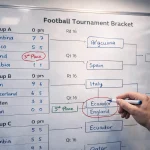
Here's the structure: 48 teams split into 12 groups of four. Each team plays three group matches. The top two from each group advance automatically to the Round of 32 (that's 24 teams), plus the eight best third-place finishers join them. This creates a 32-team knockout bracket that then proceeds through standard single-elimination rounds to the final at MetLife Stadium on 19 July.
The 48-team World Cup features 104 matches across 39 days — that's 15 more matches than Qatar 2022 and roughly three matches per day during the group stage, often running simultaneously.
For Group G specifically — where the All Whites sit alongside Belgium, Egypt, and Iran — the third-place pathway matters enormously. In the old 32-team format, only the top two advanced, meaning New Zealand would need to beat either Belgium or Egypt head-to-head. Now, a strong third-place finish with four or five points could be enough. The maths gets complicated because third-place rankings compare across all 12 groups, but the principle is simple: losing to Belgium by one goal while taking points off Iran and Egypt keeps elimination doors open.
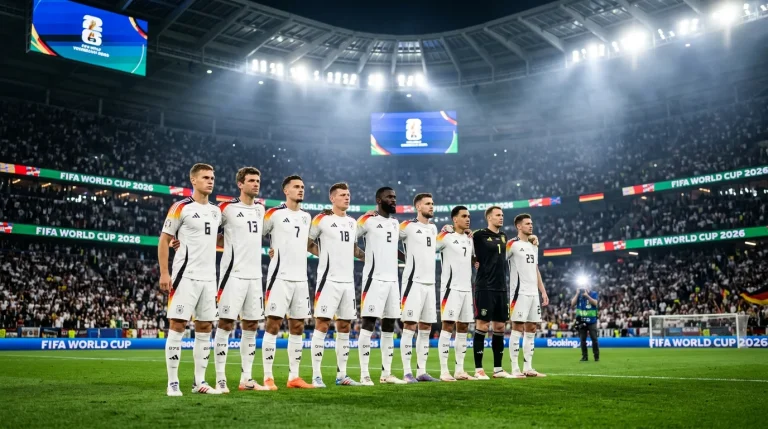
The expanded format also affects outright odds in ways the market sometimes undervalues. With more group stage matches, favourites face additional exposure to upsets, injuries, and fatigue. Argentina and Brazil might cruise through Group J and Group C respectively, but their knockout paths could include rested underdogs who scraped through as best third-place finishers. That's why the 10.00–15.00 tier of teams — Germany, Spain, Netherlands, Portugal — offers interesting value relative to the top-heavy favourites.
Three host nations (USA, Mexico, Canada) each receive automatic qualification and avoid the inter-confederation playoffs that historically knock out fringe contenders. Mexico opens the tournament at Estadio Azteca against South Africa on 11 June. The USA plays in Group D with Paraguay, Australia, and Turkey — a path to the Round of 32 that looks navigable with home support. Canada faces a trickier Group B including Switzerland and Bosnia and Herzegovina.
| Stage | Teams | Matches | Dates |
|---|---|---|---|
| Group Stage | 48 | 48 | 11–26 June |
| Round of 32 | 32 | 16 | 28 June – 2 July |
| Round of 16 | 16 | 8 | 4–7 July |
| Quarter-finals | 8 | 4 | 9–10 July |
| Semi-finals | 4 | 2 | 14–15 July |
| Final | 2 | 1 | 19 July |
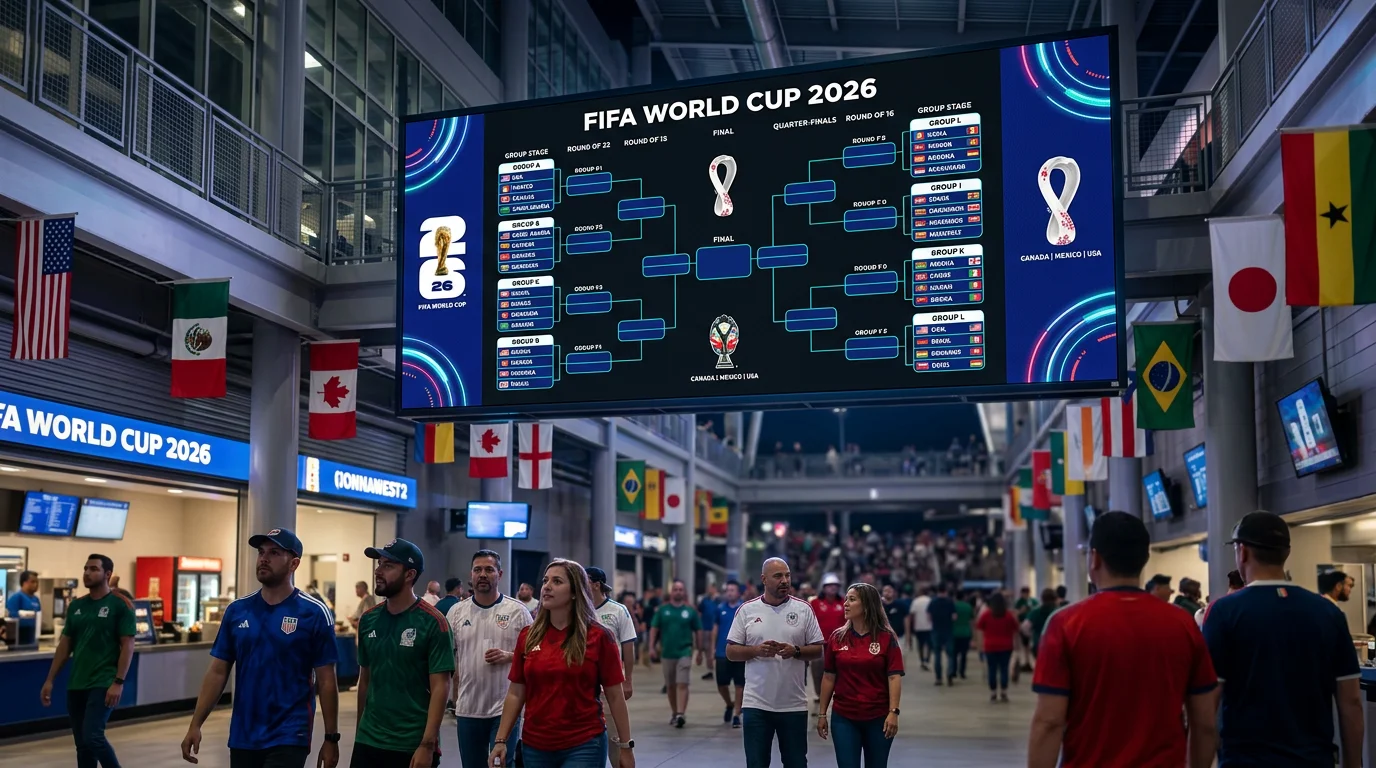
The format rewards consistency over heroics. A team that wins one match, draws one, and loses one narrowly will likely survive as a best third-place finisher. That's why match-by-match betting — rather than outright group winner bets — often offers better value for underdogs like New Zealand.
Understanding the structure is half the equation. The other half is reading the odds to find where the market has priced teams incorrectly.
I pulled up the outright winner market the morning after Bosnia and Herzegovina stunned Italy on penalties in the UEFA playoff. The odds barely moved. That told me two things: the market had already priced Italy as peripheral, and second-tier European nations weren't getting the respect their recent qualifying form deserved. Moments like these are where value hides in plain sight.
Argentina sits as the shortest-priced favourite at around 5.50 — a reflection of their defending champion status and the Messi factor, even as he approaches 39 years old by tournament's end. Brazil trades at similar odds, somewhere between 5.50 and 6.00, with a squad that's younger and arguably deeper but lacking the tournament-winning momentum. France and England complete the top tier at 7.00–8.00, representing the market's consensus that one of these four sides will lift the trophy.
| Team | Approximate Odds | Value Assessment |
|---|---|---|
| Argentina | 5.50 | Fair price; defending champions factor |
| Brazil | 5.75 | Slight value; youngest elite squad |
| France | 7.50 | Fair price; depth concerns in midfield |
| England | 8.00 | Potentially overvalued; knockout stage struggles |
| Germany | 10.00 | Strong value; new tactical identity |
| Spain | 11.00 | Strong value; Euro 2024 momentum |
| Portugal | 13.00 | Fair value; generational transition |
| Netherlands | 15.00 | Value play; Group F winnable |
The value zone I focus on sits between 10.00 and 15.00 — Germany, Spain, Portugal, and Netherlands. Germany's post-2022 rebuild under Julian Nagelsmann delivered a squad that's tactically flexible and finally moved past the stale 4-2-3-1 that cost them two consecutive group stage exits. Spain's youthful core (Pedri, Gavi, Yamal) reached maturity at exactly the right moment. These teams have genuine paths to the final at prices that compensate for the inherent variance of knockout football.
Value — when the implied probability from the odds underestimates a team's actual chance of winning. If Germany has a 12% chance to win but the odds imply only 10%, that's a value bet even if they probably won't win.
For New Zealand punters specifically, the All Whites outright odds sit beyond 500.00 — essentially a novelty market. The realistic betting angles on our squad come through group-specific and match-specific markets, which offer far better expected value. Backing the All Whites to finish third in Group G, for instance, might price around 3.00–3.50. A Chris Wood top goalscorer in Group G bet provides another avenue that doesn't require miracles.
What I avoid entirely: locking in long-shot outrights on teams priced above 30.00 unless they offer a specific edge I can articulate. Tournament betting ties up your capital for six weeks. That's fine if you're backing Germany at 10.00 with a thesis about their squad depth and draw luck. It's a poor use of bankroll if you're throwing $20 at Japan at 65.00 because "anything can happen."
The complete odds breakdown covers each market tier in detail — including Golden Boot, group winner, and special markets — so you can build a portfolio approach rather than throwing darts.
The 10.00–15.00 range offers the best risk-reward profile for outright bets. Argentina and Brazil are fairly priced, not undervalued. England at 8.00 may actually be overpriced given their knockout stage history.
Outright odds set the macro picture. But with 48 teams sorted into 12 groups, the tournament's real stories unfold one pool at a time.
The draw landed on 13 December 2025, and within minutes, social media exploded with "Group of Death" declarations for at least four different pools. Having watched every World Cup draw since 2006, I can confirm: the Group of Death label gets assigned with the urgency of a tabloid headline and the accuracy of a weather forecast. The real story is which groups offer betting value, not which ones generate the most Twitter engagement.
Groups A through D feature the host nations and their accompanying home advantages. Mexico leads Group A with South Korea, South Africa, and Czechia — a winnable path for El Tri at Estadio Azteca. The USA anchors Group D with Paraguay, Australia, and Turkey, where the Socceroos present the most likely threat to American progression. Canada's Group B includes Switzerland and Bosnia and Herzegovina, making it the tightest of the host pools.
The European heavyweights scatter across Groups C, E, F, and I through L. Brazil's Group C (Morocco, Haiti, Scotland) offers straightforward passage. Germany's Group E features Côte d'Ivoire as the primary obstacle. Netherlands in Group F must navigate Japan and Sweden — a deceptively tricky pool. France commands Group I with Senegal, Iraq, and Norway providing levels of resistance that shouldn't trouble Les Bleus.
| Group | Favourite | Key Threat | Betting Angle |
|---|---|---|---|
| A | Mexico | South Korea | Mexico to win group: fair value |
| B | Switzerland | Canada | Switzerland underrated at these odds |
| C | Brazil | Morocco | Morocco value for 2nd place |
| D | USA | Australia | Over 2.5 goals in USA matches |
| E | Germany | Côte d'Ivoire | Germany dominant; back them to top |
| F | Netherlands | Japan | Japan value for 2nd; upset potential |
| G | Belgium | Egypt | Third place competitive; All Whites angle |
| H | Spain | Uruguay | Uruguay underpriced vs Cabo Verde/Saudi |
| I | France | Senegal | Senegal value to qualify |
| J | Argentina | Austria | Austria underrated at group odds |
| K | Portugal | Colombia | Tightest elite group; goal markets |
| L | England | Croatia | Croatia value; England not guaranteed |
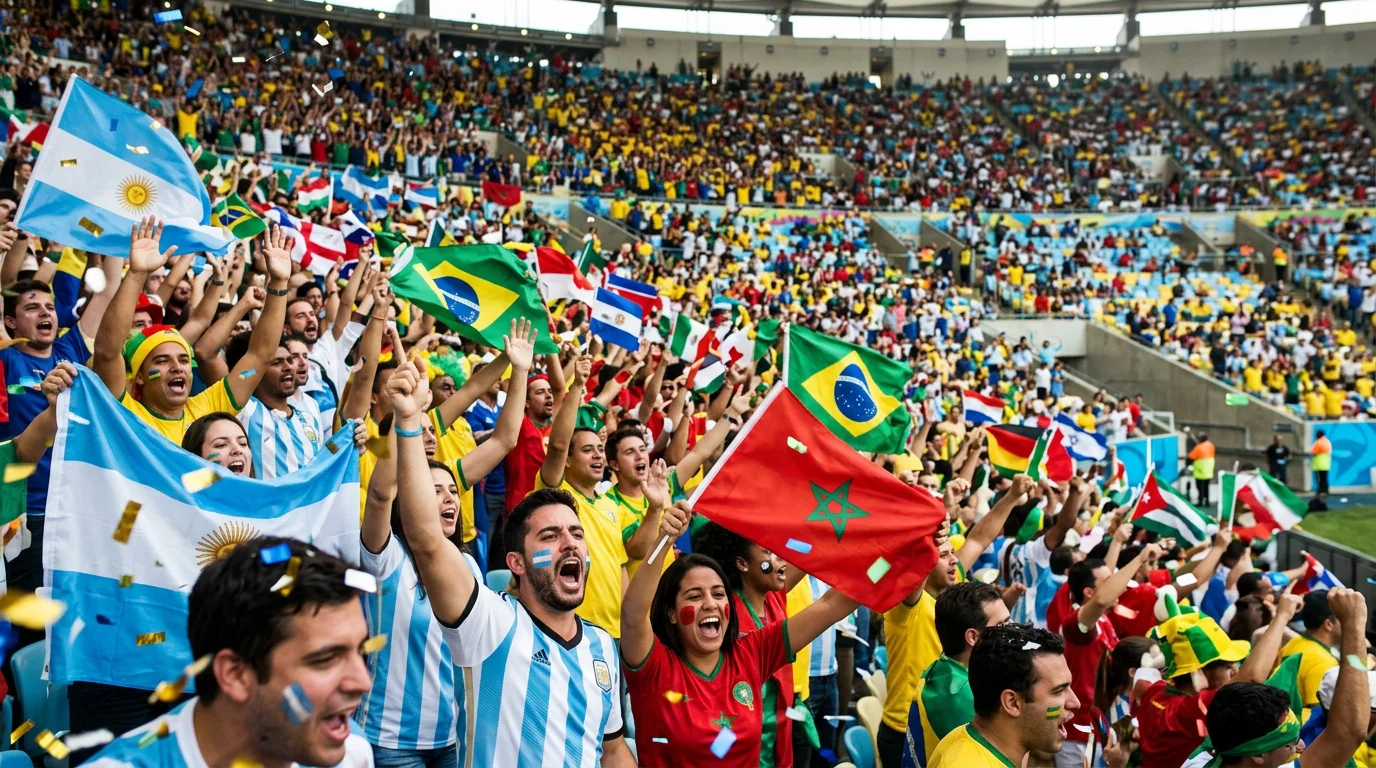
Group G deserves special attention for obvious reasons — it's where the All Whites will make history. Belgium's golden generation gets one last tournament cycle with Kevin De Bruyne and Romelu Lukaku. Egypt brings Mohamed Salah, assuming fitness cooperates. Iran remains a disciplined, organised side that regularly qualifies from Asia's tough pathway. New Zealand enters as the fourth seed but with a realistic path to third place if results align.
The Group G deep dive breaks down each match day, the qualification scenarios, and where I'm placing my own bets on the All Whites.
Speaking of the All Whites — let's get specific about what New Zealand can realistically achieve and where the betting value sits.
My first World Cup memory as a kid was 2010 — watching the All Whites draw Italy 1–1 in Nelspruit and thinking, "We're actually doing this." Shane Smeltz's goal lives rent-free in New Zealand football consciousness. Sixteen years later, we're back. The difference now is that we didn't fight through an intercontinental playoff lottery. The OFC's guaranteed spot delivered us directly into the main draw. This time, we belong here.
The All Whites open against Iran at SoFi Stadium in Los Angeles on 16 June at 13:00 NZST — lunchtime for Kiwis, which is about as good as the timezone maths gets for viewing. Iran finished top of AFC qualifying and has World Cup experience from 2014, 2018, and 2022. They're disciplined defensively and frustrate opponents who expect to dominate possession. For the All Whites, this is the must-win match. Not because beating Iran is easy, but because it's the most realistically achievable result in the group.
| Match | Date (NZST) | Time | Venue |
|---|---|---|---|
| Iran vs New Zealand | 16 June | 13:00 | SoFi Stadium, Los Angeles |
| New Zealand vs Egypt | 22 June | 13:00 | BC Place, Vancouver |
| New Zealand vs Belgium | 27 June | 15:00 | BC Place, Vancouver |
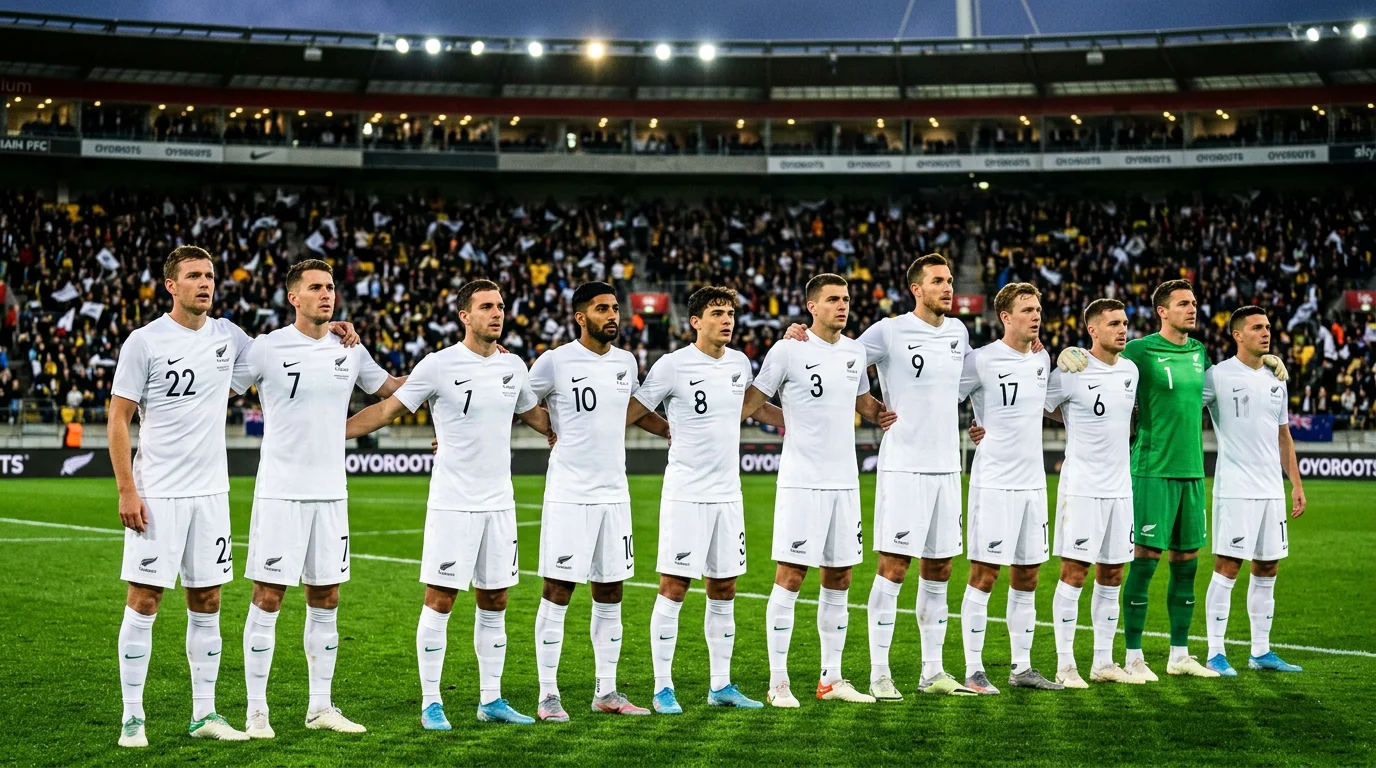
The Egypt match lands in Vancouver on 22 June — a city with a substantial Kiwi expat community, which should generate some genuine atmosphere for what might be the All Whites' most tactically interesting fixture. Mohamed Salah remains Egypt's entire attacking identity at 34 years old. If New Zealand can contain Salah's influence and keep the midfield compact, a draw isn't fantasy. It's a structured defensive plan away from reality.
Belgium closes Group G on 27 June at BC Place. By then, the permutations will be clearer. If Belgium has already qualified as group winners — which feels inevitable — they might rotate their squad. The All Whites would face a weakened side needing points to secure best third-place advancement. It's not a strategy, but it's a possibility that affects how you bet the final matchday.
Chris Wood has scored 56 goals in 78 international appearances for New Zealand — more than double the next highest scorer in All Whites history. He arrives at the World Cup as a Premier League-proven striker with Nottingham Forest.
The betting angles on the All Whites require disciplined expectations. I'm not backing New Zealand to qualify from the group at 8.00 when the path requires results against Iran and Egypt that aren't guaranteed. Instead, I'm looking at match-specific markets. New Zealand to draw against Iran prices around 3.75 — that's fair value if you believe they can defend deep and frustrate. Chris Wood anytime goalscorer against Iran at 4.00 offers another entry point with a clearer path to payout.
For full squad analysis, form guides, and the complete match-by-match betting breakdown, the All Whites tournament preview covers everything from tactical setups to specific player markets worth watching.
The Iran opener on 16 June (13:00 NZST) defines the tournament for the All Whites. A draw or win opens realistic pathways to best third-place. A loss makes the remaining matches about pride rather than progression.
Understanding the All Whites' path is personal for NZ punters. Understanding bet types is practical — and the right structure turns interest into actual wagers.
A few World Cups ago, I backed the Netherlands to win outright at 12.00 and felt clever watching them reach the final. Then Spain scored in extra time. I collected nothing. If I'd structured the same conviction as "Netherlands to reach the final," I would've cashed a nice return. Bet type selection matters as much as which team you're backing — sometimes more.
The simplest bet type is the outright winner market — pick which country lifts the trophy. You stake before the tournament and wait six weeks for resolution. The upside is high odds on second-tier contenders. The downside is your money is locked until 19 July, and any injury, red card, or tactical implosion along the way destroys value you can't recoup.
Match result (1X2) settles on 90-minute outcomes. Home win, draw, or away win — though "home" and "away" designations in a tournament hosted across three countries mean little beyond bracket positioning. Group stage 1X2 betting offers frequent action (48 matches in 16 days) and clearer analytical paths because you're assessing one fixture rather than a team's entire tournament arc.
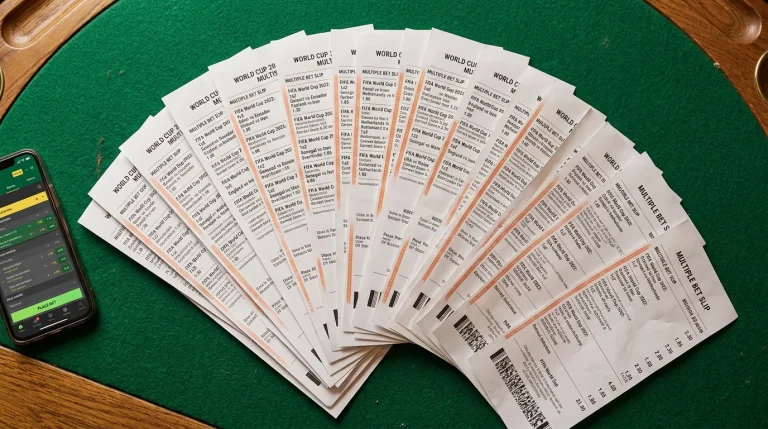
Multis (accumulators) — combining multiple selections into a single bet where all legs must win. A three-leg multi at 2.00, 1.80, and 2.20 pays 7.92 for each dollar staked. One loss voids the entire bet.
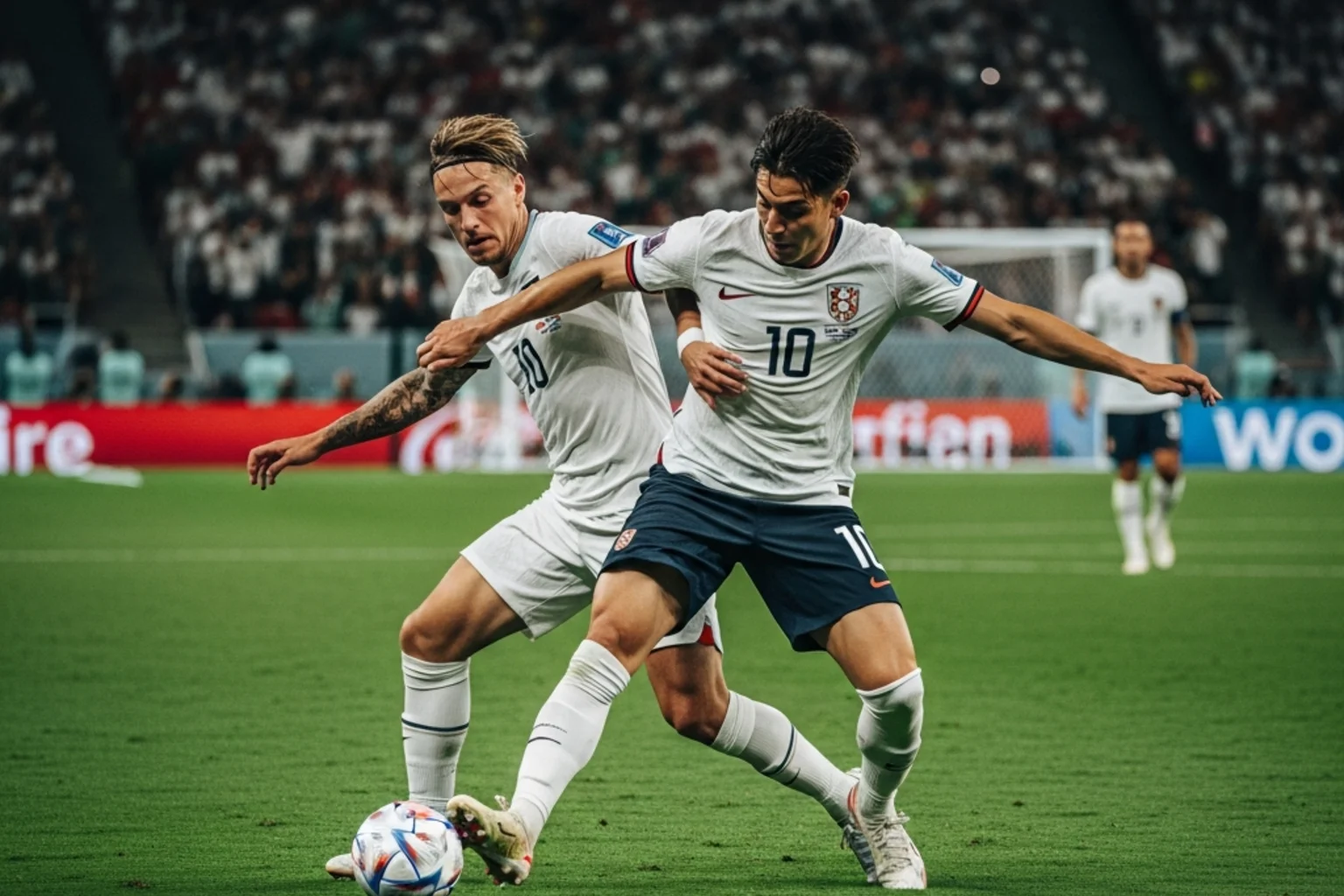
Multis are popular in NZ betting culture — the TAB interface actively promotes them — but they're high-variance instruments that should supplement your strategy, not define it. A two-leg multi combining Argentina over Brazil (head-to-head if they meet) and Germany to top Group E has correlation that makes sense. A five-leg multi combining random group stage results is entertainment, not investment.
Over/under goals markets suit punters who have views on match tempo without strong opinions on winners. Group E matches involving Germany against Curaçao and Ecuador project as high-scoring. Defensive battles like Iran versus New Zealand might stay under 2.5. These markets offer consistent edge if your read on team styles aligns with reality.
First goalscorer and anytime goalscorer provide player-specific angles. Backing Kylian Mbappé as first goalscorer against Iraq at 4.00 feels overpriced if France is expected to dominate possession and create chances from multiple sources. Anytime goalscorer at 1.60 offers better structure for the same attacking thesis.
The comprehensive betting glossary defines every market type you'll encounter on TAB NZ, from Asian handicaps to correct score accumulators.
Picking bet types is about matching conviction to structure. But no structure survives poor bankroll management across 39 days of temptation.
I've watched punters lose months of salary across tournament cycles because they chased early losses with escalating stakes. The World Cup runs 39 days with three or four matches daily during the group stage — that's roughly 100 opportunities to make poor decisions if you don't establish boundaries before the opening whistle.
TAB NZ provides deposit limits (daily, weekly, monthly), loss limits, and session time alerts through their responsible gambling toolkit. Set these during account registration, not after a bad Tuesday when Mexico upsets South Korea and you're convinced Wednesday will correct the universe. The tools work when you configure them proactively. They become psychological battlegrounds when you're trying to override them mid-tournament.
My personal rule across tournaments: never bet more than 2% of my total bankroll on any single outcome, and never more than 10% across a single match day. If I've allocated $500 for the entire World Cup, that's $10 maximum per bet and $50 maximum daily exposure. The 48-team format means more matches, which means more discipline required — not less.
Gambling is restricted to adults 18 years and older in New Zealand. If betting stops being entertainment and starts causing financial stress, relationship problems, or preoccupation you can't control, contact the Gambling Helpline at 0800 654 655 for free, confidential support.
The Department of Internal Affairs regulates gambling in NZ, and TAB NZ operates under their oversight. You can self-exclude from TAB NZ temporarily or permanently through their platform if you need a complete break. There's no shame in recognising when entertainment becomes something else. The World Cup will be played whether you're betting on it or not.
Yes, but only through TAB NZ. Since 28 June 2025, TAB NZ holds the exclusive licence for sports betting in New Zealand under the Racing Industry Act 2020. Offshore bookmakers accepting NZ punters operate outside the legal framework, which creates complications for deposit methods, dispute resolution, and consumer protection. The practical approach for NZ residents is betting through TAB NZ, where all operations fall under domestic regulation by the Department of Internal Affairs.
The opening match between Mexico and South Africa kicks off on 11 June 2026 at Estadio Azteca in Mexico City. For New Zealand viewers, that translates to 12 June at approximately 10:00 NZST due to the 16-hour time difference. During June and July, New Zealand observes standard time (UTC+12), which means most evening matches in North America land during our early afternoon — convenient for live viewing without overnight alarm clocks.
The expanded format creates more group stage matches (48 instead of 32) and adds the "best third-place" qualification route where eight third-place finishers advance to the Round of 32. This changes underdog calculations significantly. Teams like New Zealand don't need to finish in the top two — a competitive third place with four or five points might be enough. For betting, this means match-specific markets on underdogs offer better value than outright qualification bets, because the path to survival is wider than in previous tournaments.
The All Whites enter Group G as the fourth seed alongside Belgium, Egypt, and Iran. Realistically, third place is the ceiling without major upsets. Belgium's golden generation (De Bruyne, Lukaku) remains too deep despite aging. Egypt has Mohamed Salah. Iran brings consistent World Cup experience. The opening match against Iran on 16 June represents the best opportunity for a result — a draw or win there creates legitimate pathways to best third-place advancement. Chris Wood's Premier League pedigree provides a genuine goal threat that most fourth seeds lack.
TAB NZ displays all odds in decimal format, which is standard across Australia and New Zealand. Decimal odds represent the total return per dollar staked, including your original stake. If you see Argentina at 5.50, a $10 bet returns $55 total ($45 profit plus your $10 stake). This differs from fractional odds (common in the UK) and American odds (plus/minus format). No conversion is necessary when betting through TAB NZ — what you see is what you calculate.
TVNZ holds the broadcast rights for the 2026 World Cup in New Zealand. Coverage includes live matches across TVNZ channels and streaming through TVNZ+. The 16-hour time difference means group stage matches typically air between 09:00 and 15:00 NZST — workday hours for most, but lunch-break viewing is realistic for key fixtures like the All Whites matches. Knockout rounds shift slightly later but remain within accessible NZ viewing windows.
Multiply your stake by the decimal odd. A $25 bet at 3.40 returns $85 total ($60 profit plus your $25 stake). For multis, multiply all decimal odds together and then multiply by your stake. A three-leg multi at 1.90, 2.10, and 1.75 gives a combined odd of 6.98, so a $10 stake returns $69.83 if all three legs win. TAB NZ calculates this automatically on your bet slip before confirmation.
Between now and 11 June, here's what separates prepared punters from those scrambling on opening day: get your TAB NZ account verified this week, set your deposit and loss limits during setup, and start tracking the outright odds as squads finalise and injuries emerge. Markets move. Early positions at 10.00 on Germany won't exist once their group stage form confirms the thesis.
For the All Whites specifically, mark 16 June in your calendar — 13:00 NZST at SoFi Stadium against Iran. That's when New Zealand football writes its next chapter, sixteen years after the Italy draw that proved we could compete at this level. The betting value sits in match-specific markets: draw against Iran, Chris Wood goalscorer props, and carefully structured multis that don't require miracles.
World Cup 2026 is the first 48-team tournament, the first with three host nations, and the first where Oceania has a guaranteed place without playoff drama. The format creates opportunity. The schedule fits NZ viewing windows. The only question left is whether you're ready to engage with it properly — informed, disciplined, and watching every All Whites minute with something more than passive interest on the line.