
Find Best World Cup 2026 Odds — Outright, Group & More
 Available in US
Loading...
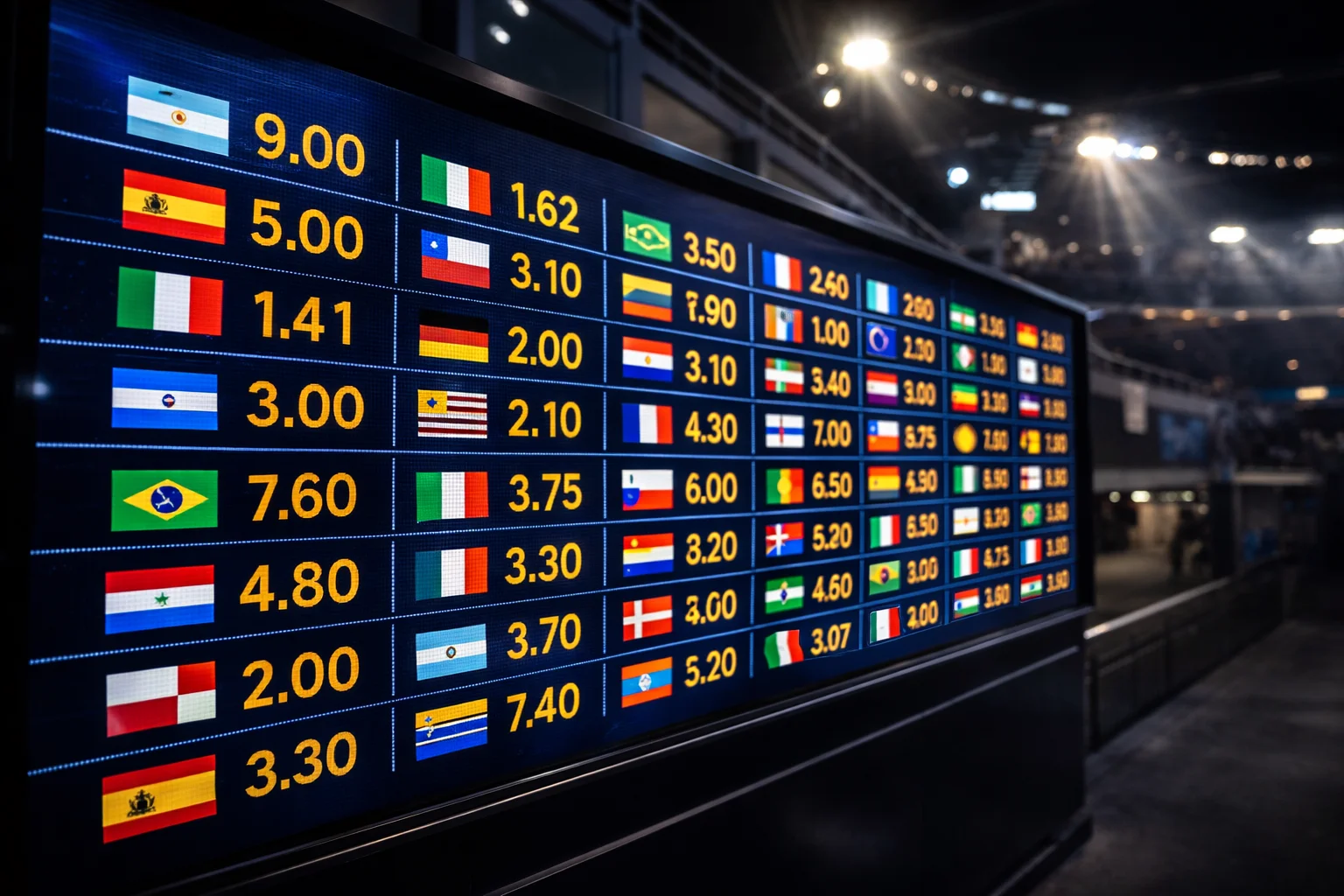
Argentina sit at 4.50 to defend their title. Brazil hover around 5.00. France, the 2022 runners-up, trade near 5.50. These numbers will shift daily between now and the opening whistle at Estadio Azteca — and understanding why they move, and when to act, separates punters who profit from those who chase yesterday’s prices.
I have tracked World Cup odds across five tournaments, and 2026 presents a market unlike any before. The 48-team format injects uncertainty into every layer of pricing. More matches create more opportunities for favourites to stumble. More groups mean more paths to the knockout rounds. More nations — including several making their first appearance in decades — introduce variables the market cannot price with historical confidence.
This guide breaks down every major odds market for the 2026 World Cup. You will learn how to read outright winner prices, identify value in group markets, assess Golden Boot contenders, and spot special markets where the bookmaker’s edge thins. Whether you want to back Argentina’s repeat or find a longshot that the market underrates, the odds landscape starts here.
TL;DR — Key Odds at a Glance
Before diving into the analysis, here is the current snapshot of the outright winner market and what each price implies about a team’s chances:
| Team | Odds (Decimal) | Implied Probability |
|---|---|---|
| Argentina | 4.50 | 22.2% |
| Brazil | 5.00 | 20.0% |
| France | 5.50 | 18.2% |
| England | 7.00 | 14.3% |
| Spain | 9.00 | 11.1% |
| Germany | 11.00 | 9.1% |
| Portugal | 13.00 | 7.7% |
| Netherlands | 15.00 | 6.7% |
| Belgium | 17.00 | 5.9% |
| USA (hosts) | 21.00 | 4.8% |
If you add up all implied probabilities across the full market, you will exceed 100% — that margin is the bookmaker’s edge. Your job is finding selections where the true probability exceeds the implied probability, regardless of whether the favourite or a longshot offers that edge.
Break Down the Outright Winner Odds
In February 2022, I placed an outright bet on Argentina at 8.00. By the time they lifted the trophy in Qatar, that price had shortened to 3.50. The lesson: early conviction pays. But conviction without analysis is just hope wearing a jersey. Here is how I evaluate the outright market tier by tier.
Tier 1 — The Big Four
Argentina, Brazil, France, and England occupy the top tier — teams the market considers most likely to win the tournament, priced under 8.00. Together, they account for roughly 75% of implied probability. If you believe a team outside this quartet can win, you are implicitly fading enormous market confidence.
Argentina enter as defending champions with a squad blending the 2022 core and emerging talent. Lionel Messi’s role remains unclear — at 38, he may feature as an impact substitute rather than a starter. The market prices this uncertainty into their odds but perhaps not enough. Losing Messi’s orchestrating presence changes Argentina fundamentally. If you back them, you are betting on Julián Álvarez, Enzo Fernández, and a new generation carrying the load.
Brazil have not won a World Cup since 2002, their longest drought in history. The pressure to end that wait weighs on every squad selection and tactical decision. Their attacking depth — Vinícius Júnior, Rodrygo, Endrick, Raphinha — is staggering, but defensive vulnerabilities persisted through qualifying. At 5.00, Brazil offer less value than their talent suggests because the market already accounts for that talent.
France peaked at Euro 2024 but disappointed. Kylian Mbappé’s new chapter at Real Madrid brings heightened expectations, and he has the talent to drag a team through knockout rounds single-handedly. France’s squad depth remains elite across every position. At 5.50, they sit in the value range if you trust Didier Deschamps to navigate another tournament.
England have reached two consecutive Euro finals and a World Cup semi-final. The “nearly men” narrative clings to them, but their squad — Bellingham, Saka, Foden, Rice, Alexander-Arnold — might be their strongest ever. At 7.00, England represent the best price among Tier 1 teams relative to their actual probability, assuming the new manager solves the creativity puzzles that plagued them at Euro 2024.
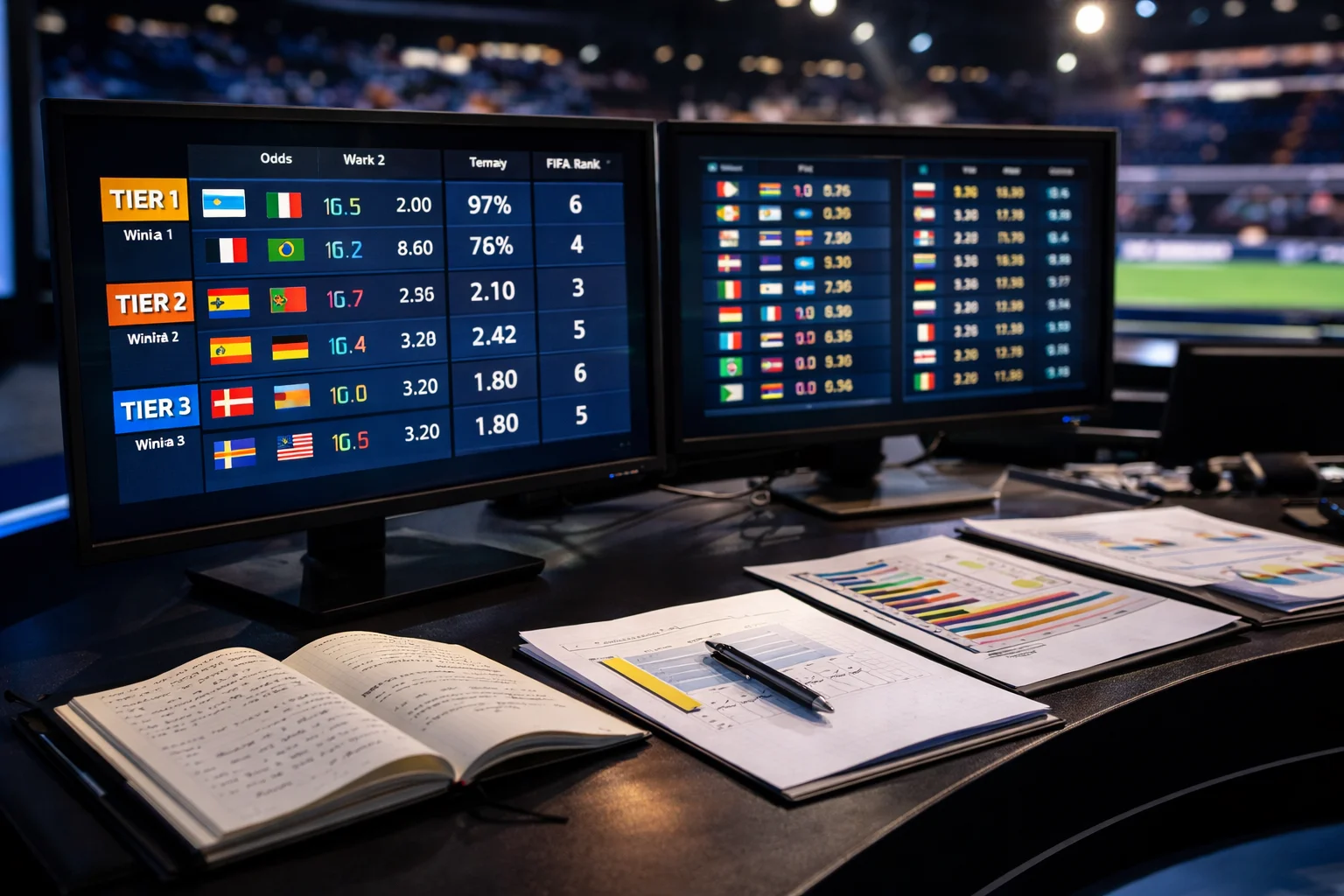
Tier 2 — The Dark Horses
Spain, Germany, Portugal, and Netherlands sit between 9.00 and 17.00. These teams can absolutely win the tournament, but the market views their chances as secondary to the top four. Finding value here requires identifying why the market might be wrong.
Spain’s youth movement delivered Euro 2024 glory, and those players have two more years of development. Lamine Yamal will be 18 at the World Cup — still a teenager, but with elite-level experience few his age possess. If Spain’s young core matures as expected, their 9.00 price underestimates their ceiling.
Germany return to tournament football after hosting Euro 2024. Julian Nagelsmann’s rebuild showed promise but remains incomplete. At 11.00, Germany are fairly priced — capable of a deep run, unlikely to win unless several results fall their way.
Portugal face a generational transition. Cristiano Ronaldo, at 41, cannot lead a team through seven knockout matches. Bruno Fernandes, Rafael Leão, and João Félix must step forward. The 13.00 price reflects that uncertainty appropriately.
Netherlands impressed at Euro 2024 and carry momentum into the World Cup. Ronald Koeman’s pragmatic approach suits tournament football. At 15.00, the Oranje offer speculative value if you believe their system can neutralise more talented opponents over 90 minutes.
Tier 3 — Value Longshots
Beyond 17.00, you enter longshot territory. Belgium, USA, Croatia, Denmark, Uruguay, and Morocco lead this tier. Each has a plausible path to the latter rounds but faces significant obstacles.
Belgium’s golden generation — De Bruyne, Lukaku, Courtois — gets one final chance. At 17.00, their price reflects age-related decline and a less impressive supporting cast than their 2018 peak. Backing Belgium is a bet on experience and quality overcoming Father Time for three more weeks.
The USA enjoy hosting advantage across 11 venues. Home crowds, no jet lag, familiar conditions — these factors historically boost host nations. At 21.00, the Americans offer value if you weight home advantage heavily and believe Christian Pulisic, Weston McKennie, and the emerging generation can gel under tournament pressure.
Croatia continue defying expectations. Luka Modrić will be 40 but may still pull strings in midfield. Their tournament pedigree — final in 2018, third place in 2022 — demands respect. At 26.00, Croatia represent a pure value play on consistency and big-game experience.
Morocco’s 2022 semi-final run announced African football at the highest level. Achraf Hakimi, Youssef En-Nesyri, and a defence that frustrated Spain and Portugal return with legitimate ambitions. At 34.00, Morocco offer the best risk-reward ratio among African nations.
Compare Group Winner Odds — Where Value Sits
Outright markets get the attention, but group winner bets often deliver cleaner value. Why? Because predicting who tops a four-team pool requires less forecasting than picking a champion from 48. Variables shrink. Upsets matter less — a favourite can lose one match and still win the group. The market prices group winners with less margin than outrights because turnover is lower. That thinner margin creates opportunity.
Group A features Mexico, South Korea, South Africa, and Czechia. Mexico open at 1.65 to win the group — short odds reflecting their status as hosts (for group matches in Estadio Azteca) and CONCACAF’s top seed. South Korea at 3.50 offer value if you believe Son Heung-min can drag them through. The Czechia shock qualification — eliminating Denmark in the playoff — suggests a team peaking at the right moment. At 6.00, they represent speculative value.
Group D pits hosts USA against Paraguay, Australia, and Turkey. The Americans open at 1.75 to top the group, but Turkey’s playoff qualification and recent form suggest they could push hard. At 4.50, Turkey offer the best value in a group where home advantage may be overpriced.
Group G — the All Whites’ group — sees Belgium heavy favourites at 1.50. Egypt sit at 3.75, Iran at 7.00, and New Zealand at 15.00. For Kiwi punters, the tactical question is whether Belgium’s ageing legs can sustain three matches in 11 days. Egypt with Mohamed Salah represent the real threat to Belgian dominance. Backing Egypt to win the group at 3.75 offers genuine value if Salah arrives fit and motivated.
Group J contains Argentina, Algeria, Austria, and Jordan. Argentina’s 1.30 odds to win the group leave almost no value — you risk $100 to profit $30. Instead, look at “group winner without favourite” markets that remove Argentina. Austria at even money to finish second could pay more reliably than backing them outright.
Group L pairs England with Croatia, Ghana, and Panama. England at 1.45 to win the group is fair but unexciting. Croatia at 3.25 represent the value if you believe their tournament experience outweighs England’s squad depth. Ghana at 9.00 offer a pure punt — they have the athleticism to challenge both European sides on their day.
Across all 12 groups, the pattern holds: favourites are correctly priced but offer thin returns; second favourites frequently deliver value because the market slightly overestimates the top seed; third and fourth seeds rarely win groups outright but can deliver value in “to qualify” markets at shorter prices than their group winner odds.
Consider “both teams to qualify” markets within groups. In Group C, Brazil and Morocco both advancing — leaving Haiti and Scotland to battle for third — prices around 1.80. That represents solid value given the quality gap between the top two and bottom two seeds. Similar opportunities exist in Group I (France and Senegal), Group K (Portugal and Colombia), and Group L (England and Croatia). These bets reduce variance compared to picking a single group winner while offering better returns than backing prohibitive favourites outright.
Group stage permutations create late opportunities. By matchday three, some groups will have qualification decided, leading favourites to rotate their squads. Monitor which groups reach this situation and adjust your final matchday betting accordingly. A rotated Brazil side facing Scotland in a dead rubber creates value on Scotland to win at inflated odds — even if they have no chance of qualifying themselves.
Check Golden Boot Odds — Top Goalscorer Market
Picking the Golden Boot winner might be the hardest bet on the board. In 2022, Mbappé scored 8 goals but lost to Argentina; had France won, his tally would have been celebrated as dominant. Instead, we remember Messi’s tournament even though he scored fewer goals. Context matters as much as numbers, and context is impossible to predict.
The 48-team format changes the maths. More matches mean more scoring opportunities — at least seven games for any team reaching the final, up from six under the 32-team format. Strikers from teams expected to dominate group play gain an edge because blowouts against weaker opponents pad stats.
Mbappé leads the market at around 8.00. He has the talent, the team around him, and France’s likely progression deep into the knockout rounds. But Mbappé often drifts wide or drops deep, reducing his pure goalscoring opportunities compared to a central striker.
Harry Kane at 10.00 offers similar logic — England should progress far, and Kane takes penalties. His drop into midfield under various managers limits his box presence, but set pieces and spot kicks keep his numbers competitive.
Vinícius Júnior at 12.00 is Brazil’s talisman but shares opportunities with Rodrygo, Endrick, and Raphinha. Brazil’s attacking wealth dilutes any single player’s expected goals.
The value lies slightly deeper in the market. Romelu Lukaku at 20.00 — Belgium may not progress far, but if they do, Lukaku will score. His physical dominance suits World Cup football where recovering defenders tire in the heat. Julián Álvarez at 18.00 could inherit Argentina’s central striking role if Messi reduces his minutes; his pressing and movement create chances even against deep blocks.
For Kiwi punters, Chris Wood at 100.00+ offers a sentimental flutter. Three group matches against Iran, Egypt, and Belgium provide realistic scoring chances in at least one fixture. Wood’s Premier League experience means he can convert half-chances that other Oceanian strikers might waste. A small stake at triple-digit odds hurts nothing if it misses and delivers a memorable payday if it lands.
Golden Boot betting suits small, diversified stakes rather than heavy concentration. Spread 5% of your bankroll across three to four selections at varying prices. One hitting returns profit; all missing costs little relative to your total World Cup budget.
Historical data suggests targeting players whose teams are expected to reach at least the semi-finals. Of the last ten Golden Boot winners, eight played for teams that reached the final four. Total matches played correlates more strongly with goals scored than individual brilliance — a mediocre striker playing seven games outscores a superstar whose team exits in the Round of 32. Weight your selections toward teams with clear knockout pathways rather than just individual talent.
Penalty takers carry inherent edge in this market. The 48-team format with 104 matches will produce roughly 15-20 penalties across the tournament based on historical rates. A reliable penalty taker captures goals that miss players who do not have spot-kick duties. Kane, Mbappé, Ronaldo (if he starts), and Bruno Fernandes all take penalties for their nations — factor this into your evaluation alongside open-play goal threat.
Explore Special Markets — Golden Glove to Fastest Goal
Beyond outrights and goals, special markets offer niche opportunities where bookmakers devote less modelling attention. Thinner liquidity means wider prices and occasionally glaring mispricings for punters willing to research obscure angles.
The Golden Glove — awarded to the tournament’s best goalkeeper — correlates heavily with defensive teams reaching the latter rounds. Courtois, Alisson, Donnarumma, and Pickford lead the market. But consider Emiliano Martínez at around 8.00: Argentina’s penalty-saving specialist already owns one Golden Glove from 2022, and if Argentina defend their title, Martínez almost certainly wins again. His price undervalues the probability of Argentina repeating.
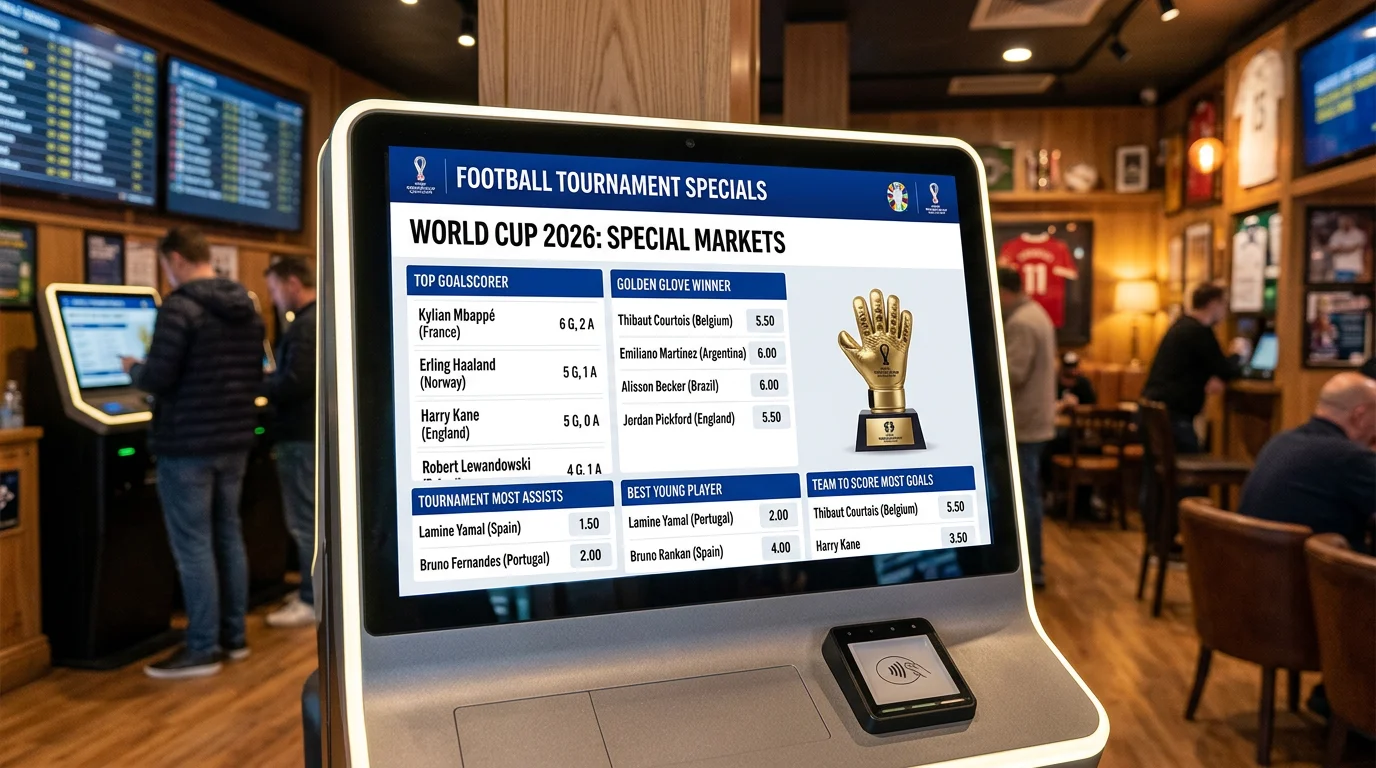
Young Player of the Tournament — for players under 21 at the start of the World Cup — features Lamine Yamal and Endrick as frontrunners. Spain’s expected deep run and Yamal’s central role make him the obvious pick at 3.00. At 5.00, Endrick offers value if Brazil click and he earns starting minutes.
Fastest goal markets bet on which match produces the quickest goal of the tournament. These bets are near-random because they depend on kickoff tactics and momentary lapses. Avoid them unless you enjoy pure lottery plays.
Group specials — such as “Group G to produce the most goals” or “Fewest goals in Group A” — offer angles based on tactical profiles. Groups featuring attacking powerhouses like Brazil (Group C) or France (Group I) tend toward higher totals. Groups with defensive, conservative sides — Iran in Group G, for instance — trend lower. Research team styles rather than names to find edges in these markets.
Head-to-head match specials — such as “Messi to score more tournament goals than Ronaldo” — let you pit players against each other regardless of their teams’ progress. These require estimating playing time, team quality, and individual role. Messi versus Ronaldo markets exist as fan service, but the pricing sometimes lags their current situations. Messi’s reduced minutes versus Ronaldo’s likely full-time involvement might flip expected value in surprising directions.
Winning margin markets ask you to predict whether the eventual champion wins the final by one goal, two goals, or three or more. Finals historically trend conservative — extra time and penalties are common, and decisive blowouts rare. Since 2000, only two World Cup finals have been decided by more than one goal in normal time. Backing “one goal margin or penalties” typically offers value around 1.65, while “champion wins by 3+” rarely pays at odds short enough to justify the historical improbability.
Continental winner markets — asking which confederation produces the champion — favour UEFA heavily at around 1.40. CONMEBOL (South America) trades near 3.00, reflecting Argentina and Brazil’s chances. AFC, CAF, CONCACAF, and OFC all offer triple-digit longshots. Unless you believe Morocco, Japan, or the USA can genuinely win the tournament, avoiding continental markets in favour of more specific team bets makes sense.
Back the All Whites — Group G and Beyond
New Zealand enter the World Cup as 500.00 outsiders to win the tournament — those odds imply a 0.2% chance. Realistically, anyone backing the All Whites at that price is buying a lottery ticket. But Group G offers markets where New Zealand’s odds carry genuine interest.
To qualify from Group G (finishing top two), New Zealand sit around 8.00. To finish third — which now means qualification to the Round of 32 if results elsewhere cooperate — the odds shorten to approximately 3.50. The third-place route matters because the 48-team format guarantees eight best third-place teams progress. In a group with Belgium, Egypt, and Iran, New Zealand finishing third is plausible if they collect four points from Iran and Egypt while losing narrowly to Belgium.
Match-specific odds provide the clearest picture. Against Iran on 16 June, New Zealand open around 4.50 to win, 3.50 for the draw, and 1.90 for Iran. That pricing reflects Iran’s superior FIFA ranking and recent form, but it underweights New Zealand’s motivation and Chris Wood’s quality. A draw at 3.50 offers value given the tactical profile: both teams will play conservatively, and neither wants to lose their opening fixture.
Against Egypt on 22 June, New Zealand drift to approximately 5.50 to win. Mohamed Salah changes every calculation — if he starts and performs, Egypt dominate. But Salah’s club workload may lead Egypt to manage his minutes in a match they expect to win. Backing New Zealand to cover a +1.5 Asian Handicap (meaning they lose by no more than one goal) offers a defensive position with reasonable odds around 1.80.
Against Belgium on 27 June, New Zealand face the group’s toughest test. Odds around 8.00 for a New Zealand win reflect Belgian quality even in decline. However, if Belgium have already qualified before this match, they may rest key players. Monitoring Belgium’s results in the first two matches determines whether this market offers late value. A dead rubber against a rotated Belgium side shifts probabilities significantly.
For Kiwi punters, the All Whites’ complete preview covers squad depth, tactical setups, and specific betting angles for each Group G fixture. Building a portfolio of small bets across New Zealand’s three matches — a draw against Iran, a handicap cover against Egypt, and a speculative win against a rotated Belgium — balances patriotism with probability.
Lock In Value — How Odds Shift and When to Act
World Cup odds move constantly. Unlike domestic leagues where odds stabilise 24 hours before kickoff, tournament markets remain fluid through the group stage as results reshape expectations. Understanding why odds shift helps you decide when to strike.
Injury news drives the sharpest movements. When Neymar tore his ACL in late 2023, Brazil’s outright odds drifted from 4.50 to 6.00 within hours. Any key player injury creates similar volatility. Follow team news closely — even rumoured knocks can move markets before official confirmation. Acting quickly on verified injury information locks in value before the broader market adjusts.
Public money influences prices ahead of high-profile matches. England versus Croatia in Group L will attract heavy English betting because of their rivalry history. This public action shortens England’s price and lengthens Croatia’s. If you favour Croatia, wait until closer to kickoff when English money has pushed their odds to maximum value.
Results during the tournament create dramatic shifts. A favourite losing their opening match — Germany falling to Japan in 2022, for example — lengthens their outright odds substantially. If your analysis says that loss was a fluke and the team will rebound, post-loss prices offer excellent buying opportunities. Conversely, a dark horse winning big attracts bandwagon money that shortens their price below fair value. Avoid chasing recent winners unless you valued them before their results proved you right.
Weather and conditions rarely influence football odds as dramatically as they do cricket or outdoor sports, but extreme heat in Dallas, Houston, and Miami during July knockouts could disadvantage European teams unaccustomed to those conditions. Markets do not always price climate factors, leaving edges for punters who research historical performance in heat.
Early action generally beats late action for outrights and group winner bets. Prices compress as the tournament approaches and casual money floods the market. If you have high conviction about Argentina, Brazil, or any other outright contender, locking in current odds preserves value that erodes closer to kickoff. For individual match bets, waiting until team sheets drop — usually an hour before kickoff — incorporates the latest information about lineups and conditions.
Track your target prices in a spreadsheet. Decide now that you want Argentina at 5.00 or better, France at 6.00 or better, and so on. When odds hit your target, act. This discipline prevents emotional betting and ensures you capture value when it appears rather than regretting missed opportunities.
Time zones work in your favour as a New Zealand punter. Most significant odds movements happen during European and American business hours — which means overnight or early morning in New Zealand. Set alerts through TAB NZ’s app or check odds first thing in the morning to catch any value created while you slept. Markets often overcorrect to news, and the correction back toward fair value happens within hours. Early-morning bettors in New Zealand can exploit windows that close before many Australasian punters wake up.
Build Your World Cup Odds Portfolio
The best approach to World Cup betting treats odds like an investment portfolio rather than a series of individual punts. Diversify across markets — outrights, group winners, player props, and match bets — to spread risk and capture value wherever it appears. No single market holds all the answers, but combining positions across multiple markets smooths variance and increases your chances of finishing the tournament in profit.
Allocate roughly 20% of your World Cup bankroll to outright bets placed before the tournament starts. Another 30% should target group markets where thin margins create cleaner value propositions. Reserve 40% for match betting during the tournament itself, reacting to lineups and live information. The final 10% covers special markets and speculative longshots — the Chris Woods and third-place qualifications that deliver disproportionate joy if they land.
Every odds number you see represents a market opinion, not a truth. Your job is identifying where that opinion misaligns with reality. Sometimes the market is right, and favourites win at short prices. Other times, overlooked teams deliver at generous odds. Over five tournaments, I have found more value in second-tier teams and group markets than in backing the obvious favourites. Your mileage may vary — but it will only vary if you engage with the odds deeply rather than glancing at headlines.
The 2026 World Cup begins on 11 June. Between now and then, odds will move, injuries will happen, and new information will emerge. Stay alert, stay disciplined, and remember: the best bet you can make is the one you researched properly. Everything else is hope.
