
Navigate World Cup 2026 Groups — Fixtures & Betting Tips
 Available in US
Loading...
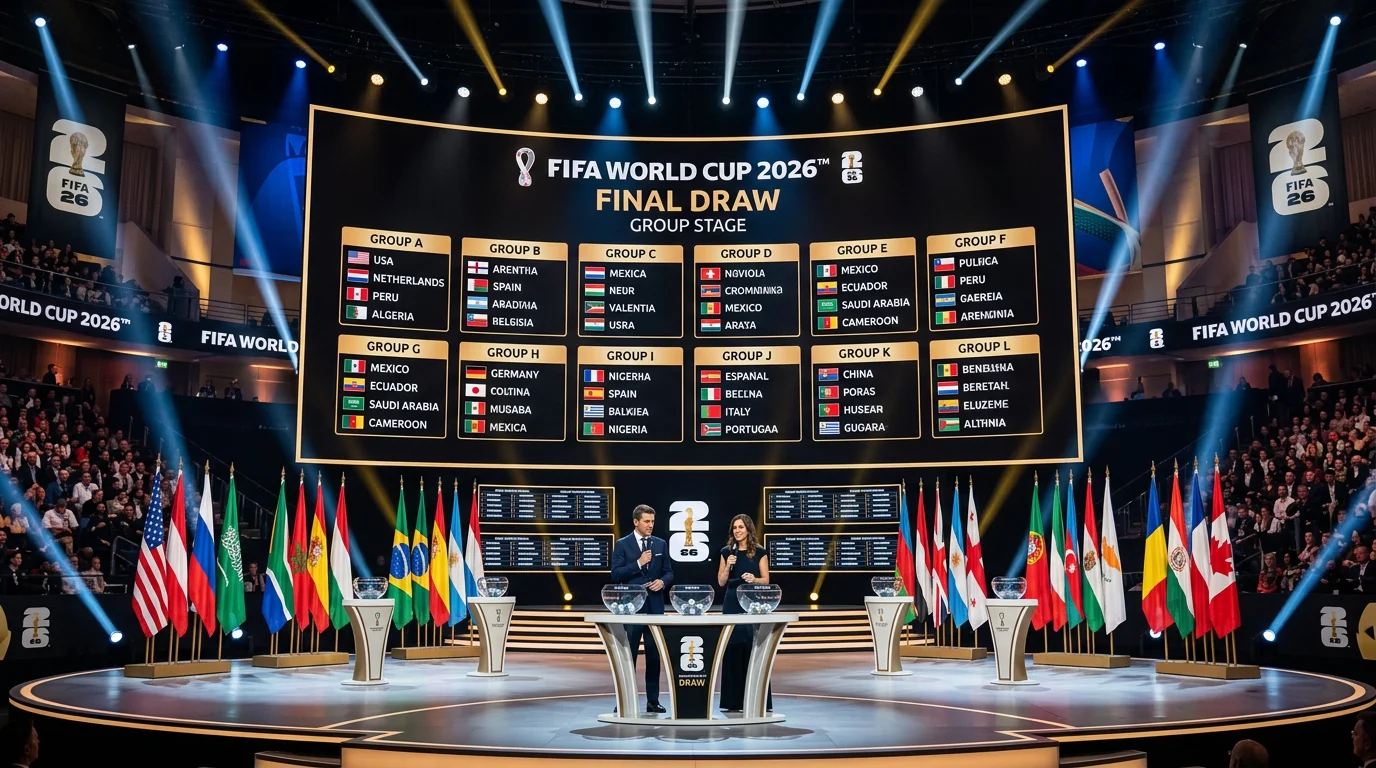
Italy missed the World Cup. Again. Bosnia and Herzegovina knocked them out in a penalty shootout that sent Gianluigi Donnarumma and Federico Chiesa home before the tournament even began. While Italian fans processed another qualification failure, the rest of us gained an unexpected participant in a Group B that now looks dramatically more competitive than seedings suggested.
The 48-team format creates twelve groups instead of eight, and the knock-on effects ripple through every betting calculation. Where previous World Cups offered clear death groups and straightforward passages, this expanded structure generates complexity that markets have not fully digested. Brazil drew Haiti. Germany face Curaçao. England share a group with Ghana and Panama. The quality variance within groups has never been wider — or more exploitable.
I have spent the weeks since the draw mapping qualification pathways, identifying value in group winner and qualification markets, and assessing which fixtures carry decisive significance. This guide covers all twelve groups with a focus on betting angles that the casual observer misses. For Kiwi punters, Group G receives particular attention — the All Whites need to understand exactly what Belgium, Egypt, and Iran bring to the table. But the tournament offers opportunities across every pool, and finding edge requires scanning the entire landscape before narrowing focus.
TL;DR — Format, Dates, and Qualification Rules
Before diving into group analysis, here is the structural framework every bettor needs to understand:
The group stage runs from 11 June to 28 June 2026, with each team playing three matches. Standard World Cup scoring applies: three points for a win, one for a draw, zero for a loss. The top two teams from each group advance automatically to the Round of 32, creating 24 automatic qualifiers. Additionally, the eight best third-placed teams across all twelve groups also advance — this wrinkle changes the mathematics considerably compared to the 32-team format.
Third-place qualification means a team can progress with as few as three points, depending on other groups’ results. This changes late group-stage dynamics: a team on three points facing a dead rubber final match might rest key players rather than chase a win that does not guarantee advancement anyway. The calculation favours goal difference and goals scored as tiebreakers after points, meaning high-scoring wins matter more than narrow victories in the third-place race.
Matches are spread across 16 venues in the United States, Mexico, and Canada. The US hosts the majority — 11 stadiums — with Mexico contributing three and Canada two. Time zones range from Eastern (New York, Miami, Atlanta) to Pacific (Seattle, Los Angeles), creating start time variations that Kiwi punters must track carefully. For New Zealand viewers, most group stage matches fall between 7:00 and 15:00 NZST — convenient morning and early afternoon viewing.
Scan Groups A–D — Americas and European Heavyweights
The 2026 World Cup opens in Mexico City on 11 June when El Tri face South Africa at Estadio Azteca — a moment designed to honour the tournament’s North American hosts. That Group A match carries weight beyond ceremony. Mexico have not advanced past the Round of 16 since 1986, their last home World Cup. Breaking that curse against South Korea, South Africa, and Czechia should be straightforward, yet Mexico historically find ways to complicate simple situations.
Group A pairs Mexico with South Korea — their 2018 group stage opponents who shocked Germany in that tournament. The Korean squad has evolved since then, with Son Heung-min still commanding the attack and a younger generation maturing behind him. South Africa bring CAF qualifying experience but limited squad depth beyond a few standouts. Czechia arrived via the playoffs, defeating Denmark on penalties in a campaign that saw them struggle against top-tier opposition. For betting purposes, Mexico at 1.65 to win the group carries short odds without corresponding certainty. South Korea at 3.00 offer better value if you believe their tactical discipline translates to this group.
Group B produced the draw’s biggest shock when Bosnia and Herzegovina eliminated Italy. The Balkan nation now joins Canada, Qatar, and Switzerland in a pool that lacks a clear favourite. Canada enjoy home advantage for their opening match at BMO Field, Toronto — a venue where Alphonso Davies and Jonathan David will receive rapturous support. Switzerland’s tournament experience under Murat Yakin makes them dangerous, though their squad lacks a true difference-maker. Qatar, the 2022 hosts, flattered to deceive at home and face exposure on neutral ground against superior opposition.
Bosnia’s inclusion reshapes Group B’s betting landscape entirely. Markets priced Italy to top the group before their elimination; now Switzerland at 2.50 inherit favouritism that feels generous given their lack of attacking dynamism. Canada at 2.75 on home soil present compelling value — if Davies stays fit, they possess a genuine match-winner. Bosnia at 6.00 reward punters who back their upset potential to continue. My approach: small stakes on Canada to win the group, with a larger position on Bosnia to qualify at 2.20.
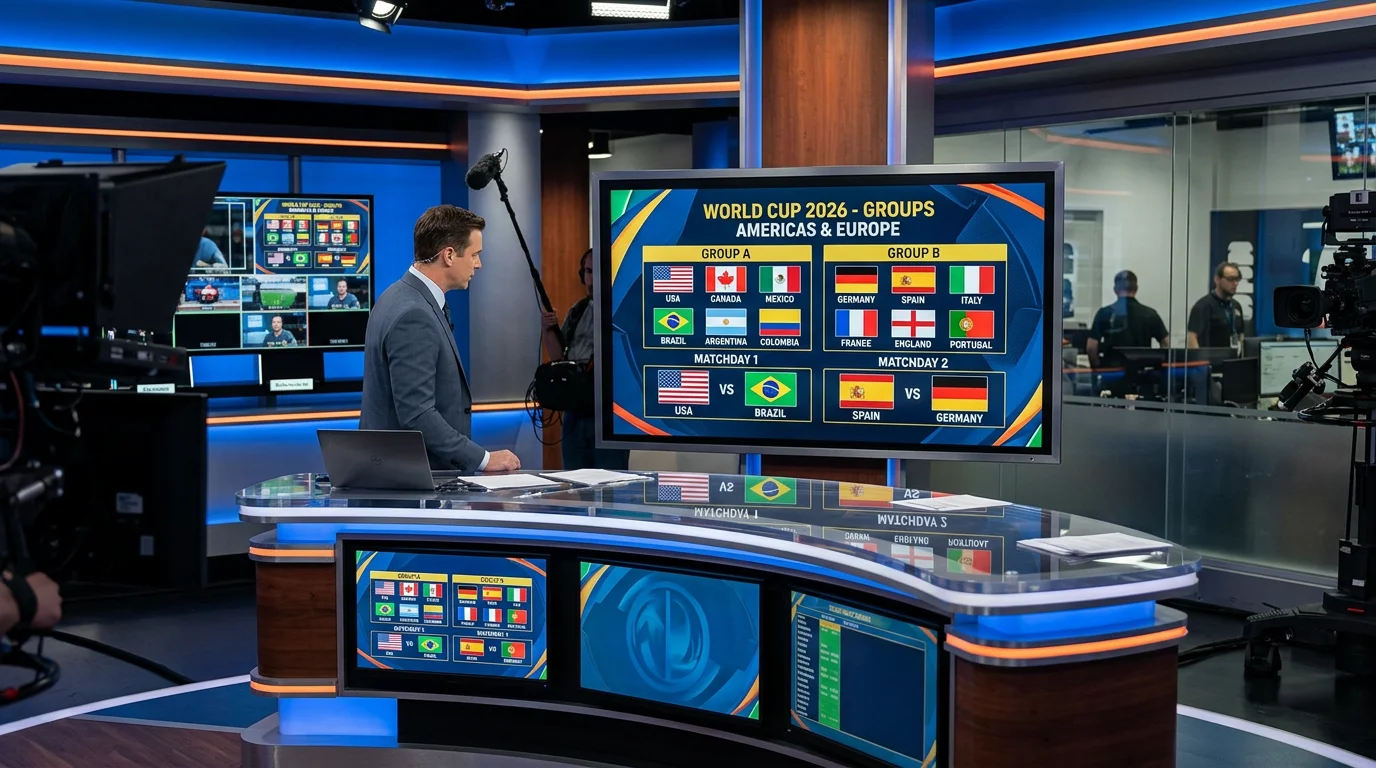
Group C pits Brazil against Morocco in a rematch of sorts — Morocco’s 2022 run ended in the semi-finals against France, but their journey included dismantling Belgium and Spain. The Lions of the Atlas have sustained that level since, and Achraf Hakimi, Youssef En-Nesyri, and Sofyan Amrabat remain central figures. Brazil versus Morocco on matchday one could determine the group outright. Haiti and Scotland fill the remaining spots, neither likely to threaten qualification but capable of causing problems in isolated matches. Scotland’s failure to reach the Euros still stings, and their World Cup presence offers a redemption narrative. At 1.40, Brazil to win the group is the tournament’s shortest group winner price — appropriate given the quality gap, but thin value nonetheless.
Group D showcases US home advantage in full. The Americans open against Paraguay in Kansas City before facing Australia in Houston and Turkey in Dallas. Paraguay bring the South American physicality and tactical discipline that historically troubles CONCACAF teams. Australia and the Socceroos carry trans-Tasman significance for Kiwi punters — our neighbours qualified through AFC, and their performance reflects on Oceania’s regional standing. Turkey arrived through the playoffs after a qualifying campaign that fluctuated wildly; they can beat anyone or lose to anyone depending on which squad shows up.
The United States at 1.90 to win Group D prices in home advantage but perhaps not enough. Christian Pulisic, Weston McKennie, and the young core have improved since Qatar 2022, and the support at domestic venues creates an atmosphere that cannot be replicated abroad. Turkey at 3.50 offer dark horse value — their attacking talent exceeds their market price, and a strong opening against Paraguay could position them for a group push. Australia at 5.00 suits each-way approaches: likely third place, possible qualification through the best-third route.
Across Groups A–D, the pattern emerges: hosts and CONMEBOL representatives dominate Pot 1 and Pot 2 placements, while European playoff winners and AFC qualifiers fill lower seeds. The expanded format guarantees more mismatches in early rounds, creating opportunities for punters who identify value on either side of quality gaps. Look for over/under goal markets in fixtures like USA versus Paraguay or Brazil versus Haiti — these matches should produce entertainment and clear betting angles that group winner markets do not capture.
Scan Groups E–H — Germany, Netherlands, Belgium, and Spain
Curaçao’s population is 150,000. Germany’s is 84 million. When these nations meet in Group E, the mismatch will be among the most lopsided in World Cup history — and therein lies the 48-team format’s core tension. Expanding the tournament creates historic moments for small nations while guaranteeing fixtures that lack competitive merit.
Group E gives Germany their easiest route to the knockout rounds. Curaçao made history simply by qualifying; expecting them to take points from Die Mannschaft stretches credulity past breaking point. Côte d’Ivoire, the 2023 AFCON champions, and Ecuador represent genuine opposition. The Ivorians’ attacking trio of Nicolas Pépé, Sébastien Haller, and Simon Adingra can threaten Germany if Die Mannschaft’s defensive vulnerabilities persist. Ecuador qualified comfortably through CONMEBOL, their pragmatic approach under Félix Sánchez built on the same principles that frustrated Argentina in qualifying. Germany at 1.35 to top the group offers no value. The betting opportunity lies in match markets — Germany to win by 5+ goals against Curaçao, Ecuador to draw with Côte d’Ivoire, or over 3.5 goals in the group’s opener.
Group F presents a fascinating tactical contrast. Netherlands’ disciplined, counter-attacking approach under Ronald Koeman meets Japan’s high-pressing intensity and Sweden’s physical directness. Tunisia complete the group as experienced tournament competitors unlikely to threaten qualification but capable of frustrating superior opponents. The Dutch enter as favourites, but their squad lacks the attacking dynamism that previous generations possessed. Cody Gakpo shoulders the goalscoring burden, and when he fails to deliver, alternatives are unconvincing.
Japan deserve close attention in Group F. Their 2022 World Cup run — victories over Germany and Spain in the group stage — announced a tactical evolution years in the making. Hajime Moriyasu’s squad press with an intensity that European teams struggle to handle, and their movement off the ball creates overloads that basic defensive shapes cannot counter. Japan at 2.75 to win Group F underrates their ceiling. The match against Netherlands on matchday two could be the group’s decisive fixture; if Japan win that, they cruise to top spot. Sweden at 5.00 offer speculative value if Viktor Gyökeres arrives in the form that has made him Europe’s most prolific striker over the past 18 months.
Group G is the All Whites’ pool, analysed in detail below. But viewed from a neutral perspective, it presents intriguing dynamics. Belgium’s “golden generation” faces their final major tournament with squad depth declining visibly. Egypt’s reliance on Mohamed Salah continues — he can still single-handedly change matches when motivated, but his defensive workrate has diminished with age. Iran bring experience from multiple World Cup campaigns and a style that neutralises superior opponents through compact defending and clinical transitions. New Zealand enter as clear underdogs but not embarrassing ones. The group’s outcome likely hinges on whether Belgium’s experience overcomes their declining physical capacity and whether Salah chooses this tournament to deliver one last great international performance.
Group H positions Spain as overwhelming favourites against Cabo Verde, Saudi Arabia, and Uruguay. The Euro 2024 champions possess the deepest squad in the tournament, and their tactical flexibility under Luis de la Fuente allows them to dominate possession or counter-attack depending on opposition. Uruguay’s presence adds quality — Darwin Núñez and Federico Valverde can trouble any defence — but La Celeste have struggled to replicate their Copa América form in recent qualifiers. Saudi Arabia’s home World Cup heroics (that opening win over Argentina) feel distant, and their squad has not improved since. Cabo Verde make history simply by participating.
Spain at 1.30 to win Group H is the tournament’s most confident market price. The value lies elsewhere: Uruguay to finish second at 1.80 offers near-certainty, while the match between Spain and Uruguay should provide over/under opportunities given both teams’ attacking quality. Saudi Arabia to collect a single point across three matches around 2.00 represents dark-horse backing for punters who remember their 2022 upset potential. Cabo Verde’s journey ends in this group — enjoy it for the narrative rather than the betting opportunities.
Groups E–H collectively favour European Pot 1 seeds, but the 48-team format’s quirks create pockets of value. Japan’s undervaluation in Group F, Uruguay’s clear path to second in Group H, and the unpredictability of Group G’s middle positions all warrant attention. These four groups should produce the clearest qualification outcomes — only Group G carries genuine uncertainty about which two teams advance.
Scan Groups I–L — France, Argentina, Portugal, and England
Iraq qualified for their first World Cup since 1986, defeating Bolivia in the FIFA playoff to end a 38-year absence. Their reward? Group I alongside France, Senegal, and Norway — arguably the tournament’s most challenging group for an underdog. The Lions of Mesopotamia face matches against Kylian Mbappé, Sadio Mané, and Erling Haaland in consecutive weeks. The narrative alone makes Iraq worth watching; the betting calculus offers fewer opportunities.
France dominate Group I as clear favourites, but their path is not entirely straightforward. Senegal possess the defensive organisation and transition speed that caused France problems at the 2022 World Cup before a narrow 2-1 victory. Norway’s inclusion through the playoffs adds Haaland — the world’s most prolific goalscorer — to a squad that otherwise lacks tournament pedigree. The France versus Norway match could generate entertainment regardless of outcome: Mbappé’s pace against Norway’s defensive depth, Haaland’s aerial threat against France’s centre-backs. Iraq complete the group as plucky underdogs whose competitive approach will make them hard to beat even when outclassed.
France at 1.50 to win Group I feels appropriately priced. The value lies in match markets: Senegal to cover a +1.5 Asian Handicap against France, Norway’s over 2.5 goals across the group stage, Iraq to avoid defeat in at least one match at around 3.00. Senegal at 3.50 to finish second rewards those who trust their AFCON-winning core to outperform Norway despite the Haaland factor. The group’s matches should produce goals given attacking talent across all four teams — tournament over/under markets deserve attention.
Group J presents Argentina’s defence of their title against Algeria, Austria, and Jordan. The defending champions face a path that looks manageable on paper but carries hidden challenges. Algeria’s African qualifying campaign showed defensive resilience that translates to tournament football; they will sit deep and counter against Messi and company. Austria’s high-pressing system under Ralf Rangnick has embarrassed better teams than their ranking suggests. Jordan, making their World Cup debut, offer West Asian representation and a squad that surprised in the AFC qualifiers.
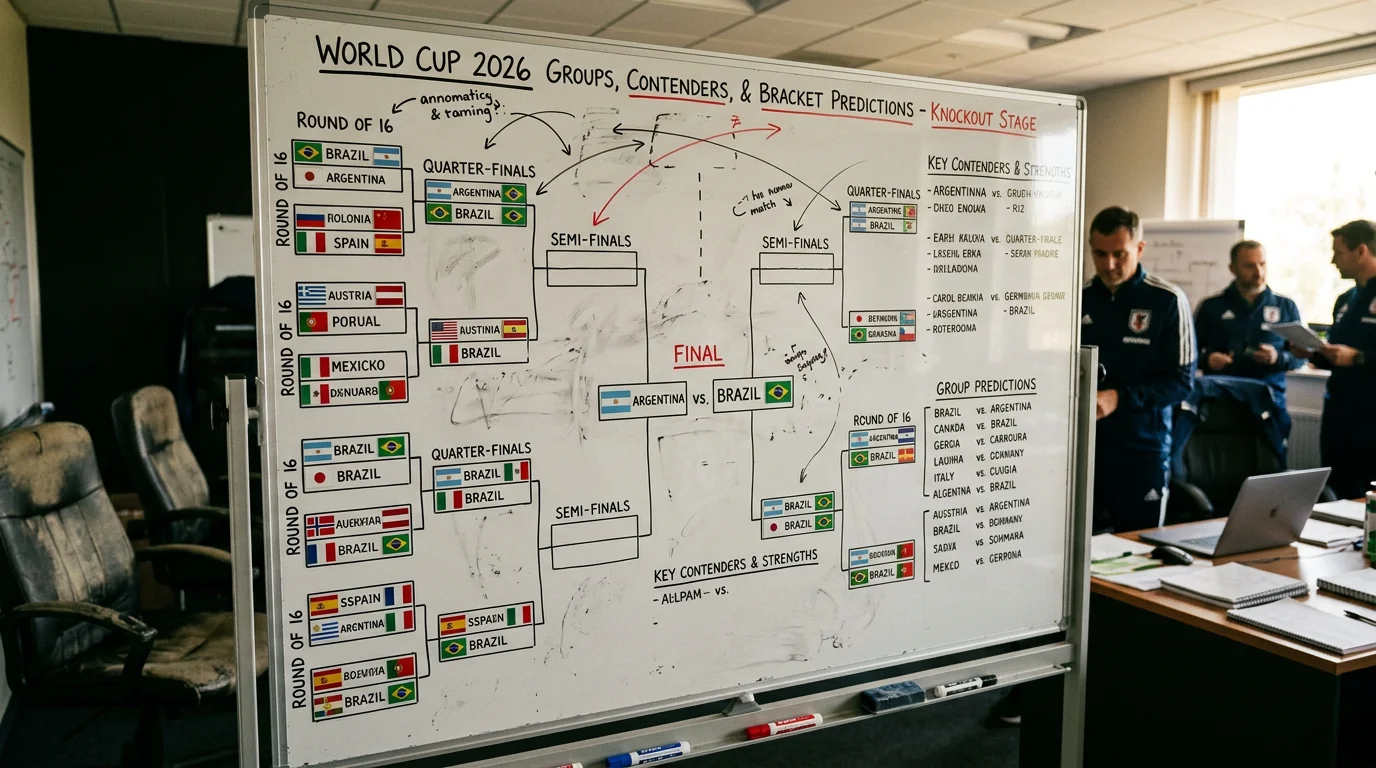
Argentina at 1.40 to win Group J carries the weight of defending champion expectations. The market prices their dominance efficiently, leaving little value in straightforward group bets. Instead, examine match-specific angles: Algeria to draw with Austria (both teams capable, neither dominant), Jordan to score in each match around 2.50, over 2.5 goals in Argentina’s opener against Algeria given both teams’ attacking inclinations. The group’s second-place race offers more intrigue — Austria at 2.50 and Algeria at 2.80 are essentially a coin flip, with Algeria’s defensive solidity giving them a slight edge over Austria’s more open approach.
Group K pairs Portugal with DR Congo, Uzbekistan, and Colombia in what looks like a straightforward path on paper. The reality is messier. DR Congo qualified through the FIFA playoffs after a strong CAF campaign, and their squad includes several players plying their trade in top European leagues. Colombia’s CONMEBOL qualifying run was inconsistent — brilliant victories over Brazil alongside head-scratching defeats against Peru. Uzbekistan bring Central Asian representation and a defensive system that can frustrate superior opposition for extended periods. Portugal remain favourites, but Roberto Martínez’s tactical approach — possession-heavy with slow build-up — can struggle against teams that sit deep and counter.
Portugal at 1.55 to win Group K is fair value without being generous. Colombia at 2.60 to finish second offers reasonable odds for a team with genuine quality if inconsistency does not derail them. The speculative bet: Uzbekistan to finish third above DR Congo at even money — their AFC qualifying campaign showed more tactical sophistication than Congo’s CAF run. Match markets in this group should favour unders in fixtures involving Uzbekistan, whose defensive approach limits open play.
Group L is the “death group” designation that every World Cup requires. England, Croatia, Ghana, and Panama create a pool where even the weakest team — Panama — reached the knockout rounds in 2018. Croatia’s third-place finish in Qatar 2022 came against all expectations; dismissing them now invites the same mistake. Ghana’s African qualifying campaign featured a new generation of talent replacing the Ayew brothers’ era, though whether that youth translates to World Cup performance remains unproven. England enter as favourites but carry their traditional burden of tournament underperformance.
England at 1.80 to win Group L is too short given Croatia’s proven ability to rise in major tournaments. The value lies in Croatia at 2.75 to top the group — backing Luka Modrić’s final World Cup run to produce another surprise. Ghana at 7.00 offers long-shot value if their young squad clicks immediately; the match against Panama on matchday one becomes crucial for their qualification hopes. Panama at 15.00 to qualify from the group represents pure speculation, but their 2018 run shows underdog mentality can overcome talent gaps in isolated matches. This group warrants multiple small stakes across different outcomes rather than confidence in any single selection.
Dive Into Group G — the All Whites’ Path
Chris Wood watched the World Cup draw from Nottingham, his club commitments preventing attendance at the FIFA ceremony in Switzerland. When New Zealand landed in Group G with Belgium, Egypt, and Iran, the All Whites captain reportedly texted teammates: “Iran first. That’s the one.” He was right. The entire All Whites campaign hinges on that opening fixture in Los Angeles.
Belgium enter as Pot 1 seeds but arrive diminished from their 2018 semi-final peak. Kevin De Bruyne’s injuries have accumulated, limiting his influence to specific matches rather than tournament-long dominance. Romelu Lukaku’s goalscoring remains elite when fit, yet fitness has been precisely his problem. Thibaut Courtois provides world-class goalkeeping, but the outfield players around these three have aged without adequate replacement. Amadou Onana and Jérémy Doku represent Belgium’s future, but neither has proven themselves in major tournaments. For betting purposes, Belgium to win the group at 1.60 prices their reputation more than their current form warrants.
Egypt bring Mohamed Salah — and honestly, Salah is enough to change any group’s dynamics. His Premier League form with Liverpool shows no decline, and when motivated, he can single-handedly dismantle defences. The concern lies in Egypt’s supporting cast: no other attacker threatens at his level, and their midfield lacks creativity when opponents double-mark Salah out of matches. Egypt at 3.00 to win Group G offers value if you believe Salah will choose this tournament for one last great international performance. Their 2:1 World Cup record (loss to Russia, victory over Saudi Arabia in 2018) provides limited historical guidance.
Iran represent the most dangerous opponent for New Zealand’s ambitions precisely because they occupy the same competitive band. Team Melli qualified through AFC with a campaign built on defensive solidity and clinical finishing from limited chances. Mehdi Taremi provides the attacking focal point, his Champions League experience with Inter adding big-game pedigree. Iran have competed in multiple World Cups without advancing from the group stage, but each campaign demonstrated competitive performances against superior opposition. Their 2022 matches — a loss to England, victory over Wales, narrow defeat to the USA — showed a team capable of troubling anyone when their defensive shape holds.
New Zealand’s best-case scenario involves taking points from Iran (draw or win), competing closely against Egypt (draw or narrow loss), and avoiding humiliation against Belgium (keeping the scoreline respectable). That sequence could yield two to four points — potentially enough for third place and a best-third knockout berth depending on other groups’ results. The complete Group G preview breaks down each matchup with specific betting recommendations. From this pillar perspective, Group G offers clear hierarchy betting: Belgium first, Egypt second, Iran/New Zealand battling for third. The Iranian match on 16 June in Los Angeles determines whether the All Whites’ World Cup becomes a celebration or a lesson.
Understand Best Third-Place Scenarios
Portugal’s Euro 2016 triumph came despite finishing third in their group with three draws. The best third-place rule saved a team that went on to lift the trophy. At the 2026 World Cup, eight of twelve third-placed teams will advance to the Round of 32 — a calculation that changes everything about how we assess group stage betting and team survival chances.
The mathematics favour teams that collect points even without winning matches. Three points (one win or three draws) almost certainly guarantees advancement as a best third. Four points (one win and one draw, or four draws if goal difference allows a fourth match somehow) locks in qualification with room to spare. Even two points might be enough in a tournament where some groups produce clear hierarchies and others generate chaos.
For All Whites punters, the best-third pathway represents the realistic ceiling. New Zealand finishing above Egypt or Belgium would constitute a miracle; finishing third requires only avoiding last place against Iran while collecting a point or two elsewhere. The draw against Iran becomes paramount not just for direct competition but for the points that could separate third and fourth globally. A team finishing third with one point almost certainly misses the knockout rounds. A team finishing third with three points almost certainly advances.
Historical precedent from Euro tournaments (which used the 24-team, six-group format with four best thirds advancing) suggests the cut-off hovers around three points with decent goal difference. At the 2026 World Cup, the eight-from-twelve advancement rate raises that floor slightly — more teams survive, so the weakest third-placed teams face less scrutiny. My modelling suggests two points with a goal difference of minus-two or better should be sufficient for advancement in most scenarios.
The betting angle: “team to qualify” markets for nations like New Zealand, Uzbekistan, Jordan, or Panama price in group-winner and second-place probabilities too heavily. These teams’ realistic paths run through third place, not above. If you can find discrepancies between “to qualify from group” prices and implied third-place advancement probabilities, value exists. New Zealand to qualify at 4.00, for instance, might underrate a scenario where they take three points, finish third, and advance through the best-third mechanism.
Track other groups’ progress throughout the stage. If Groups A and B produce clear two-team races with the third-place finisher on zero or one point, the path widens for third-placed teams elsewhere. Conversely, if multiple groups generate three-way battles for second place, the third-place quality threshold rises. Dynamic betting during the group stage — adjusting positions as results come in — exploits these shifting probabilities better than pre-tournament outrights can.
Pick Your Group Bets — Value in Each Pool
Markets price group winners efficiently because casual punters bet on them heavily. The value typically lies elsewhere — in second-place finishers, qualification props, and specific match outcomes that feed into group standings. Here is my selection across all twelve pools, targeting prices that exceed underlying probability.
Group A: South Korea to finish above Mexico at 2.40 offers value. The Koreans’ tactical discipline and tournament experience (semi-final 2002, round of 16 in 2010 and 2022) exceed Mexico’s historical ceiling. El Tri have not escaped the last sixteen since hosting in 1986; backing them to finally break through requires faith their historical pattern reverses.
Group B: Canada to win the group at 2.75 exploits home advantage and squad quality. Bosnia’s upset potential creates uncertainty, but if Switzerland’s limitations show early, Canada can capitalise. Switzerland to finish third at 4.50 represents a contrarian play on their attacking deficiency catching up with them.
Group C: Morocco to beat Brazil in their head-to-head match at 5.50 offers one-off value. The 2022 World Cup showed Morocco can compete with anyone; a single match against Brazil — especially if Seleção rotate before a knockout — creates upset potential. Brazil to win the group is the tournament’s safest group-winner bet but offers no value at 1.40.
Group D: Australia to finish third above Turkey at 2.00 suits risk-averse punters. The Socceroos’ defensive organisation and tournament experience should translate to disciplined performances that accumulate points without spectacular results. USA to win the group at 1.90 is reasonable but not generous given home advantage.
Group E: Côte d’Ivoire to finish second above Ecuador at 2.20 backs their AFCON-winning pedigree over South American pragmatism. Germany to win every group match at 2.50 offers straightforward value given Curaçao’s limitations and their likely domination of weaker opponents.
Group F: Japan to win the group at 2.75 remains underpriced despite their 2022 heroics. Their pressing system troubles European opponents who expect possession dominance. Netherlands to fail to win the group at 1.80 provides a hedge if Japan’s value materialises.
Group G: Iran to finish above New Zealand at 1.70 prices the head-to-head favourite correctly. The speculative play: Egypt to win the group at 3.00 if you trust Salah to dominate and Belgium’s decline to accelerate.
Group H: Uruguay to finish within one point of Spain at 2.80 backs their South American quality in a group that should otherwise be comfortable for the Europeans. Saudi Arabia to beat Cabo Verde at 1.60 offers near-certainty for bankroll building.
Group I: Senegal to qualify at 1.50 is the section’s safest bet. Their defensive quality should secure second place behind France regardless of Norway’s Haaland threat.
Group J: Algeria to draw at least one match against Argentina or Austria at 1.90 trusts their tournament defensive approach to frustrate superior opponents. Austria to finish above Algeria at 2.10 backs pressing intensity over defensive resilience.
Group K: Colombia to top the group at 4.50 requires Portugal to falter — unlikely but not impossible given their slow build-up vulnerability. Uzbekistan to collect at least two points at 2.20 backs their defensive quality against a favourable draw.
Group L: Croatia to win the group at 2.75 remains the tournament’s best value among European contenders. England’s historical struggles and Croatia’s proven tournament pedigree suggest the market underrates Modrić’s final act.
Your Group Stage Roadmap Starts Here
Twelve groups, 48 teams, and 48 matches before the knockout rounds even begin. The volume of action creates paralysis for punters who try to bet everything; success requires focusing on specific angles that compound across multiple outcomes.
Start with the structural edges: home advantage for USA, Canada, and Mexico; third-place advancement probabilities that markets undervalue; head-to-head mismatches where quality gaps create predictable outcomes. Layer in tactical analysis — pressing teams against possession sides, counter-attackers against high lines, aerial threats against short defences. The combinations generate betting opportunities that single-market analysis misses.
For Kiwi punters, Group G demands primary attention. The Iran match shapes everything; the Egypt fixture offers a secondary opportunity; the Belgium game probably serves as damage limitation. But do not ignore other groups while watching the All Whites. Japan versus Netherlands, Croatia versus England, Morocco versus Brazil — these fixtures carry betting value regardless of Kiwi allegiance.
The group stage is a marathon disguised as a sprint. Pace your bankroll, track results across all pools, and adjust positions as probabilities shift. Forty-eight teams enter; thirty-two advance. Finding edge means understanding which teams belong in the knockout rounds before markets catch up.
