
Back England at World Cup 2026 — Odds, Squad & Path
 Available in US
Loading...
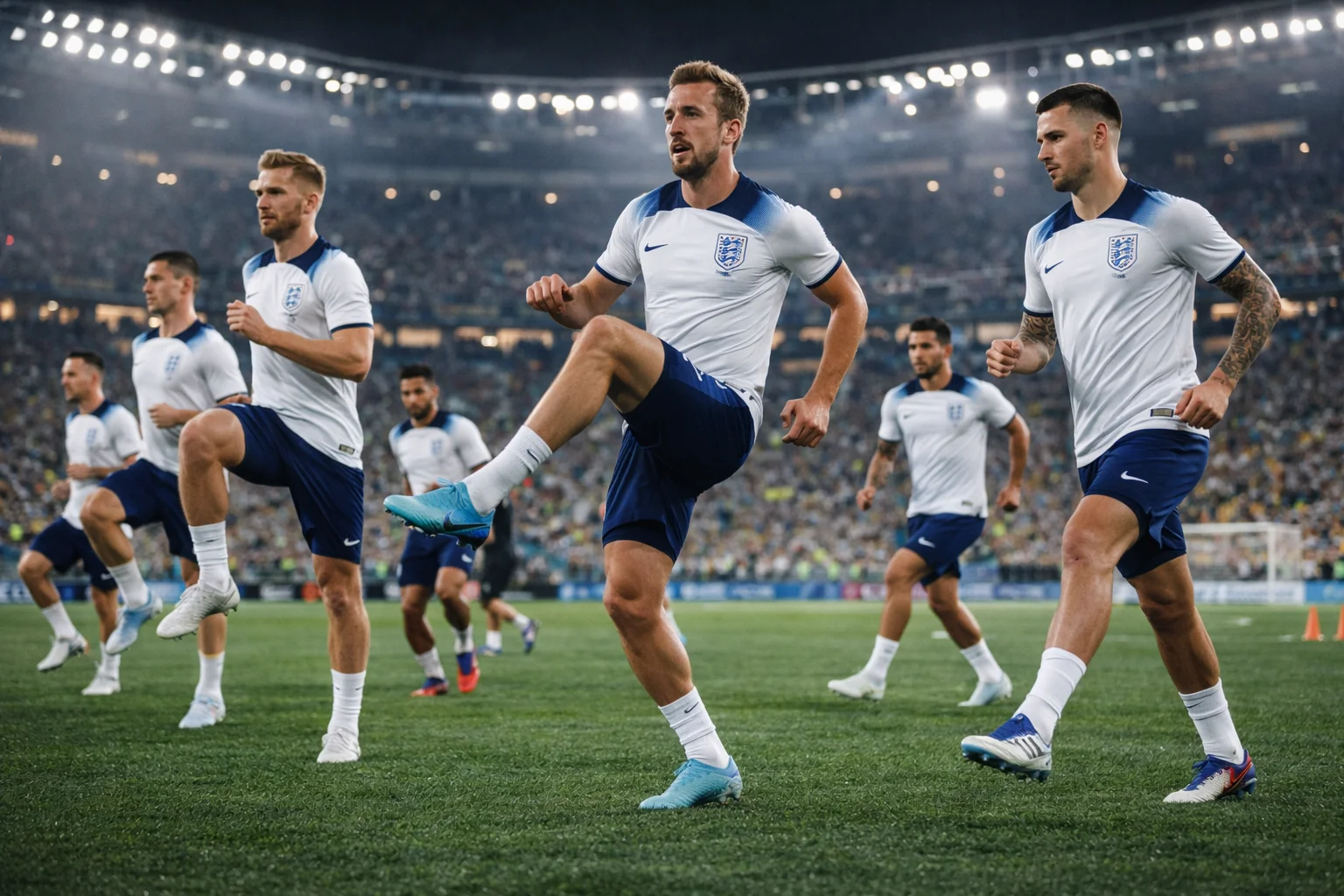
Sixty years. That is how long England have been dining out on a single World Cup victory — 1966, Wembley, Geoff Hurst’s hat-trick — while every subsequent generation has been measured against that golden afternoon and found wanting. Semi-final in 2018. Final of Euro 2020. Quarter-final in 2022. The pattern under Gareth Southgate was progress without consummation: always close, never quite there. Now England enter the 2026 World Cup under new management, with a squad that many pundits rate as the best collection of individual talent the country has produced since the mid-2000s generation of Gerrard, Lampard, and Rooney. Group L — Croatia, Ghana, Panama — offers a manageable path to the knockout rounds. What happens after that is the question that has haunted English football for six decades.
For Kiwi punters watching from the other side of the world, England are a familiar presence in the outright market: always among the top five or six in the betting, always carrying the weight of history and hope. This guide strips away the narrative and examines whether backing England at the 2026 World Cup is justified by the data, the squad, and the odds available on TAB NZ.
TL;DR: England Betting Snapshot
- Perpetual contenders — semi-finals, finals, quarter-finals at the last three major tournaments, but no trophy since 1966.
- Group L opponents: Croatia, Ghana, Panama. England should qualify as group winners.
- Jude Bellingham and Bukayo Saka lead a squad dripping with Premier League talent across every position.
- Outright odds around 7.00 to 9.00 — longshots relative to Argentina and France, but still among the top tier.
- Our angle: the new manager bounce could be real. England’s value is best captured in the “to reach the semi-finals” market rather than the outright, where the historical bottleneck at the final hurdle makes the price unattractive.
Check How England Qualified
England qualified through the UEFA pathway as group winners, which sounds straightforward until you examine the details. The post-Southgate era began with a rocky transition: a defeat in the first competitive match under the new manager, tactical confusion about the best formation, and a public debate about whether the squad’s abundance of attacking talent was actually a strategic liability. By the midpoint of qualifying, England had steadied. Six consecutive wins, 18 goals scored, three conceded — the numbers improved rapidly once the coaching staff settled on a preferred starting eleven and a consistent tactical approach.
The qualifying campaign’s most encouraging feature was the improvement in defensive structure. England’s vulnerability under Southgate was always in the transition from attack to defence, particularly through the wide channels where the full-backs pushed high and left space behind them. The new coach addressed this by implementing a more disciplined pressing system where the full-backs’ forward runs are staggered — one pushes high while the other tucks in alongside the centre-backs to form a temporary back three. That adjustment, simple as it sounds, reduced England’s expected goals conceded per match from 1.2 under Southgate’s final campaign to 0.7 in the qualifying cycle. The defence is not impregnable, but it is significantly more organised than the version that leaked goals against France in the 2022 quarter-final.
For punters, the qualifying data supports the thesis that England are a genuine contender, not just a sentimental favourite. The goals-scored and goals-conceded numbers are comparable to France and only slightly behind Argentina. England’s underlying performance metrics — expected goals, pressing efficiency, possession in the final third — all sit in the top five across European qualifying, suggesting the results were built on consistent quality rather than fortunate scorelines.
Rate the Squad — Bellingham, Saka and the New Guard
Jude Bellingham at 22 is already one of the best midfielders in the world. His ability to arrive late in the penalty area and score goals — a skill that evokes memories of Frank Lampard at his peak — makes him uniquely dangerous for a midfielder. Bellingham scored the goal that saved England at Euro 2024 with an overhead kick in the dying seconds against Slovakia, and that moment encapsulated everything he brings: physical power, technical brilliance, and the sheer force of will to refuse defeat. At the World Cup, Bellingham will operate as the advanced midfielder in a three-man unit, with licence to push into the box when England attack and responsibility to press the opponent’s deepest midfielder when defending. His goal threat from midfield is an asset that Argentina, France, and Brazil do not have in the same measure.
Bukayo Saka has evolved from a promising teenager at Euro 2020 into one of the Premier League’s most devastating wide forwards. His ability to beat defenders on either side — cutting inside onto his left foot or driving to the byline on his right — makes him almost impossible to defend one-on-one. Saka’s crossing and passing from wide positions have improved significantly over the past two seasons, and his work rate in tracking back to help the right-back defensively is an underappreciated part of his game. At the 2026 World Cup, Saka will be 24 and entering the phase of his career where tournament performances define legacies. His odds for the Golden Boot are long — typically 15.00 to 20.00 — and while he is not a pure goal poacher, his combined goal-and-assist numbers make him one of the more interesting speculative plays in the player markets.
Phil Foden occupies the left-sided attacking role and provides the creative spark that England have historically lacked from wide positions. Foden’s close control in tight spaces, his ability to combine with overlapping full-backs, and his eye for the final pass make him the player most likely to unlock deep-lying defences in the group stage. His inconsistency in an England shirt — brilliant in patches, invisible in others — is the concern. If the new manager has found a way to integrate Foden’s club form into the international setup, England’s attacking threat becomes genuinely frightening. If not, the left flank remains a position where England’s potential exceeds their output.
Harry Kane enters what is almost certainly his final World Cup at 32, still a prolific goalscorer but no longer the player who drops deep and orchestrates play as effectively as he did in 2018 and 2022. Kane’s role has shifted toward a pure penalty-box striker — holding his position centrally, attacking crosses, and finishing the chances that Bellingham, Saka, and Foden create. His heading ability, penalty record, and composure in front of goal make him a reliable source of goals, and his experience in high-pressure tournament matches is an intangible asset that younger strikers like Ivan Toney or Ollie Watkins cannot replicate. Kane’s Golden Boot odds at around 12.00 to 15.00 are interesting if you believe England will go deep and create volume.
Defensively, the squad is deeper than any England side I can remember. John Stones and Marc Guehi form a centre-back pairing that combines Premier League experience with pace and aerial ability. Trent Alexander-Arnold, if deployed at right-back, provides a unique weapon — his passing range from the full-back position is unmatched in international football, and his ability to switch play from right to left with a single 50-yard diagonal changes the geometry of England’s attacks. The trade-off is defensive vulnerability: Alexander-Arnold is not as disciplined positionally as Kyle Walker, and against quick, direct wingers his side of the pitch can be exposed. The manager’s choice between attacking upside and defensive reliability at right-back will be one of the defining selection decisions of England’s tournament.
Declan Rice anchors the midfield, providing the defensive screen that allows Bellingham to push forward. Rice’s ability to read the game, intercept passes, and distribute cleanly from deep positions has made him one of the Premier League’s most valuable defensive midfielders. His partnership with Bellingham is the fulcrum of England’s system: Rice protects the defence, Bellingham attacks the box, and the balance between the two determines whether England look like contenders or pretenders on any given day.
Read the Tactical Setup Under the New Manager
The Southgate era was defined by caution — a back three or back five in big matches, deep defensive lines, and a willingness to sacrifice attacking territory for structural security. The new manager has moved decisively in the opposite direction. England’s base shape is a 4-3-3 that asks the front three to press aggressively and the midfield to push high up the pitch in possession. The full-backs are more adventurous, the defensive line is higher, and the emphasis is on controlling matches through possession rather than absorbing pressure and counter-attacking.
The system is designed to maximise Bellingham’s goal threat. When England have the ball in the final third, the attacking structure collapses into a narrow shape with Saka, Foden, and Kane occupying central and half-space positions while the full-backs provide width. Bellingham times his runs from midfield to arrive at the edge of the penalty area as the ball enters the danger zone, either meeting crosses or receiving cut-backs. This pattern — wide build-up, narrow finishing — was the most productive attacking sequence in England’s qualifying campaign and is the foundation of the 2026 game plan.
Defensively, the higher line introduces risk. England are more exposed to long balls in behind than they were under Southgate, and the pace of the centre-backs becomes critical. Stones’ positional intelligence compensates for his declining sprint speed, but against opponents with genuine pace up front — which describes most teams at a World Cup — the gap between England’s high defensive line and their goalkeeper can be exploited. The coaching staff have addressed this by drilling a specific recovery shape: when the high line is beaten, the centre-backs drop sharply while the full-backs squeeze inside to form a narrow back four that funnels the attack into central areas where the goalkeeper can narrow the angle. The system works well in theory and looked solid during qualifying. Whether it holds against the speed and quality of a knockout-round opponent remains untested.
Break Down Group L — Croatia, Ghana, Panama
Group L is kind to England but not generous. Croatia are a serious opponent. Ghana bring pace and physical intensity. Panama will defend deep and fight for every ball. The path to nine points is clear, but five or seven is more realistic — and the specific results will determine England’s knockout-bracket position.
Croatia remain a formidable tournament team even as the generation of Modric, Perisic, and Brozovic enters its final act. Luka Modric at 40 — if he is selected — will play a limited role, but Croatia’s midfield tradition runs deeper than one player. Mateo Kovacic, Marcelo Brozovic, and younger talents in the pipeline ensure Croatia will control possession in phases and compete in midfield against any opponent. The danger for England is Croatia’s ability to slow the game down, deny transitions, and frustrate the Three Lions into impetuous attacking play that leaves gaps at the back. England vs Croatia is a tactical chess match, and the outcome likely hinges on whether Bellingham can find space between Croatia’s midfield lines. A 1-0 or 2-1 England win is the most probable scoreline, with a draw entirely possible if Croatia execute their game plan to perfection.
Ghana bring a different challenge: raw athleticism, pace on the wings, and an unpredictability that comes from a squad with nothing to lose. The Black Stars have been rebuilding since their 2022 World Cup exit and arrive in 2026 with a younger, hungrier squad that views the tournament as an opportunity to announce a new generation of Ghanaian football talent. England should win this match comfortably — the quality gap across the pitch is significant — but Ghana’s pace on the counter and set-piece quality mean a clean sheet is not guaranteed. Expect a 2-0 or 3-1 English victory, with the first half tighter than the scoreline suggests.
Panama are the group’s underdogs, qualified through CONCACAF and playing at their second World Cup after their 2018 debut in Russia. Panama’s approach will be entirely defensive: two banks of four, minimal pressing, and an acceptance that possession will belong to England for 70 per cent of the match. The risk is complacency — England’s history of underperforming against lower-ranked opponents in tournament group stages (Iceland 2016, Scotland at Euro 2020) serves as a cautionary tale. If the Three Lions remain focused and clinical, they should win 3-0 or 4-0. If not, a frustrating 1-0 or 2-0 is more likely.
For punters, the key group bet is England to qualify with a game to spare — if they beat Croatia and Ghana in the first two matches, the Panama fixture becomes a dead rubber where rotation and rest take priority. That scenario affects the Panama match odds significantly and creates value on the underdogs in a match where England’s second-choice players may struggle to break down a deep defensive block.
Evaluate England’s Odds — Always the Bridesmaid?
England’s outright World Cup winner odds on TAB NZ sit around 7.00 to 9.00, placing them in a second tier behind Argentina and France but ahead of Germany, Spain, and the Netherlands. Those odds imply a win probability of 11 to 14 per cent. My own assessment is slightly lower — around 10 to 12 per cent — because England’s historical record in tournament semi-finals and finals shows a consistent pattern of falling short at the decisive moment. The talent is there. The composure in the biggest matches has not been, and until England prove they can win a final under pressure, the market should price them as a slight underdog relative to Argentina and France in the closing stages.
The “to reach the semi-finals” market is where England’s odds look most attractive. At around 2.20 to 2.80, you are getting implied probabilities of 36 to 45 per cent on a team I rate at 45 to 55 per cent to make the last four. England’s squad depth, the manageable group draw, and the likely knockout-bracket path — which avoids the strongest teams until the quarter-finals — all support a deep run. The semi-final market captures England’s quality while sidestepping the semi-final-to-final bottleneck that has plagued them historically.
Player markets are worth exploring too. Bellingham for the Golden Ball (tournament’s best player) at long odds is a speculative play that depends on England reaching the final and Bellingham producing multiple man-of-the-match performances along the way. Kane for the Golden Boot at 12.00 to 15.00 offers value if you believe England will create enough chances across seven matches for his finishing to accumulate a competitive goal tally. Saka for the Young Player Award, if offered, is another angle — though the age cutoff for that award would need checking.
Find Value Bets for England Backers
I have three specific plays on England for the 2026 World Cup that I rate as positive expected value.
The first is England to reach the semi-finals at odds above 2.50. As outlined above, the probability of England making the last four is higher than the market implies, driven by the group draw, squad depth, and the new manager’s tactical improvements. This is my primary England bet — moderate stake, moderate return, high confidence.
Second, Bellingham to score in two or more group matches. His advanced positioning in England’s system, combined with opponents who will struggle to track his late runs into the box, makes multi-match goalscoring highly probable. If this is offered as a specific prop at odds around 3.00 to 4.00, it is a strong play. Alternatively, backing Bellingham as anytime goalscorer in each group match individually and looking for value in the Croatia fixture (where the odds will be longest due to Croatia’s midfield quality) is a viable approach.
Third, England vs Croatia to produce under 2.5 goals. This is a tactical matchup that favours low scoring. Croatia’s midfield control slows the game, England’s new defensive discipline reduces chaotic goal sequences, and the first group match for both teams historically produces cautious football. At odds around 1.80 to 2.00, the under is a solid single-game play that reflects the likely pattern of the match rather than a speculative gamble.
Three Lions in North America — The Honest Forecast
England will win Group L with six or seven points, qualifying comfortably but not dominantly. The Round of 32 will be straightforward. The Round of 16 is where the tournament begins in earnest — likely against a second-placed team from Group K (Portugal’s group), which could mean Colombia or DR Congo. England should advance, but it will require genuine quality to overcome a well-organised opponent in a single elimination match.
The quarter-final is the fork in the road. If England face a beatable opponent — a dark horse that has overperformed to reach the last eight — they have the quality to reach the semi-finals. If they draw one of the tournament’s heavyweights — Brazil, Germany, or Spain — the match becomes a coin-flip where England’s ability to handle pressure determines the outcome. My prediction: England reach the quarter-finals, where their run ends against a technically superior opponent who exploits the space behind the high defensive line. A quarter-final exit, honourable but ultimately familiar, is the most probable outcome. For the 20-to-25 per cent chance they break through to the semis and beyond, the “to reach the semi-finals” market at 2.50 is the right bet.
