
Visit BC Place — All Whites' Group G Home in Vancouver
 Available in US
Loading...
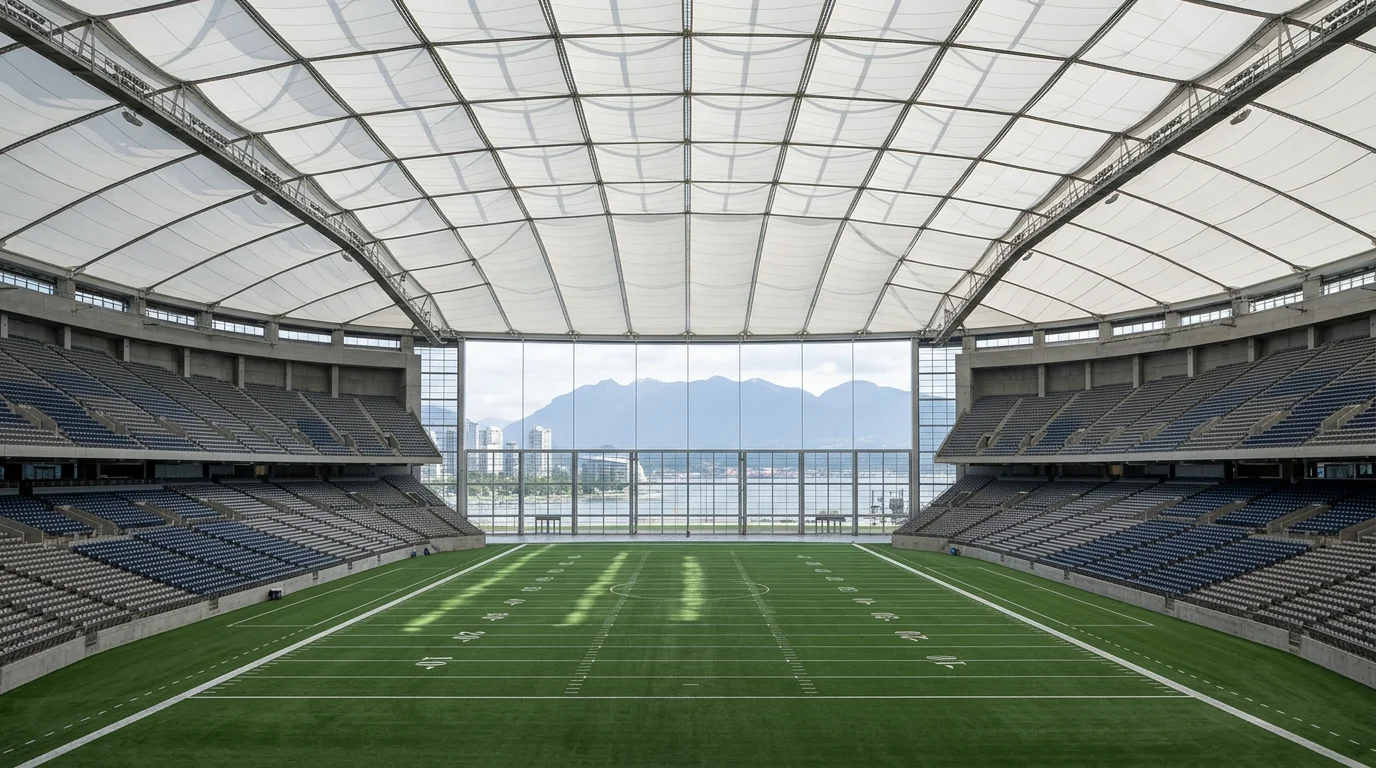
Two of the All Whites’ three Group G matches take place at BC Place in Vancouver, which makes this retractable-roof stadium in downtown British Columbia the closest thing New Zealand has to a home ground at the 2026 World Cup. On 22 June at 13:00 NZST, the All Whites face Egypt. Five days later, on 27 June at 15:00 NZST, they close the group stage against Belgium. Two matches, one venue, and a city with one of the strongest Kiwi expat communities in North America. If you are planning to follow the All Whites in person, Vancouver is where your money goes furthest and your experience peaks.
TL;DR — Venue and NZ Fixtures
- BC Place seats approximately 54,500 for football and features a retractable roof — rain or shine, the match goes ahead in comfort.
- New Zealand vs Egypt on 22 June kicks off at 13:00 NZST. New Zealand vs Belgium on 27 June kicks off at 15:00 NZST. Both are broadcast on TVNZ.
- Vancouver is accessible from Auckland via direct Air New Zealand flights to the nearby US airports or one-stop connections through Canadian carriers to Vancouver International Airport (YVR).
- BC Place sits in downtown Vancouver, walkable from most major hotels and connected by SkyTrain rapid transit.
- Budget 200 to 400 NZD per night for accommodation in Vancouver during the tournament period.
Know the Venue — BC Place by the Numbers
Every stadium guide starts with capacity and construction dates, so let me get those out of the way before telling you what actually matters. BC Place opened in 1983, underwent a major renovation in 2011 that added its distinctive retractable roof, and seats approximately 54,500 in its World Cup football configuration. It is the home ground of the Vancouver Whitecaps in Major League Soccer and the BC Lions in the Canadian Football League. The renovation cost around 563 million CAD and transformed the venue from a dated concrete dome into a modern, light-filled arena.
What actually matters for your matchday experience is this: BC Place is a downtown stadium. It sits on the north shore of False Creek in Vancouver’s entertainment district, surrounded by restaurants, bars and hotels within walking distance. Unlike MetLife Stadium in suburban New Jersey or SoFi in Inglewood, you do not need a car, a train or a shuttle to reach it — if you are staying anywhere in downtown Vancouver, you walk. That walkability changes the entire pre-match and post-match experience. You can eat at a proper restaurant two hours before kickoff, stroll ten minutes to the stadium, watch the match and walk back to your hotel or a celebration pub without ever seeing the inside of a vehicle.
The retractable roof is the other crucial detail. Late June in Vancouver averages highs of 20 to 22 degrees Celsius with a real possibility of rain — the Pacific Northwest earns its reputation honestly. The retractable roof means FIFA and the local organising committee can close the stadium in poor weather, ensuring spectator comfort and protecting the temporary natural grass surface. For players, the enclosed environment can amplify crowd noise, which works in favour of whoever brings more supporters. Given the size of the Kiwi community in Vancouver, do not be surprised if BC Place sounds more like a home ground than a neutral venue for the All Whites’ matches.
Check NZ’s Two Matches at BC Place
The first fixture, New Zealand vs Egypt on 22 June, arrives six days after the All Whites’ opener against Iran in Los Angeles. By this point, we will know the result of the Iran match and how Belgium fared against Egypt on Matchday 1. The Egypt match is pivotal — if New Zealand beat Iran in the opener, a draw against Egypt puts them on four points and in genuine contention for the knockout rounds. If they drew or lost to Iran, this becomes a must-win fixture that transforms a tournament experience into a pressure cooker.
Egypt will be formidable opponents. Mohamed Salah’s ability to unlock defences with a single moment of brilliance is the kind of threat that keeps coaches awake at night, and Egypt’s defensive structure rarely allows opponents to build sustained pressure. For New Zealand, the tactical approach will be physical, direct and built around set pieces — Chris Wood’s aerial ability against an Egyptian defence that can be vulnerable to crosses from wide areas is the matchup to watch. Kickoff at 21:00 ET translates to 13:00 NZST, another friendly lunchtime slot for Kiwi viewers at home.
The second fixture, New Zealand vs Belgium on 27 June, is the final Group G matchday. Both matches in the group kick off simultaneously at 23:00 ET (15:00 NZST), which prevents any team from knowing the other result in advance. This is the All Whites’ toughest assignment — Belgium’s squad depth and tournament experience should tell against a side competing in only their second-ever World Cup. But final matchdays produce surprises. If Belgium have already qualified, they may rest key players. If Belgium need a result, New Zealand face the full force of De Bruyne, Lukaku and company. Either way, this match is the emotional peak of the All Whites’ campaign. Win, lose or draw, the final whistle at BC Place on 27 June will be a moment that New Zealand football remembers for decades.
Explore Vancouver — Where to Stay and What to Do
I first visited Vancouver covering a Whitecaps MLS match several years ago, and the city immediately went onto my list of places I would happily base a tournament trip around. The setting is extraordinary — mountains visible from downtown streets, the Pacific Ocean a short bus ride away and a food scene that punches well above its weight for a city of 700,000 people. For Kiwis, there is an added bonus: Vancouver feels oddly familiar. The combination of mountains, ocean, mild weather and outdoor culture mirrors the best of New Zealand’s own cities, just with better sushi and a functioning SkyTrain.
For accommodation during the World Cup, downtown Vancouver is the obvious choice because of its proximity to BC Place. Hotels in the Yaletown, Gastown and West End neighbourhoods range from 250 to 500 NZD per night during peak summer. Booking early is essential — Vancouver has fewer hotel rooms than cities like Los Angeles or New York, and demand during the World Cup will be intense. Airbnb and short-term rental options in the broader metro area can bring costs down to 150 to 250 NZD per night, though you may need to commute via SkyTrain from suburbs like Burnaby or Richmond.
Between matches, Vancouver offers enough to fill your days without exhausting your budget. Stanley Park, a 400-hectare urban park on a peninsula northwest of downtown, is one of the best city parks in the world and features a seawall walking path with views of the mountains and harbour. Granville Island is a public market and arts hub where you can eat your way through local seafood, craft beer and artisan food stalls for an afternoon. If you enjoy hiking, the Grouse Grind trail is a steep, hour-long climb up Grouse Mountain that rewards you with panoramic views of the city and coastline. And if you simply want to sit in a pub and watch other World Cup matches between the All Whites fixtures, Vancouver’s bar scene has you covered — the craft beer culture here rivals anything in New Zealand.
Connect With the NZ Community in Vancouver
Vancouver is home to one of the largest New Zealand expat populations in North America. The Kiwi community here is active, well-connected and reliably enthusiastic about any occasion that involves sport and a pub. During the World Cup, expect organised viewing parties, pre-match meetups and informal gatherings at bars and restaurants throughout the city. Social media groups — search for “Kiwis in Vancouver” or “New Zealanders in BC” — are the best way to find these events.
For travelling supporters arriving from New Zealand specifically for the World Cup, connecting with the local Kiwi community offers practical benefits beyond camaraderie. Locals can recommend the best-value accommodation, the most reliable transport routes to BC Place and the restaurants where your dollar stretches furthest. They also know the city’s quirks — which neighbourhoods to avoid late at night, where to find a proper flat white and how the SkyTrain system works when event-day crowds overwhelm the stations closest to the stadium.
The All Whites supporter culture is growing but still small compared to the Barmy Army or the Orange Army. That intimacy is part of its charm. At BC Place, a few thousand Kiwis in white shirts singing together will create an atmosphere disproportionate to their numbers. If you are on the fence about making the trip, consider this: New Zealand may not play at a World Cup again for eight years. The chance to be in the stadium when the All Whites face Belgium — to witness a 21.00 longshot result or a gallant defeat — does not come around often.
Plan Your Travel from New Zealand to Vancouver
There are no direct flights from Auckland to Vancouver as of early 2026, but the connection options are straightforward. The most common routing is Auckland to Los Angeles on Air New Zealand’s direct service (approximately 12 hours), then a domestic or transborder connection to Vancouver (approximately 3 hours). Total travel time with a reasonable layover is around 18 to 20 hours. An alternative is flying Auckland to Fiji or Honolulu and connecting to Vancouver via a Canadian carrier, though these routes tend to be longer and less frequent.
If you are attending both the SoFi Stadium opener on 16 June and the BC Place matches on 22 and 27 June, the obvious itinerary is to fly into Los Angeles, attend the Iran match, then fly or drive north to Vancouver. The LA-to-Vancouver flight takes about 3 hours, and one-way fares on budget-friendly carriers can be found for 150 to 300 NZD if booked early. Driving is an option for the adventurous — the I-5 highway from LA to Vancouver covers approximately 1,900 kilometres and takes about 19 hours of driving time, best split across two days with an overnight stop in Portland or Seattle. You pass through stunning scenery along the Pacific Northwest coast, and Seattle itself is a World Cup host city (Lumen Field hosts Group G’s Belgium vs Egypt), so you could catch a third match along the way.
At Vancouver International Airport (YVR), the Canada Line SkyTrain connects the airport to downtown Vancouver in approximately 25 minutes for around 10 CAD. From downtown, BC Place is a short walk or one SkyTrain stop. Immigration into Canada requires a valid New Zealand passport and an Electronic Travel Authorization (eTA), which costs 7 CAD and can be applied for online — make sure you arrange this before departing. New Zealand passport holders do not need a visa for tourist stays under six months in Canada.
