
Visit MetLife Stadium — World Cup Final Venue NZ Guide
 Available in US
Loading...
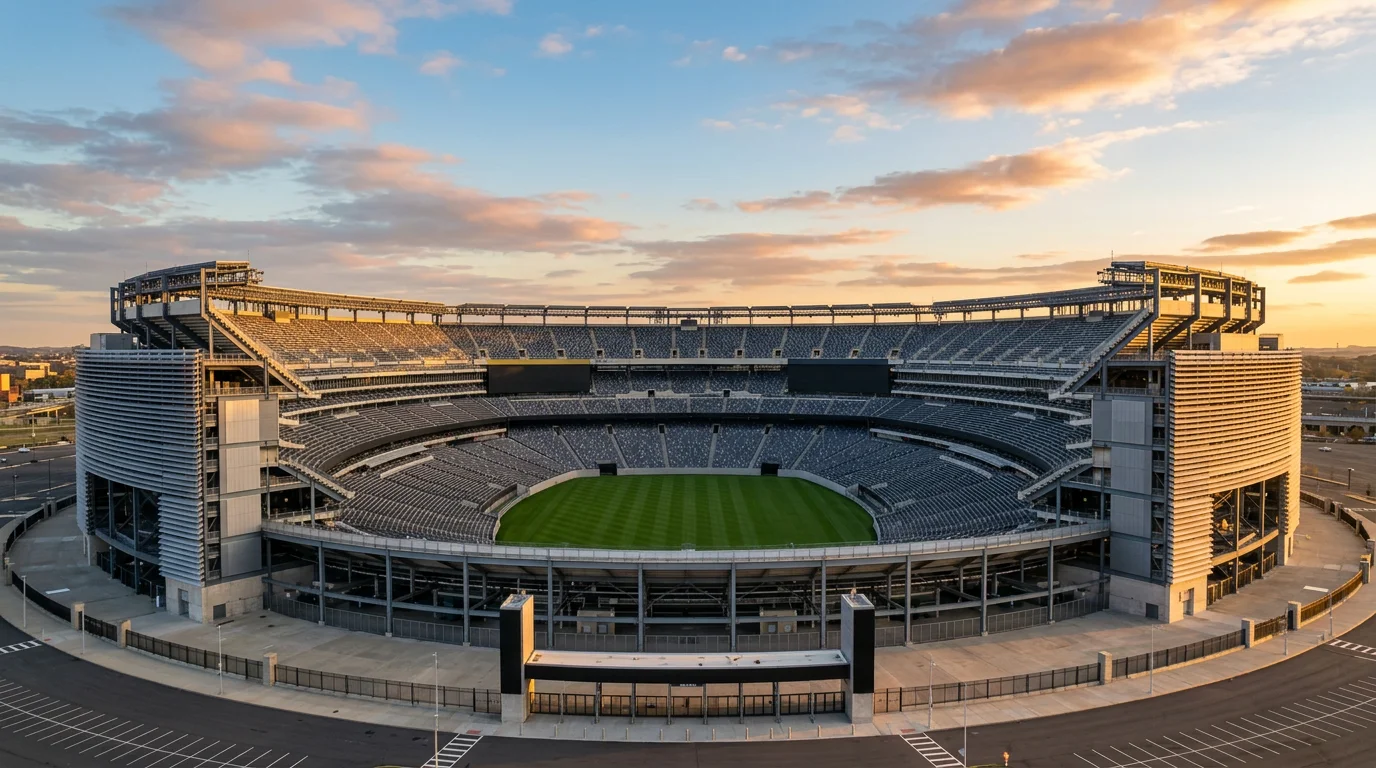
The biggest match in football will be played in a stadium that spent most of its life hosting American gridiron. MetLife Stadium in East Rutherford, New Jersey, sits eight miles west of Manhattan and will stage the 2026 FIFA World Cup Final on 19 July at 15:00 ET — which translates to 07:00 NZST the following morning. If the All Whites somehow survive Group G and make a miracle run, this is where the journey ends. Even if they do not (the realistic scenario), the final is still the crown jewel of the tournament calendar, and any Kiwi planning the trip of a lifetime to North America deserves a proper guide to the venue.
TL;DR — Venue Facts and Key Matches
- MetLife Stadium seats approximately 82,500 for football (soccer) configuration and hosts the 2026 World Cup Final on 19 July at 15:00 ET (07:00 NZST on 20 July).
- The venue also hosts group-stage matches and knockout rounds throughout the tournament — it is the busiest single venue in the competition.
- East Rutherford is accessible from Manhattan via NJ Transit trains and buses, with a journey time of roughly 30 to 45 minutes depending on the service.
- For NZ travellers, budget a minimum of three nights in the New York metro area and expect accommodation costs between 200 and 500 NZD per night depending on location and booking timing.
- The World Cup Final at MetLife is projected to break global viewership records — and the time slot means Kiwis can watch it over a Sunday morning breakfast on TVNZ.
Know the Venue — MetLife by the Numbers
When I first visited MetLife Stadium for a Copa America match in 2016, the thing that struck me was scale. Not just the seating bowl, which stretches across four tiers and wraps 360 degrees around the pitch, but the infrastructure surrounding it — parking lots that stretch to the horizon, a rail station built into the complex and concourse corridors wide enough to drive a truck through. This is American sports engineering at its most extravagant, repurposed for the world’s game.
MetLife Stadium opened in 2010 at a construction cost exceeding 1.6 billion USD, making it one of the most expensive stadiums ever built. It serves as the home ground for two NFL teams, the New York Giants and the New York Jets, which is why you will sometimes see it referred to as “the Meadowlands” after the broader sports complex it sits within. The stadium is open-air with no retractable roof, which matters for a July final — temperatures in the New York metro area during mid-July average around 30 degrees Celsius with humidity that can make it feel significantly hotter. FIFA selected a 15:00 ET kickoff to avoid the worst of the midday heat while still catching prime television hours across Europe and Asia.
For the World Cup, the seating capacity will be configured at approximately 82,500. The pitch dimensions will meet FIFA’s standard requirements of 105 by 68 metres. MetLife’s playing surface is artificial turf during the NFL season, but FIFA mandates natural grass for all World Cup matches — a temporary natural grass surface will be installed, as has become standard practice for major football events at NFL venues. The stadium sits at an elevation near sea level, so altitude is not a factor for player performance or spectator comfort, unlike some of the Mexican venues.
Check the World Cup Matches Hosted Here
MetLife Stadium is not just a final venue — it is the workhorse of the American leg of the tournament. FIFA has assigned it a heavy schedule that includes group-stage matches, Round of 32 fixtures, quarter-finals and the showpiece final. The exact group-stage allocations depend on scheduling that FIFA finalises closer to the tournament, but expect at least four to six matches before the knockout rounds even begin.
The confirmed headline fixture is the World Cup Final on 19 July 2026 at 15:00 ET. For New Zealand fans, that translates to 07:00 NZST on 20 July — early enough for a special breakfast viewing event but late enough that you do not need to set an alarm for the middle of the night. If you are in a pub in Auckland that opens early for the occasion, expect the atmosphere to rival an All Blacks test match morning.
Beyond the final, MetLife’s knockout-round matches offer opportunities to watch top-tier football at what is essentially the tournament’s flagship American venue. If you are travelling to the US for the World Cup and can only pick one city to base yourself in, the New York metro area gives you the most matches per dollar spent on flights and accommodation. Tickets for MetLife matches will be the most expensive of the tournament, particularly for the final — expect face-value prices to start at approximately 400 USD for upper-tier seats and climb well beyond 2,000 USD for lower-tier positions near the pitch.
Plan Your Trip from NZ to East Rutherford
Flying from New Zealand to the New York area is not a quick journey. Direct flights from Auckland to New York do not exist as of early 2026 — you will connect through either Los Angeles, San Francisco or a Pacific hub like Fiji or Hawaii. Total travel time ranges from 20 to 26 hours depending on your connection, and you should budget for at least one night of recovery before attending a match. Jet lag from NZ to the US East Coast is brutal because you effectively skip an entire calendar day, arriving before you left.
From New York City, reaching MetLife Stadium is straightforward. NJ Transit operates rail services from Penn Station in Manhattan to the Meadowlands sports complex station, with dedicated event-day services that run frequently before and after matches. The journey takes approximately 30 minutes and costs around 10 to 15 USD each way. During World Cup match days, FIFA typically arranges supplementary shuttle services from designated transport hubs. Avoid driving unless you enjoy sitting in traffic on the New Jersey Turnpike — parking at MetLife is vast but congested before and after major events, and the lots charge 40 to 60 USD per vehicle.
Accommodation in Manhattan is the most convenient but most expensive option, with hotel rooms in midtown averaging 300 to 600 NZD per night during peak summer. Jersey City and Hoboken, both across the Hudson River from Manhattan, offer significantly lower rates — often 30 to 40 percent cheaper — while remaining accessible to MetLife via public transport. For budget-conscious Kiwi travellers, booking accommodation in Newark or other New Jersey towns along the NJ Transit corridor can bring nightly rates below 200 NZD, though you sacrifice the buzz of being in Manhattan. Book early: the World Cup Final weekend will see hotel demand spike across the entire metro area, and rates will climb sharply after the semi-finals confirm the two finalists.
Learn MetLife’s Biggest Football Moments
MetLife Stadium already has football history before the World Cup arrives. It hosted matches during the 2016 Copa America Centenario, including a semi-final that drew over 79,000 spectators. The atmosphere that night — a packed house watching top South American and North American sides compete — gave FIFA confidence that the venue could handle the intensity of a World Cup knockout match. The stadium also regularly hosts international friendlies and club exhibition matches, including fixtures involving Real Madrid, Barcelona and Manchester United that have drawn crowds exceeding 80,000.
The 2026 final will be the first World Cup Final played in the New York metropolitan area and only the second played in the United States after the 1994 final at the Rose Bowl in Pasadena. That 1994 match — Brazil defeating Italy on penalties — remains one of the most-watched sporting events in television history. FIFA expects the 2026 edition to surpass it, driven by the expanded 48-team format generating interest from more nations than ever before and the time zone allowing simultaneous prime-time viewing across much of the Americas, Europe and Africa.
For New Zealand, MetLife represents the theoretical ceiling of the All Whites’ ambitions. Nobody expects them to reach the final, but the mere act of qualifying for the tournament means that every Kiwi who watches the final will do so knowing their team was part of the same competition. That matters more than the cynics will admit.
Grab Matchday Tips for Travelling Kiwis
I have attended enough events at MetLife to know the difference between a smooth experience and a miserable one, and it often comes down to preparation.
Arrive at least two hours before kickoff. The security screening at MetLife is thorough and slow — the stadium uses a clear-bag policy, meaning your bag must be transparent and no larger than 30 by 30 by 15 centimetres. Do not bring a backpack, a handbag or anything opaque. Leave your non-essentials at the hotel and carry only your phone, wallet, ticket and a small clear bag. Sunscreen is essential for a July afternoon match — there is no roof, and New Jersey summer sun is unforgiving. A hat is also wise.
Food and drink inside MetLife are expensive by New Zealand standards. Expect to pay 12 to 18 USD for a basic meal and 10 to 15 USD for a beer. Water is typically 5 to 7 USD per bottle. If you want to save money, eat before you arrive — the Meadowlands area has limited options, but Manhattan and Jersey City have plenty. Many American stadiums allow you to bring an empty reusable water bottle and fill it at fountains inside, but confirm MetLife’s specific World Cup policy closer to the date.
For meeting other Kiwis, look for the New Zealand Football Supporters’ gatherings that will inevitably form in the days before the final. The New Zealand expat community in New York is active and enthusiastic, and World Cup tournaments tend to bring people together in ways that surprise even the participants. Check local NZ community groups on social media closer to the event — in my experience, someone always organises a pre-match meetup at a nearby bar.
One more practical note: mobile phone coverage inside MetLife can be patchy during major events due to network congestion. Download offline maps and save your accommodation address before you enter the stadium. Cash is useful as a backup for concessions and transport, though most vendors accept contactless payments. ATMs inside the stadium charge steep fees, so withdraw cash beforehand.
