
Back Argentina at World Cup 2026 — Title Defence Odds
 Available in US
Loading...
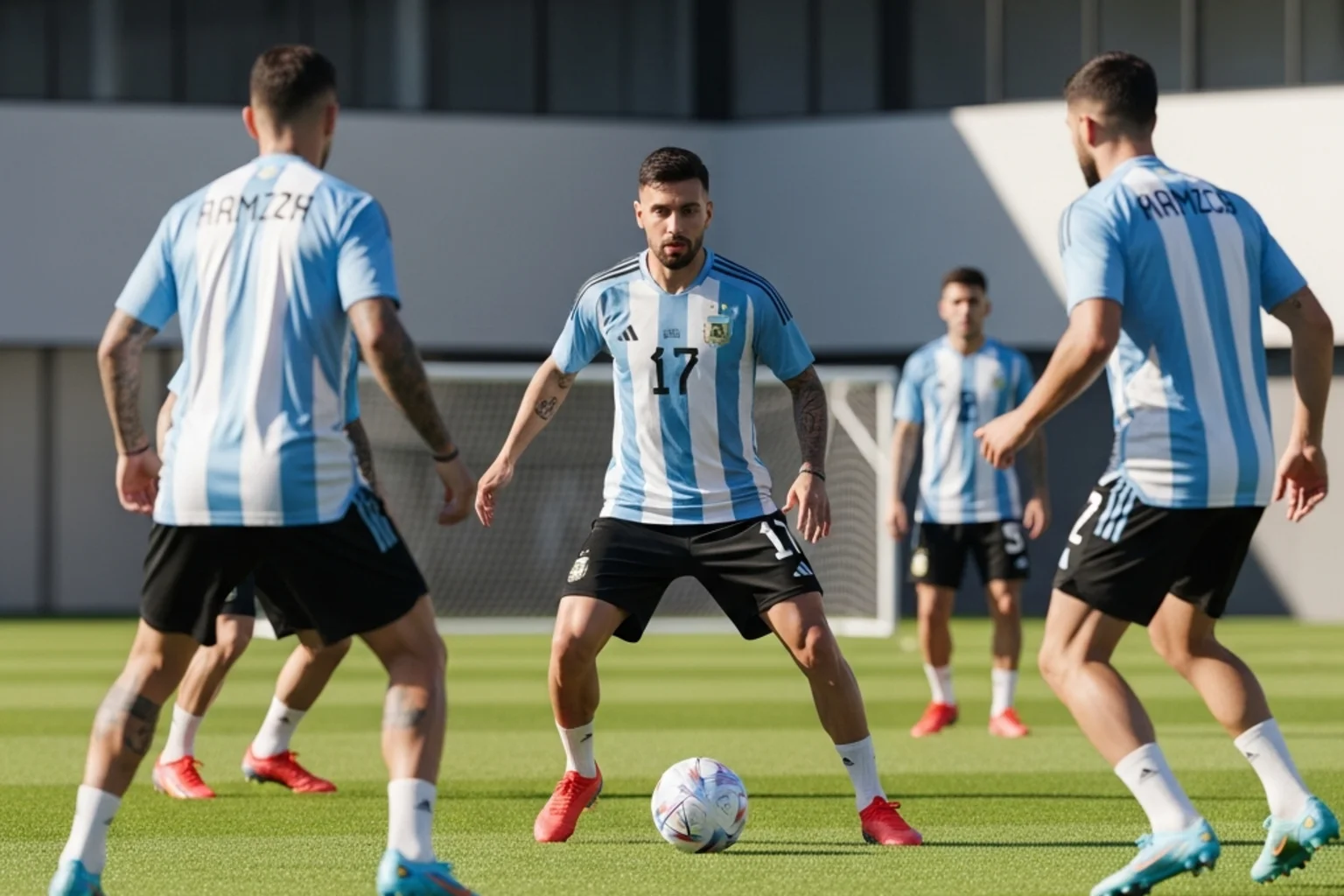
The last time a defending champion retained the World Cup was Brazil in 1962. Sixty-four years of history say it cannot be done in the modern era — and yet Argentina arrive at the 2026 World Cup as the outright market favourite, the reigning Copa America holders, and the team nobody wants to face in the knockout rounds. Lionel Scaloni has built something at once fragile and formidable: a squad that revolves around an ageing genius in Lionel Messi, surrounded by a generation of younger players who have tasted glory and expect more. The question that defines Argentina’s 2026 campaign is not whether they are good enough to win it. They are. The question is whether the defending champion curse — that long, unbroken streak of title holders crashing out early — finally meets a team capable of breaking it.
For NZ punters, Argentina sit at the top or near the top of every outright coupon on TAB NZ. The price is short, the expectation is enormous, and the margin for error is razor-thin. This page breaks down the squad, the system, the group, and the odds to help you decide whether backing Argentina at the 2026 World Cup is a smart play or a trap.
TL;DR: Argentina Betting Snapshot
- Defending champions and current Copa America holders — the most decorated active international squad in the world.
- Group J opponents: Algeria, Austria, Jordan. Argentina should cruise through the group stage.
- The Messi question: at 38, his minutes will be managed. Argentina need to function without him for stretches.
- Outright odds around 5.00 to 6.50 — the shortest or second-shortest price in the market.
- Our angle: the defending champion curse is real in the data but may not apply to this specific squad. The value is in “Argentina to reach the final” rather than the outright, hedging against a single-match upset in the decider.
Trace Argentina’s CONMEBOL Qualifying Path
Winning the World Cup earns you a parade, a place in history, and precisely zero free passes through CONMEBOL qualifying. Argentina still had to grind through 18 rounds of South American qualifiers alongside Brazil, Uruguay, Colombia, and the rest, and while they topped the table, the campaign was not without turbulence. Early away defeats in Colombia and Venezuela raised questions about the squad’s hunger after the Qatar triumph, and a mid-cycle dip in form saw Argentina drop consecutive home points for the first time in Scaloni’s tenure.
The response was definitive. Scaloni adjusted his squad rotation, integrating younger players into the starting eleven more aggressively and resting Messi for altitude matches in La Paz and Quito where the physical demands outweighed the tactical benefit of his presence. The second half of qualifying saw Argentina reel off five consecutive wins, conceding just two goals across those matches, and seal their spot at the top of the CONMEBOL table with two games to spare. The qualifying campaign confirmed what most analysts already suspected: Argentina can win without Messi on the pitch, as long as the system and the collective mindset remain intact.
The data from qualifying tells a clear story. Argentina averaged 1.8 goals per match, conceded 0.6, and maintained a possession average above 58 per cent — the highest in the confederation. Their expected goals numbers were equally dominant, suggesting the results were built on genuine performance rather than luck or variance. For betting purposes, the qualifying campaign supports the thesis that Argentina are the most consistent team in international football right now, with a floor that rarely drops below “comfortable win” and a ceiling that includes multi-goal demolitions of good opposition.
Evaluate the Squad — The Messi Question and Next Gen
There is no avoiding it: every assessment of Argentina at the 2026 World Cup begins and ends with Lionel Messi. At 38, playing his club football in MLS with Inter Miami, Messi is no longer the player who dragged Argentina to the 2022 title with seven goals and the tournament’s best player award. His pace has diminished further, his minutes are carefully managed, and the physical demands of a North American summer tournament — heat, humidity, travel — will test his body in ways that Qatar’s air-conditioned stadiums did not. Scaloni knows this. The coaching staff have spent the past two years building a version of Argentina that can thrive with Messi as an impact substitute or a 60-minute player rather than a 90-minute fulcrum.
That transition has worked better than anyone outside the camp expected. When Messi was rested during qualifying, Argentina did not collapse — they adapted. The attacking system shifted to a more direct approach through Julian Alvarez and Lautaro Martinez, with Enzo Fernandez orchestrating from deeper positions and the full-backs providing width. The team missed Messi’s genius in the final third — nobody replaces his ability to find the impossible pass in tight spaces — but compensated with increased pressing intensity and faster transitions. In effect, Argentina without Messi are a slightly different team: less magical, more industrious, and still very, very good.
Julian Alvarez has emerged as the squad’s most important outfield player for the 2026 cycle. His versatility — he can play as a centre-forward, a second striker, or a wide attacker — gives Scaloni tactical flexibility that no other player in the squad offers. Alvarez’s work rate off the ball is exceptional, his finishing is clinical in both feet, and his willingness to press from the front sets the tone for the entire team’s defensive structure. At 26, he is entering his peak years, and the 2026 World Cup is the stage where he could announce himself as Argentina’s post-Messi talisman. For punters, Alvarez is a strong Golden Boot candidate at odds that may underrate his goal involvement.
Enzo Fernandez controls the midfield. The Chelsea central midfielder has matured into one of the world’s best passers from deep positions, combining the ability to break up opposition attacks with the vision to launch Argentina’s own. His partnership with either Rodrigo de Paul or Alexis Mac Allister in a double pivot gives Argentina a midfield that can dominate possession against any opponent and transition from defence to attack in two or three passes. Fernandez’s set-piece delivery is another asset — his corner kicks and free kicks into the box are consistently dangerous, and Argentina’s aerial threat at set pieces is one of the best in the tournament.
Defensively, Cristian Romero anchors the back line with an intensity that borders on recklessness. His aggressive, front-foot defending — stepping out to intercept, challenging for every aerial ball, driving forward with the ball at his feet — can be a liability against quick, technical forwards, but it sets the tone for Argentina’s high defensive line. Lisandro Martinez provides the calmer, more positional complement alongside him. The full-backs are where Argentina’s squad depth really shows: Nahuel Molina and Gonzalo Montiel on the right, Nicolas Tagliafico or younger options on the left, all offer different profiles depending on the tactical requirement. Emiliano Martinez in goal remains one of the tournament’s best shot-stoppers and a penalty-shootout specialist whose psychological games with opposing kickers have already influenced two major tournament outcomes.
The bench strength is the final piece. Argentina can bring on Messi, Paulo Dybala, Giovani Lo Celso, or Nicolas Gonzalez as impact substitutes in the final 30 minutes of a knockout match — each of those players would start for most other nations at the tournament. That depth, more than any individual, is what makes Argentina the favourites. Tournaments are not won by starting elevens; they are won by squads of 23 or 26 players, and Argentina’s squad is the deepest in the competition.
Study Scaloni’s System — What Makes Them Tick
I once asked a colleague who covers Argentine football daily to describe Scaloni’s system in one word. He said “trust.” It is not the most tactical answer, but it might be the most accurate. Scaloni’s Argentina are not defined by a rigid formation or a set of complex tactical principles — they are defined by a group of players who have won together repeatedly and who know instinctively where each other will be on the pitch at any given moment.
The base formation is a 4-3-3 or 4-4-2, depending on whether Messi starts. With Messi, the system skews toward a 4-3-3 with Messi as a free-roaming right-sided forward who drifts inside to receive the ball between the lines. Without Messi, it becomes a more balanced 4-4-2 or 4-2-3-1 with Alvarez and Martinez as the twin strikers and the midfield trio providing cover behind them. The formation is less important than the principles: high pressing out of possession, quick vertical passes in transition, and patient build-up through the midfield when the opponent defends deep.
The defensive structure is notably aggressive for a team at this level. Argentina press high and push the defensive line to the halfway line or beyond, relying on Romero’s pace and anticipation to sweep behind the back four. The risk is obvious — a long ball over the top can expose the space behind the defence — but the reward is equally clear: Argentina win the ball back in dangerous areas more frequently than almost any other international team, creating chances directly from turnovers in the opposition’s half.
Set pieces deserve special mention. Argentina scored more goals from corners and free kicks during the qualifying cycle than any other CONMEBOL side, and their routines are well-rehearsed and varied. Short corners, near-post flick-ons, and direct deliveries to the back post are all in the playbook, and the aerial threat of Romero, Martinez, and Alvarez at set pieces makes every dead ball a genuine scoring opportunity. For punters, the “first goal from a set piece” market in Argentina matches is worth tracking.
Break Down Group J — Algeria, Austria, Jordan
If you designed a group specifically to give the defending champions an easy path to the knockout rounds, you might end up with something close to Group J. Argentina face Algeria, Austria, and Jordan — a collection of respectable but clearly outmatched opponents who will compete fiercely for second place while the Albiceleste stroll through as group winners. That predictability shapes the betting approach: the value is not in match results but in margins, goalscorer props, and performance metrics.
Algeria are the strongest of the three. Les Fennecs qualified through the African pathway and bring a physically imposing squad with pace on the wings and solidity in central midfield. Algerian football has improved significantly since their last World Cup appearance in 2014, and the squad includes several players from top European leagues. Their weakness is defensive organisation against elite opposition — in Africa Cup of Nations matches against top-seeded opponents, Algeria have tended to concede early and spend the rest of the match chasing the game. Against Argentina’s pressing intensity, that vulnerability could be exposed within the first 15 minutes. Expect Argentina to win this match by two or three goals, though Algeria’s counter-attacking pace — particularly through the wide channels — could produce a consolation goal or two.
Austria are a well-coached European side under Ralf Rangnick, whose pressing philosophy has transformed the national team into one of the most disciplined units in UEFA. Austria’s performance at Euro 2024, where they competed admirably against France and the Netherlands, suggests they will not be intimidated by Argentina’s reputation. The tactical matchup is interesting: Austria’s high press versus Argentina’s press-resistant midfield. Enzo Fernandez and de Paul are precisely the type of midfielders who thrive under pressure, receiving the ball in tight spaces and playing through the press with quick one-twos. I expect Argentina to control this match through midfield dominance, but Austria will make it uncomfortable. A 2-0 or 2-1 Argentina win is the most likely scoreline, and this is the group match where Argentina might rotate least, treating it as a tactical test for the knockout rounds.
Jordan are the group’s underdogs and another beneficiary of the expanded 48-team format. The Jordanians reached the Asian Cup final in 2024, demonstrating a level of tactical organisation that earned them respect across the continent. Their defence is structured and disciplined, built around a deep block that denies space in the penalty area. Against Argentina, Jordan’s plan will be to defend with numbers, keep the score down, and hope for a set-piece opportunity. Argentina should win comfortably — three or four goals is realistic — but Jordan’s defensive discipline could keep the first-half scoreline tight before legs tire and gaps appear.
For punters, the group-stage play is straightforward. Argentina to win the group is priced too short to be interesting. Instead, look at Argentina’s total group-stage goals (likely over/under around 8.5 — take the over), Alvarez for anytime goalscorer across multiple group matches, and the specific margins in the Jordan fixture where a three-or-more-goal winning margin is highly probable.
Compare Argentina’s Outright and Group Odds
Argentina’s outright odds on TAB NZ sit around 5.00 to 6.50, making them the joint-favourites or outright favourites alongside France. Those odds imply a win probability of roughly 15 to 20 per cent. For context, no pre-tournament favourite at those odds has won the World Cup since Spain in 2010, and the last defending champion to retain the title was Brazil in 1962 at odds that did not even exist in modern decimal format. The historical data argues against backing Argentina at this price.
But historical data does not account for squad quality in isolation, and Argentina’s squad is arguably the strongest defending champion in modern World Cup history. The 1998 France side that failed to defend in 2002 had lost Zinedine Zidane to suspension and injury. The 2010 Spain side that exited in 2014’s group stage was ageing rapidly. The 2014 Germany side was similarly declining by 2018. Argentina in 2026 are not declining — they are evolving. The core of Alvarez, Fernandez, Romero, and Emiliano Martinez are all in their mid-to-late twenties, peak age for international tournament football. The squad around them is deeper than the 2022 vintage. The coaching setup is stable. If any team can break the defending champion curse, it is this one.
My assessment puts Argentina’s true win probability at around 18 to 22 per cent — roughly in line with what the market offers. That means the outright price is fair but not generous. You are not getting value backing Argentina to win the World Cup at 5.50; you are getting a correctly priced bet on the most likely winner. For punters who want exposure to Argentina without paying fair price, the “to reach the final” market at around 2.80 to 3.50 is more attractive. It captures Argentina’s likely deep run while removing the variance of the final itself — a single match where anything can happen.
The semi-final market, similarly, offers a cleaner entry point at around 1.80 to 2.20. Argentina reaching the last four requires them to win four matches (three group games plus the Round of 32), which their squad quality and group draw make highly probable. The knockout bracket from Group J should produce a Round of 16 or quarter-final opponent from a weaker group, further supporting the thesis that Argentina’s path to the semis is among the smoothest in the draw.
Weigh the Defending Champion Curse — History Check
Numbers do not lie, and the numbers on defending World Cup champions are brutal. Since 1962, every single defending champion has failed to retain the trophy. Most have not even come close. France in 2002 exited in the group stage without scoring a goal. Italy in 2010 finished bottom of their group. Spain in 2014 were eliminated in the group stage after a 5-1 defeat to the Netherlands. Germany in 2018 finished last in a group containing South Korea, Sweden, and Mexico. The pattern is so consistent that it has moved beyond coincidence into something approaching a structural phenomenon.
The explanations are varied and none is fully satisfying on its own. Complacency is the most commonly cited factor — the hunger that drives a team to win the tournament is difficult to replicate when the trophy is already in the cabinet. Physical and mental fatigue from the preceding cycle also plays a role: the defending champion’s players carry the weight of an extra year of celebrations, obligations, and expectation between tournaments. Tactical evolution matters too: the team that wins a World Cup becomes the model that every other nation studies and prepares for, meaning the defending champion faces opponents who have specifically game-planned against their system.
Argentina are aware of the curse and have actively worked to counter it. Scaloni has rotated his squad more aggressively in the post-2022 cycle than any other Argentina coach in history, integrating new players and varying his tactical approach to avoid becoming predictable. The Copa America 2024 victory — won with a partially rotated squad — demonstrated that the team’s winning mentality extends beyond the core group of 2022 veterans. The psychological framework is different too: Messi’s potential final World Cup provides a narrative motivation that transcends the general defending-champion malaise. This squad is not playing to prove they can win — they are playing to send the greatest footballer in history out on the ultimate high.
Does the curse apply to this specific Argentina team? I rate the probability of a group-stage exit at around 5 per cent — far lower than the historical average for defending champions. The squad is too good, the group too weak, and the coaching too stable for a catastrophic early collapse. The curse’s real danger lies in the knockout rounds, where a single off-day against a well-organised European opponent could end the defence. That is where the historical pattern is most relevant, and it is why I recommend the semi-final or final market over the outright: you capture Argentina’s quality while hedging against the single-elimination variance that has undone every champion since Pelé’s Brazil.
The Albiceleste’s Tournament Arc
Argentina will top Group J with nine points and minimal fuss. The Round of 32 will be comfortable. The Round of 16 will present the first genuine test — likely against a second-placed European team with the tactical discipline to compete for 90 minutes. Argentina will win, probably through a Messi cameo off the bench that produces a decisive assist or a set-piece goal from a Fernandez delivery. The quarter-final is where the tournament gets real: a match against one of Germany, the Netherlands, or a resurgent European side that tests Argentina’s defensive structure and mental resilience.
My prediction: Argentina reach the final. They have the squad depth, the tactical flexibility, and the tournament experience to navigate the bracket, and the Messi narrative adds an intangible emotional edge that is impossible to quantify but foolish to ignore. Whether they win the final depends on the opponent and the day. Against France or Brazil, I rate it a coin-flip. Against England or Germany, Argentina are slight favourites. The smart punt is “Argentina to reach the final” at around 3.00 — it captures the likely deep run while avoiding the variance of the decider.
