
Compare Socceroos at World Cup 2026 — Odds & NZ Angle
 Available in US
Loading...
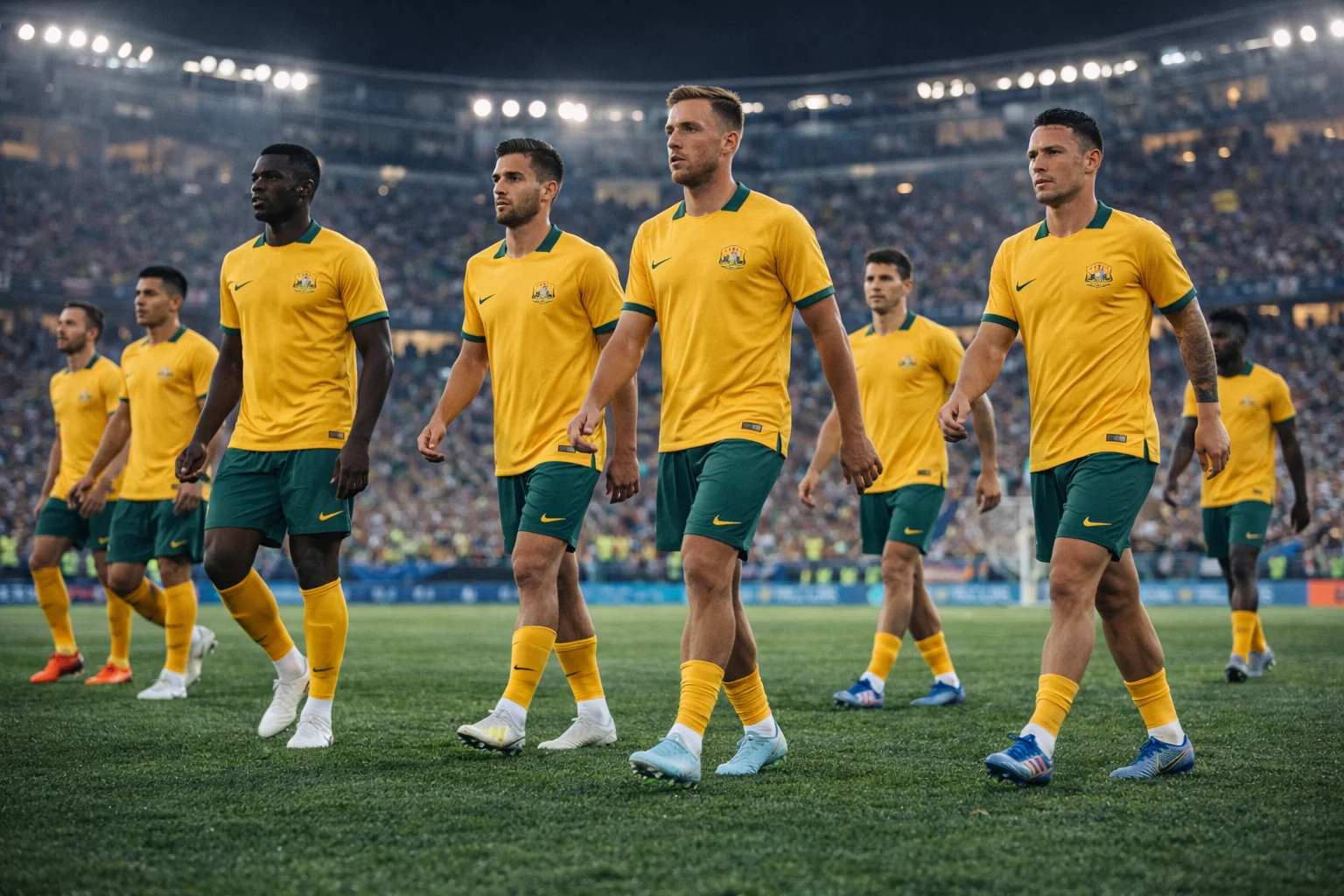
The Trans-Tasman rivalry in football has always existed in the shadow of rugby, where the All Blacks and Wallabies dominate the headlines and the national consciousness. But the 2026 World Cup changes the equation. For the first time since 2010, both New Zealand and Australia are at the same FIFA World Cup — the All Whites through Oceania’s guaranteed berth, the Socceroos through Asia’s qualifying gauntlet. Different groups, different opponents, different paths, but the same backyard bragging rights at stake. Which side goes further? Which produces the better result? And for NZ punters looking across the Tasman with one eye on the betting markets, does Australia offer any value that the All Whites’ own fixtures do not?
Australia are in Group D alongside the United States, Paraguay, and Turkey — a group that is significantly tougher than New Zealand’s on paper but offers the Socceroos a realistic shot at qualifying for the Round of 32 if they can take points from at least two of their three opponents. This page scouts the squad, breaks down the group, and examines the Trans-Tasman angle that makes Australia’s campaign uniquely relevant to New Zealand football fans.
TL;DR: Socceroos Snapshot Plus the NZ Rivalry Angle
- Australia qualified through AFC — the fifth consecutive World Cup appearance for the Socceroos, confirming their status as Asia’s most consistent qualifier.
- Group D opponents: USA (hosts), Paraguay, Turkey. Tough draw — Australia are likely the third or fourth seed in the group.
- Key players drawn from the Premier League, A-League, and European mid-tier leagues. No single superstar, but a well-organised collective.
- The Trans-Tasman angle: both NZ and Australia are in the tournament. Whoever progresses further earns bragging rights that will echo through Oceania football for years.
- Our angle: Australia’s group is harder than New Zealand’s, but the Socceroos’ experience at this level gives them a higher floor. The value is in match-specific bets rather than qualification markets.
Trace the Socceroos’ AFC Route
Australia left the Oceania Football Confederation for Asia in 2006, a move that transformed their qualifying pathway from comfortable OFC dominance to a biennial war of attrition against Japan, South Korea, Iran, Saudi Arabia, and a host of improving Asian nations. The decision was controversial at the time — it stripped Oceania of its strongest member and forced New Zealand to carry the OFC flag alone — but it has undeniably improved Australian football. The Socceroos have qualified for every World Cup since the switch, and the experience of competing against Asian opposition on a regular basis has raised the squad’s defensive discipline and tactical awareness.
The 2026 qualifying campaign was characteristically tight. Australia finished in the third automatic qualification spot in the final AFC group, behind Japan and Iran but ahead of Saudi Arabia and South Korea. The campaign featured narrow wins at home, gritty draws away from home in the Middle East and East Asia, and a late-cycle surge in form that carried the Socceroos over the line with a matchday to spare. The goal difference was modest — Australia scored 18 and conceded 11 across 10 final-round matches — reflecting a team that wins through organisation rather than flair.
The qualifying data for punters tells a specific story: Australia are hard to beat but do not score freely. Their expected goals per match in qualifying sat around 1.4, the lowest of any automatic AFC qualifier, while their expected goals conceded was a respectable 0.9. The Socceroos win matches by keeping them tight and finding one or two goals through set pieces, individual moments, or counter-attacks. That profile translates to World Cup Group D as follows: Australia can compete with anyone in the group on a single-match basis, but they are unlikely to dominate any opponent or produce a comfortable multi-goal victory. Every match will be a battle, and the margins will be thin.
Assess the Key Players
The Socceroos’ strength is collective rather than individual, and any assessment of the squad needs to acknowledge that upfront. Australia do not have a Salah, a Mbappe, or even a Chris Wood in terms of Premier League profile. What they have is a group of professionals operating at a consistent standard across multiple leagues, bound together by a coaching system that extracts maximum output from each player’s specific skill set.
The midfield is where Australia are strongest. A combination of A-League experience and European mid-tier quality produces central midfielders who are physically imposing, tactically disciplined, and comfortable covering the ground required by a pressing system. The engine room’s ability to compete in the physical battles of international football — winning headers, contesting 50-50 balls, sustaining pressing intensity for 70-plus minutes — is the foundation that everything else is built upon. Without midfield dominance, Australia’s system collapses; with it, they are competitive against any opponent outside the tournament’s absolute elite.
In attack, the Socceroos rely on pace and directness from wide positions, combined with a target forward who can hold the ball up and bring runners into play. The wide players — drawn from the A-League and lower European leagues — are quick, willing to track back defensively, and capable of delivering crosses into the box at pace. The centre-forward position has been rotated throughout the qualifying cycle, with different profiles used depending on the opposition. Against teams that defend deep (Paraguay’s likely approach), a physical target man who wins aerial duels is preferred. Against teams that push high (USA’s probable style), a quicker, more mobile forward who runs in behind is the better option. The coaching staff’s willingness to adapt the attacking setup to the specific opponent is one of the squad’s underappreciated strengths.
Defensively, Australia’s centre-back pairing is experienced, physical, and comfortable defending deep. The full-backs are attack-minded by nature — a characteristic of Australian football development that has been shaped by years of A-League coaching philosophies — and their forward runs provide width in the build-up. The goalkeeper position is solid, with the number one having established himself through the qualifying cycle as a reliable shot-stopper with good distribution. The defensive unit’s main vulnerability is pace: against quick, direct forwards who run in behind the defensive line, the Australian centre-backs can be exposed in footraces. Turkey’s attacking options and the USA’s wide players are the specific threats that will test this vulnerability in Group D.
The bench depth is adequate but not exceptional. Australia can bring on different profiles in the final 30 minutes — substitutes who offer energy, pace, or a different tactical approach — but the quality drop between the starting eleven and the first-choice replacements is more significant than for teams like France, Germany, or Argentina. In a tight group where every match matters, the ability to influence games from the bench could be the difference between qualification and elimination.
Break Down Group D — USA, Paraguay, Turkey
Group D is one of the most evenly matched groups in the tournament, and any of the four teams could realistically finish in any position. The USA have home advantage and a squad stacked with young European-based talent. Paraguay bring the hardness of South American football and the underdog mentality that makes them dangerous opponents. Turkey qualified through the UEFA play-offs and have the individual quality to compete with anyone in the group. Australia must navigate all three without the luxury of a “easy” fixture — every match is a test.
The USA are Group D’s top seed and the team Australia need to upset to have a realistic chance of finishing in the top two. Playing at home, in front of partisan crowds across American stadiums, the USMNT will benefit from a psychological lift that is difficult to quantify but undeniably real. Christian Pulisic, Gio Reyna, Weston McKennie, and a generation of American players with top-five European league experience form a squad that is quick, technically proficient, and comfortable playing in high-pressure environments. The USA’s weakness is defensive inexperience and a tendency to lose concentration in the final third of matches — characteristics that Australia could exploit through patient, disciplined play that stretches the game into the final 20 minutes where American concentration has historically wavered. I expect the USA to win this match 2-1 or 1-0, but a draw is a realistic outcome if Australia execute their defensive game plan.
Paraguay are the group’s dark horses — a team nobody wants to play but few rate as genuine contenders. Paraguayan football is built on defensive resilience, physical aggression, and a refusal to be beaten that has produced countless upset results at World Cups and Copa Americas. The squad lacks the individual brilliance of Argentina or Brazil, but the collective organisation and the willingness to compete in every physical contest make them opponents who demand respect. Australia versus Paraguay is a collision of similar philosophies: both teams defend well, both rely on set pieces and transitions for attacking output, and both have limited creative spark from open play. The match will likely be tight, low-scoring, and decided by a single goal from a dead ball or a defensive error. A draw is the most probable outcome, and the under 2.5 goals market is a strong play.
Turkey bring the most unpredictable element. Qualified through the UEFA play-offs with a 1-0 win over Kosovo, Turkey have quality across the pitch — Arda Guler’s creative talent in particular is a match-winning threat — but inconsistency has plagued the national team for years. On their day, Turkey can beat anyone in Group D. On an off day, they can lose to anyone. For Australia, the Turkey match is both a threat and an opportunity: if Turkey underperform, the Socceroos could steal three points that transform their group prospects. If Turkey show up with their best, Australia face a team with more individual talent and home-continent familiarity (Turkey’s large North American diaspora will provide vocal support). The match result market for this fixture is the most volatile in Group D, and the odds on all three outcomes will be closely bunched.
Evaluate Australia’s Odds
Australia’s outright World Cup winner odds are in the 150.00-plus range — not worth a glance. The relevant markets are Group D specific and, for NZ punters, the Trans-Tasman comparison bets if any bookmaker is creative enough to offer them.
To qualify from Group D (top two or best third) sits around 2.80 to 3.50 for Australia. My assessment of the Socceroos’ qualification probability is 30 to 38 per cent — slightly above what the market implies at the lower end of the odds range, but fairly priced at the higher end. The group is genuinely competitive, and Australia’s ceiling is limited by the quality of opposition. If you find the qualification price above 3.20, a small stake is justifiable, but this is not a high-conviction play.
Match-specific markets offer better opportunities. Australia vs Paraguay to draw at around 3.00 to 3.30 is my favourite single-game bet in Group D — both teams’ defensive profiles point toward a stalemate, and the draw is the most probable single outcome. Australia vs USA under 2.5 goals at around 1.80 is another data-supported play: Australia will defend deep against the hosts, limiting the game’s open play and reducing the total goal output. The Turkey match is too volatile for confident pre-tournament betting — wait for team news and in-play opportunities.
Explore the Trans-Tasman Angle — Could They Meet?
The bracket structure of the 2026 World Cup makes a New Zealand vs Australia knockout-round match theoretically possible but extremely unlikely in the early rounds. New Zealand would need to qualify from Group G (as second or best third) and Australia from Group D, and the bracket would need to align them in the same half of the draw. The probability of both teams reaching the knockout rounds is low — I rate it at around 5 to 10 per cent — and the probability of them meeting each other if they both advance is lower still, perhaps 2 to 3 per cent depending on the specific bracket permutations.
The Trans-Tasman angle is better viewed as a narrative rather than a betting proposition. For NZ fans, tracking Australia’s results adds a layer of engagement to the tournament — watching the Socceroos’ group matches, comparing their performances against Group D opposition with the All Whites’ efforts in Group G, and debating which side had the better campaign across social media and pub conversations. If both teams take a point or more from their opening fixtures, the shared Oceania pride will be genuine. If both exit in the group stage, the post-mortem comparisons will be equally heated.
For punters who want to construct a Trans-Tasman portfolio, the approach is simple: back the draw in both teams’ tightest group fixture (NZ vs Iran and Australia vs Paraguay), and add a speculative outright on whichever team progresses further. The combined odds of both draws hitting would be around 9.00 to 11.00 — a genuine long-shot multi that captures the most probable competitive outcome for both Oceania representatives. It is not a scientific bet; it is a narrative bet that pays off if the story writes itself the way I think it might.
The Socceroos’ Group D Journey
Australia lose 1-0 to the USA in a match where the Socceroos defend bravely but cannot create enough chances to threaten the American goal. Australia draw 0-0 with Paraguay in a tactical stalemate that satisfies neither coach but keeps both teams’ qualification hopes alive. Australia beat Turkey 1-0 through a set-piece header in the second half, the defining moment of the Socceroos’ campaign and a result that could be enough for a best third-place finish. Four points, third in Group D, and a nervous wait to see whether the numbers are sufficient for the Round of 32.
The prediction for NZ punters: both Australia and New Zealand finish third in their respective groups with similar points tallies, and the best third-place calculation determines which Oceania side advances and which goes home. The Trans-Tasman rivalry, normally settled on the rugby pitch, comes down to goal difference at a World Cup. That is a story worth following — and worth a small wager on, if the odds align.
