
Follow the All Whites at World Cup 2026 — NZ Betting Guide
 Available in US
Loading...
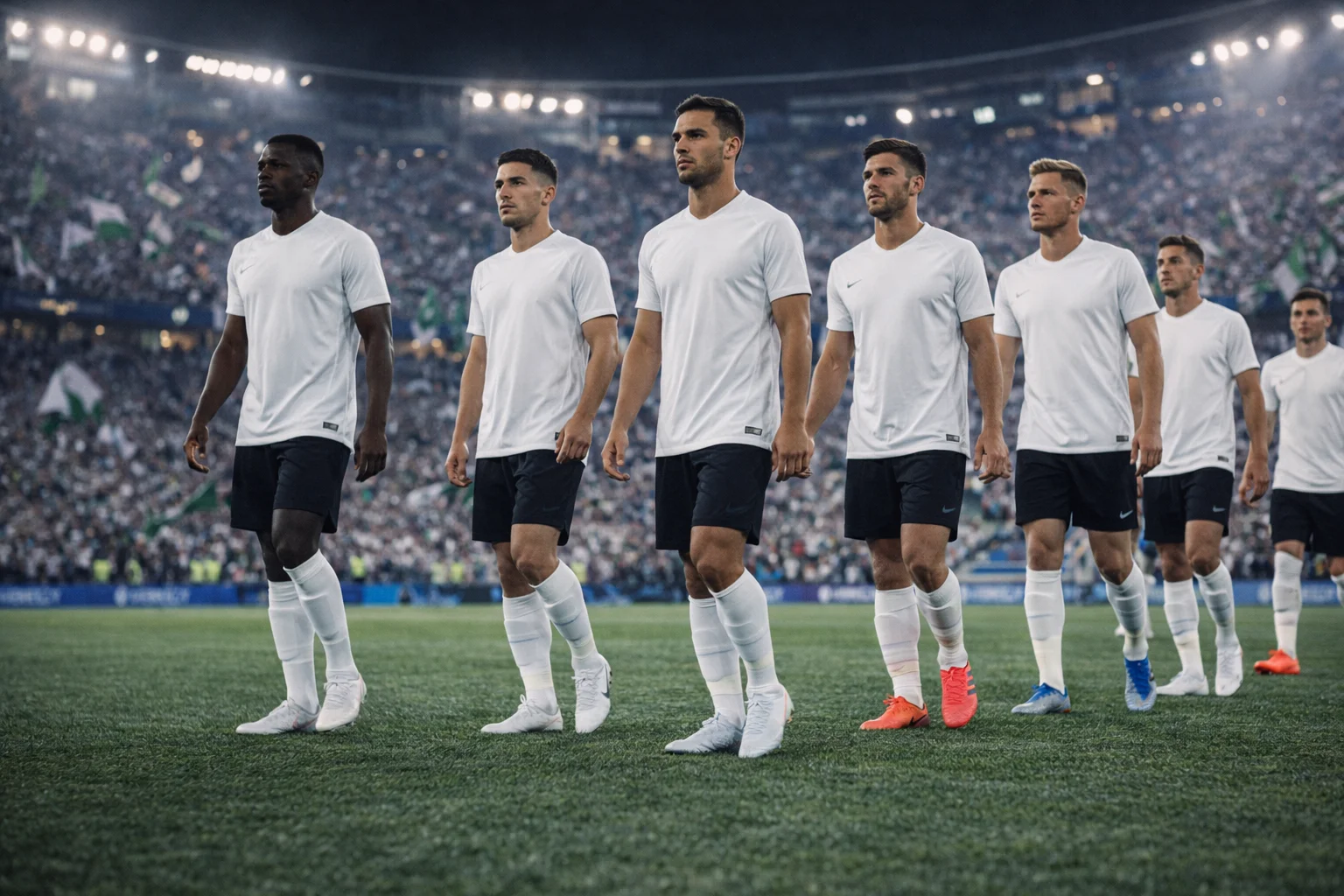
I covered the All Whites’ 2010 World Cup campaign from a press box in Polokwane, watching a team nobody believed in hold Italy and Paraguay to draws. Fifteen years later, I am still chasing that same feeling — and so is every New Zealand football fan alive. The All Whites are back at the FIFA World Cup 2026, this time with a guaranteed OFC berth, a proven Premier League goalscorer leading the line, and a Group G draw that offers genuine routes forward. This is the guide I wish I had had before South Africa: squad assessments, tactical blueprints, opponent breakdowns, match schedules converted to NZST, and every betting angle I can find on TAB NZ. Pin it, bookmark it, come back on match day.
New Zealand’s return to the world stage is not charity — it is the product of FIFA’s expanded 48-team format awarding Oceania a direct qualification spot for the first time in tournament history. The All Whites earned that place by topping the OFC qualifiers, and they will line up in Group G alongside Belgium, Egypt, and Iran. The realistic mission is clear: fight for third place, accumulate enough points and goal difference to sneak into the Round of 32 as one of the eight best third-placed sides, and make the nation’s football history richer than the three draws that defined 2010.
TL;DR: All Whites Key Facts and Our Verdict
- New Zealand qualified automatically via OFC — the first guaranteed Oceania berth in World Cup history.
- Group G opponents: Belgium (FIFA top five), Egypt (Salah-led African power), Iran (six-time World Cup qualifier from Asia).
- Captain Chris Wood, coming off consecutive double-digit Premier League scoring seasons with Nottingham Forest, is the attacking centrepiece.
- All three group matches fall between 13:00 and 15:00 NZST — prime daytime viewing in New Zealand.
- Our verdict: a best third-place finish is achievable. The Iran opener on 16 June is the match that decides everything. Target the “NZ to qualify from group” market on TAB NZ at inflated odds — the value sits in the belief that one win and a draw could be enough.
Trace How New Zealand Qualified — The OFC Path
For decades the running joke in world football was that Oceania’s qualification slot did not actually exist. The OFC winner had to survive an intercontinental play-off — usually against a South American side — just to reach the finals. New Zealand lost that play-off to Peru ahead of the 2018 tournament and missed out on Russia entirely. The expanded 48-team format changed the equation overnight: OFC now holds one guaranteed berth, no play-off required. When FIFA confirmed the allocation in 2023, it was the single most significant structural shift in New Zealand football history.
The All Whites entered the OFC qualifying tournament as heavy favourites and delivered accordingly. The campaign ran through two rounds: a group phase involving smaller Pacific Island nations, followed by a final round against the strongest OFC challengers. New Zealand topped every stage without a single defeat. The squad scored freely, conceding fewer than a goal per game across the entire qualifying cycle. Chris Wood led the scoring charts, but the depth behind him — goals from midfield runners, set-piece headers from centre-backs — showed a side with more dimensions than the 2010 vintage that relied almost exclusively on Shane Smeltz and Rory Fallon.
Qualification was sealed well before the final matchday, yet head coach Darren Bazeley used every remaining fixture to test formations, rotate the bench, and integrate younger players like the Wellington Phoenix contingent who had impressed in the A-League. That rotation mattered: it means the All Whites arrive at the World Cup with genuine squad depth rather than an eleven-plus-subs model. The OFC qualifiers also forced New Zealand to play on different surfaces, in tropical heat, and across multiple time zones — small-scale rehearsals for the travel demands of a tournament spread across North America.
Context matters when assessing the quality of OFC opposition. Fiji, Solomon Islands, and New Caledonia are developing football nations; beating them by three or four goals does not translate directly to World Cup readiness. The All Whites coaching staff know this. Pre-tournament friendlies against Asian and South American opposition in early 2026 were specifically designed to bridge the gap between OFC-level football and the pace and physicality of Group G. Results from those friendlies — including a creditable draw against a second-string Japan side and a narrow loss to Chile — suggest the squad can compete at a higher tempo, even if the gap to Belgium remains substantial.
Know the Key Players to Watch
Every underdog story at a World Cup has a protagonist — someone the neutrals learn to respect and the opponents learn to fear. For the All Whites at the 2026 World Cup, that figure is Chris Wood, but reducing this squad to one name would be a mistake. The supporting cast is deeper than any New Zealand side I have covered, and several of those secondary figures could tip a tight group match.
Chris Wood — The Spearhead
Wood has spent the best years of his career proving people wrong. Released by West Brom early in his development, he rebuilt through the Championship, scored goals at Burnley in both tiers, and found his peak at Nottingham Forest, where consecutive Premier League seasons of ten-plus goals silenced anyone who called him a limited target man. At the 2026 World Cup, Wood will be 34. His legs are not as quick over 90 minutes as they were even two seasons ago, but his movement inside the penalty area remains elite by any measure. He wins aerial duels at a rate in the top five per cent of Premier League forwards over the past three campaigns, and his hold-up play gives New Zealand a crucial out-ball when defending deep against Belgium or Egypt.
Wood’s penalty record is another asset. He has converted over 80 per cent of spot-kicks in Premier League competition, and in a group where tight margins will likely determine who advances, a reliable penalty taker is worth more than most people realise. I expect the coaching staff to build the entire attacking structure around getting crosses and set-piece deliveries into zones where Wood can attack the ball in the air, supplemented by cut-backs from wide areas that let him shoot across goal from central positions. His leadership — he has worn the armband for more than 20 caps — sets the emotional tone for the squad.
Supporting Cast — Who Steps Up
Behind Wood, the names matter less individually than the system they form together. Liberato Cacace, the left-back who has been playing club football in Europe across multiple leagues, offers genuine quality going forward. His delivery from wide positions is the primary supply line for Wood’s aerial threat, and defensively he has improved his one-on-one ability against quick wingers — something he will need against Egypt’s flanks and Belgium’s Jérémy Doku or Leandro Trossard.
In midfield, the All Whites rely on a mix of A-League regulars and lower-tier European professionals. The engine room does not contain a single household name, which is precisely why the collective structure matters so much. Joe Bell, the central midfielder who has bounced around Scandinavian and Dutch lower divisions, brings ball-carrying ability and the willingness to cover the ground between both penalty areas. His pressing numbers from the OFC qualifiers were excellent, though the step up in class against Iran and Egypt will test whether that energy translates to smarter pressing rather than just more of it.
At the back, the squad’s most important player might be the goalkeeper. Stefan Marinovic, experienced and vocal, has been the number one for years. His shot-stopping is above average at OFC level, and he showed in 2010-cycle friendlies that he can produce big saves when the opposition quality rises. Whether the coaching staff hands the gloves to a younger option remains one of the unresolved selection questions heading into the tournament. Whoever starts in goal will face a high volume of shots in every group game — New Zealand will not dominate possession against any of these opponents — and composure under sustained pressure is the single most important attribute the goalkeeping position demands.
The bench depth is meaningful too. Several New Zealand-eligible players plying their trade in Australia’s A-League offer fresh legs and tactical flexibility in the final 30 minutes of matches. The ability to bring on a different profile — pace off the bench when opponents tire, or an extra centre-back to lock down a lead — could be the difference between a draw and a defeat in a group this tight.
Read the Tactical Shape and What to Expect
Watch a New Zealand match on mute and you can still identify the system within five minutes: two banks of four, compact lines, Wood isolated as the lone outlet up front. Darren Bazeley inherited the defensive pragmatism that has defined All Whites football since Ricki Herbert’s era and refined it with slightly more ambition in transition. The base shape is a 4-4-1-1 or a flat 4-5-1, depending on the opponent. Against weaker OFC sides, the formation pushed higher, but in Group G the default will almost certainly be low-block defence with quick vertical transitions when possession is won.
The key tactical battle in every group match will be New Zealand’s ability to control the width of the pitch defensively. Belgium and Egypt both overload wide areas — Belgium through Doku’s dribbling and overlapping full-backs, Egypt through Salah cutting inside from the right and wide midfielders stretching the opposite flank. If the All Whites’ wingers do not track back to create a disciplined five-across-the-back line in defensive phases, gaps will appear between the full-back and the centre-half. That channel is where the danger lives.
In attack, expect set pieces to be New Zealand’s most productive route to goal. Wood’s aerial ability, combined with Cacace’s delivery and the height of the centre-backs pushing forward at corners, makes dead-ball situations a genuine weapon. From open play, the plan is simpler: win possession, play direct into Wood’s chest, and get runners beyond him before the opposition’s defensive shape resets. The transition speed between winning the ball and the first forward pass is the metric that will tell you whether New Zealand are competitive or overwhelmed in any given match. In friendlies where that transition took fewer than four seconds, the All Whites created chances. When it slowed beyond six seconds, they were pinned back without relief.
Bazeley has also experimented with a back three in pre-tournament camps, particularly for the Belgium fixture where absorbing pressure and having a spare centre-back to sweep behind the defensive line could blunt Lukaku’s movement. Whether that option survives contact with reality depends on the first two results, but the willingness to adapt rather than stick rigidly to a single shape is encouraging.
Scout Group G Opponents — Iran, Egypt, Belgium
Knowing your enemy is half the battle, and for All Whites backers, the order of opponents matters as much as the opponents themselves. New Zealand faces Iran first, Egypt second, and Belgium last — a sequence that frontloads the two matches where points are realistically available and saves the toughest fixture for when the group picture is already taking shape.
Iran — The Opening Test
Iran at a World Cup is never a comfortable draw. Team Melli have qualified for six of the last eight tournaments, and their style is built on defensive discipline, aggressive midfield pressing, and the ability to absorb long spells without possession before striking on the counter. Mehdi Taremi’s movement and finishing have troubled far better defences than New Zealand’s, and the Iranian full-backs push high to deliver crosses into a crowded penalty area. The danger for the All Whites is not that Iran will overwhelm them with technical quality — it is that Iran will frustrate them with structure and patience, then score from a set piece or a half-chance that New Zealand’s goalkeeper cannot quite reach. The flip side: Iran’s build-up from the back can be ponderous, and if NZ press high in the opening minutes they could force errors that create early chances. Win this match and the entire group opens up. Lose it and the All Whites are likely playing for pride by matchday three.
Egypt — Salah Factor
Mohamed Salah’s presence warps the entire tactical approach. Even at 34, Salah remains one of the most dangerous forwards on the planet — his ability to receive the ball on the right, cut inside onto his left foot, and either shoot or thread a through ball is a problem that elite European defences struggle to solve consistently. For New Zealand’s left-back and left centre-back, the assignment is simple to describe and ferociously difficult to execute: do not let Salah turn. Double up early, accept that you will concede the wide areas to Egypt’s left flank, and force the ball away from Salah’s preferred zones. Egypt’s squad beyond Salah is solid rather than spectacular — good tournament players, well-organised under their coaching setup, and dangerous from set pieces. The match on 22 June in Vancouver is the one where New Zealand need at least a draw. Stealing a point here, especially if the Iran result went well, keeps the third-place dream alive heading into the Belgium decider.
Belgium — Can NZ Pull a Shock?
On paper, Belgium are the prohibitive Group G favourites. Kevin De Bruyne, Romelu Lukaku, and the remnants of the golden generation that reached a World Cup semi-final in 2018 still form the spine of the team, supplemented by younger talents in wide positions and midfield. Belgium’s strength is also their vulnerability: age. De Bruyne has battled injury for much of the past two seasons. Lukaku’s mobility has declined. If Belgium have already qualified by matchday three — a likely scenario if they beat Egypt and Iran — they may rotate heavily, offering New Zealand a weakened opponent. That scenario is the All Whites’ best realistic shot at a result against a top-five FIFA-ranked side. Even a draw against Belgium’s reserves would be a massive result for goal difference and the third-place calculation.
Plan Your Viewing — Match Schedule in NZST
One of the quieter perks of the 2026 World Cup for New Zealand fans is the schedule. Because the tournament is hosted in North America (USA, Canada, Mexico) and most matches kick off in evening ET slots, every All Whites fixture lands in the middle of the New Zealand day. No 3 a.m. alarms. No bleary-eyed Monday mornings. You can watch from the office break room, a pub at lunch, or your own couch without sacrificing a second of sleep.
| Date (NZST) | Time (NZST) | Match | Venue |
|---|---|---|---|
| 16 June 2026 | 13:00 | Iran vs New Zealand | SoFi Stadium, Los Angeles |
| 22 June 2026 | 13:00 | New Zealand vs Egypt | BC Place, Vancouver |
| 27 June 2026 | 15:00 | New Zealand vs Belgium | BC Place, Vancouver |
TVNZ holds the broadcast rights for all 104 World Cup matches in New Zealand, so every group game, knockout round, and the final at MetLife Stadium will be available free-to-air. For the All Whites matches specifically, expect TVNZ to run extended pre-match coverage starting at least 30 minutes before kick-off. The two Vancouver fixtures (Egypt and Belgium) offer an additional advantage for travelling Kiwis: Vancouver has a large New Zealand expat community, and fan zones in the city are already being planned. If you are watching from home, the 13:00 and 15:00 kick-offs mean you can build an entire afternoon around the match — gather mates, set up a screen, place your bets on TAB NZ before kick-off, and settle in.
Find Value in All Whites Odds and Markets
Here is the uncomfortable truth about betting on your own national team: emotion clouds judgement. I have seen Kiwi punters lump on the All Whites at prices that reflected hope rather than probability, and I have seen the same people ignore genuinely valuable markets because they were too focused on the match result. The smart play for NZ backers at the 2026 World Cup is not to bet with your heart on every game — it is to identify the two or three spots where the market underestimates this team and strike hard there.
The first market to examine is “New Zealand to qualify from Group G” — meaning to finish in the top two or as one of the eight best third-placed teams. TAB NZ will price this as an underdog outcome, likely in the range of 4.00 to 6.00 decimal odds depending on how the market moves closer to kick-off. Those odds imply a probability of roughly 17 to 25 per cent. My own assessment, factoring in the Iran opener as a genuine coin-flip, Egypt as a tough but not impossible assignment, and the Belgium match as a potential dead rubber for the Belgians, sits closer to 25 to 30 per cent. That gap between market-implied probability and my estimated probability is where the value lies. If you find the qualification price above 4.50, it is worth a measured stake.
The second angle is Group G match-specific markets. The Iran fixture is the one where I see the most mispricing. Iran are respected by the market because of their World Cup track record, and rightfully so — but the opening match of a group stage is historically volatile. First-game nerves, unfamiliar opponents, and tactical uncertainty all compress the range of outcomes. New Zealand’s odds for a draw or win in the Iran match could represent value, particularly the draw at prices around 3.20 to 3.50. Iran do not concede many goals, and New Zealand’s defensive structure is designed to keep scores low. A 0-0 or 1-1 is the most probable scoreline profile for this fixture.
Third, look at Chris Wood’s individual markets. The “anytime goalscorer” price for Wood in each group match will reflect his underdog-team status, which inflates his odds beyond what his actual chance of scoring deserves. Wood faces centre-backs who will not have played against him before; his movement patterns in the box are unfamiliar to Iranian and Egyptian defenders. At prices likely above 4.00 for anytime goalscorer in the Iran match, Wood represents a solid single-game punt. Across all three group matches, you could also explore a “Wood to score in the tournament” market — if available — at prices that underrate the volume of set-piece chances NZ will create.
What to avoid: outright tournament winner bets on New Zealand. Those are lottery tickets with zero analytical basis. The All Whites are not winning the World Cup; the value is in the margins, in the group-stage outcomes where the market’s assumptions about Oceania football create exploitable gaps.
Predict How Far the All Whites Go
I have run through every plausible Group G scenario in my head, on spreadsheets, and over too many flat whites with other analysts. The honest assessment is this: the All Whites’ ceiling at the 2026 World Cup is a Round of 32 appearance, and reaching it requires a specific chain of results that is improbable but far from impossible.
The chain looks like this. Beat Iran in the opener — a match I rate as close to 35 per cent probability for a New Zealand win. Draw with Egypt in Vancouver — roughly 25 per cent probability. Lose to Belgium but keep the scoreline respectable to protect goal difference — the most likely outcome regardless. That sequence produces four points (win plus draw), which based on historical World Cup data from expanded formats and the Euro 2016 model would very likely be sufficient for a best third-place qualification. Even three points (a win and two losses) could scrape through if the goal difference remains tight and other groups produce similarly low-scoring third-place teams.
The floor is just as important to define. A worst-case scenario — three defeats, no goals scored, a swift exit — is possible if the squad freezes under the occasion. I rate that outcome at around 20 per cent. The most probable scenario sits between floor and ceiling: one competitive result (a draw against Iran or Egypt), two defeats, and a third-place finish that falls just short of the best-third cutoff. That lands New Zealand on one or two points and a respectable but ultimately eliminated group-stage run.
My prediction: New Zealand draw with Iran, lose narrowly to Egypt, and lose to a rotated Belgium side. Two points, third place, and an agonising miss on the Round of 32 by goal difference. The All Whites leave the tournament with their heads high, Chris Wood scores at least once, and the 2026 campaign becomes the foundation for a stronger 2030 cycle. For punters, the play is the value bets outlined above — not a prediction of glory, but a recognition that the market underprices New Zealand’s competitiveness in specific spots.
