
Scout Belgium in Group G — Odds & All Whites Preview
 Available in US
Loading...
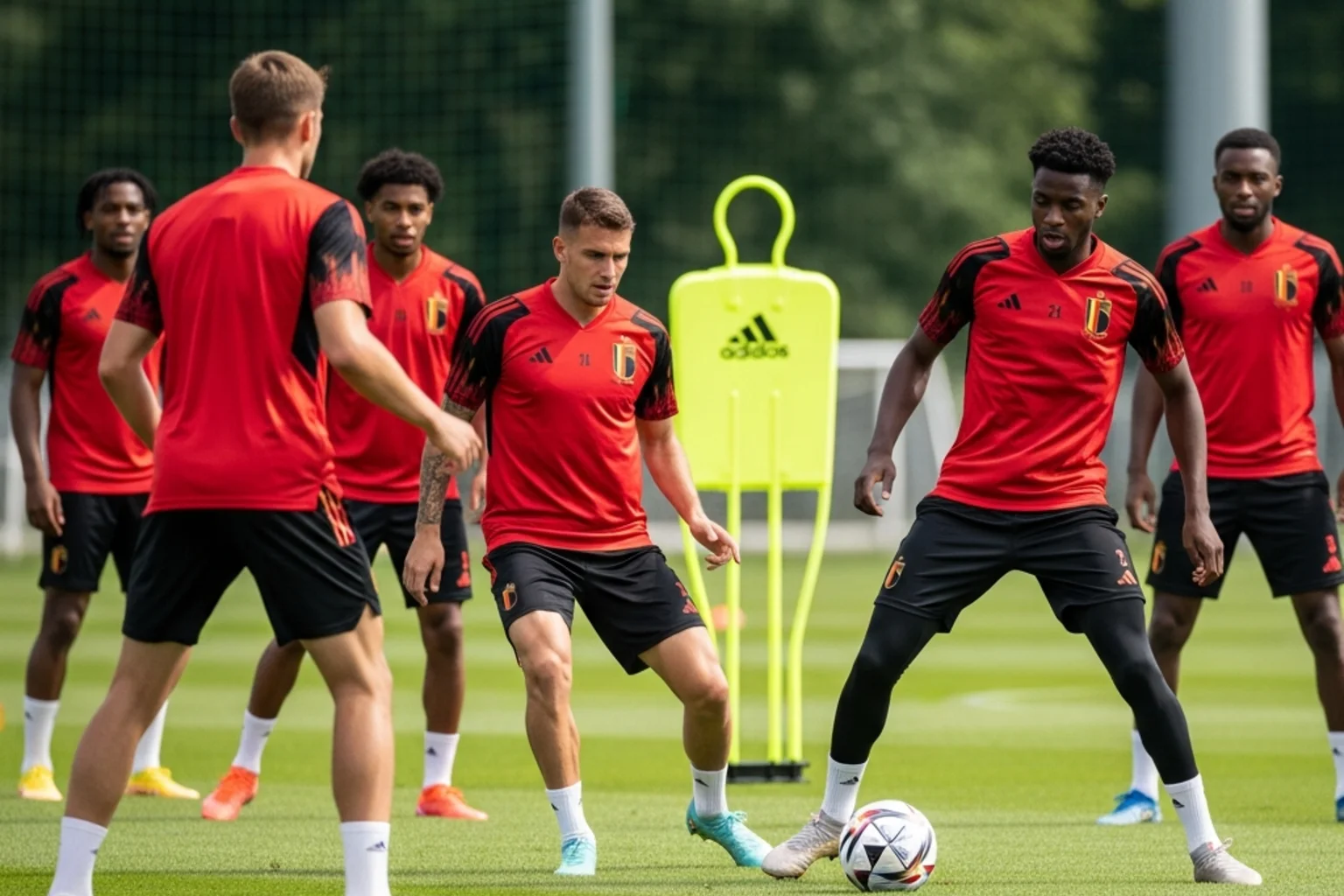
Kevin De Bruyne turned 35 in June. Romelu Lukaku will be 33 by the time the Group G matches kick off. Thibaut Courtois, if selected, is 34 and has spent the better part of two years recovering from knee injuries. Belgium’s golden generation — the one that was supposed to win a World Cup and never did — arrives at the 2026 tournament with one final chance to deliver the trophy that an entire nation expected from them a decade ago. The raw talent is still there in pockets. The question is whether the body can cash the cheques the reputation keeps writing. For All Whites fans, Belgium are the Group G team sheet that looks most intimidating on paper — but they may also be the opponent most vulnerable to an upset on the right day.
TL;DR: Belgium Snapshot Plus the NZ Angle
- FIFA top-five ranked side built around an ageing but still talented core — De Bruyne, Lukaku, Courtois.
- Group G favourites, but the golden generation’s decline is real: slower, less mobile, more dependent on individual moments.
- Belgium vs All Whites on 27 June (15:00 NZST) at BC Place, Vancouver — the final group match for both sides.
- If Belgium have already qualified after two matches, expect heavy rotation for the NZ fixture — the best-case scenario for an All Whites result.
- Our angle: Belgium’s outright Group G winner odds are fair. The value for NZ punters is in the specific Belgium vs All Whites match market if rotation is confirmed.
Check Belgium’s Route to the World Cup
Belgium qualified through UEFA as group winners, but the campaign exposed every crack that the ageing squad has tried to paper over. A defeat in Austria — where Rangnick’s pressing overwhelmed Belgium’s ageing midfield — and a frustrating draw at home against a well-organised North Macedonian side raised serious questions about the squad’s competitiveness at the highest level. De Bruyne missed several qualifying matches through injury, and without his creative influence Belgium looked ordinary: reliant on Lukaku’s physical presence rather than the fluid passing combinations that once made them one of the most exciting teams in Europe.
When De Bruyne played, the difference was stark. Belgium’s passing accuracy in the final third increased by nearly 10 per cent in matches where he started, and their expected goals per match rose from 1.3 without him to 2.1 with him. The dependency is a structural problem: no other player in the Belgian squad can replicate De Bruyne’s vision, his ability to weight a through ball perfectly, or his range of passing from deep and advanced positions. If De Bruyne arrives at the World Cup fit and fresh, Belgium remain dangerous. If he is managing an injury, the team’s creative ceiling drops dramatically.
The qualifying campaign did produce some positives. Younger players like Amadou Onana in midfield and Jeremy Doku on the wing showed they could carry the attacking burden in De Bruyne’s absence, and the defensive unit — reorganised around a new centre-back pairing after the retirement of several veterans — looked more mobile and better organised under the high line than previous iterations. Belgium are not the force they were in 2018, but they are still a top-10 side with enough quality to be comfortable favourites in Group G.
Assess the Squad — De Bruyne, Lukaku and What Remains
I spent an evening watching Belgium’s last five qualifying matches back-to-back, and the overriding impression was of a team living between two eras. The golden generation still occupies the starting eleven — De Bruyne orchestrating, Lukaku leading the line, Courtois commanding the penalty area — but the movements are half a second slower, the pressing less intense, the recovery runs a fraction less urgent. Alongside them, a younger cohort is emerging that plays with more energy but less certainty. The tension between experience and vitality defines this Belgian squad.
De Bruyne remains the heartbeat. Even at 35, his passing is among the best in world football. His ability to play a ball in behind the defensive line from 40 yards, to switch the point of attack with a single diagonal, and to find pockets of space in congested midfields is undiminished by age. What has diminished is his durability. De Bruyne has completed 90 minutes in fewer than half of his competitive club matches over the past two seasons, and the risk of a muscle injury during the tournament is significant. Belgium’s coaching staff will manage his minutes carefully — expect him to be substituted around the 65th minute in group matches, with his full 90-minute reserve saved for the knockout rounds if Belgium advance.
Lukaku’s decline is more visible. His first touch, always a debated topic, has become less reliable under pressure. His ability to hold the ball up with his back to goal — once a devastating weapon that allowed Belgium to play direct and bypass the midfield — has deteriorated as defenders have learned that aggressive physical contact disrupts his control. Lukaku still scores goals; his positioning inside the six-yard box remains excellent, and he converts chances at a rate that most strikers would envy. But he is no longer the dynamic, mobile forward who terrified defenders at the 2018 World Cup. He is a penalty-box presence, effective when the crosses arrive, invisible when they do not. For All Whites fans, this is relevant: if New Zealand can prevent Belgium’s wide players from delivering quality balls into the box, Lukaku becomes a passenger.
The younger contingent offers Belgium their best path forward. Doku’s dribbling ability on the right flank is electric — he beats defenders for fun and creates chaos in the defensive structure that opens space for others. Amadou Onana’s physicality in central midfield provides the engine that the ageing incumbents can no longer supply. Charles De Ketelaere, Loïs Openda, and Johan Bakayoko offer different attacking profiles from the bench: pace, creativity, and directness in varying combinations. The question is whether these younger players can deliver in the pressure cooker of a World Cup, where experience and composure count for as much as raw talent.
In goal, Courtois is a world-class presence if fit. His shot-stopping ability, command of the penalty area, and distribution under pressure are among the best in the tournament. The caveat is the same as with De Bruyne: fitness. Courtois’s knee injuries have been recurrent, and a full-strength Belgium with Courtois in goal is a fundamentally different proposition from a Belgium that starts their backup. The goalkeeping position is the squad’s biggest binary variable — fit Courtois means Belgium concede one or fewer per match; without him, that number climbs.
Break Down Group G — Egypt, Iran, New Zealand
Belgium are clear Group G favourites and will be expected to take six or nine points from the three matches. The order of fixtures matters: Belgium face Egypt first (Lumen Field, Seattle), then Iran (SoFi Stadium, Los Angeles), then New Zealand (BC Place, Vancouver). That sequence frontloads the two harder matches and saves the theoretically easiest fixture for last — a scheduling gift that could have significant implications for the All Whites.
The Egypt match is Belgium’s toughest test. Mohamed Salah against Belgium’s full-backs is a contest that could go either way, and Egypt’s defensive organisation is good enough to frustrate Belgium’s build-up if De Bruyne has an off day. I expect Belgium to win 1-0 or 2-1, with the match decided by a moment of individual brilliance from De Bruyne or a defensive error from Egypt rather than systematic dominance.
Iran will sit deep and challenge Belgium to break them down. This is the type of match where Lukaku’s lack of mobility hurts Belgium most — against a packed defence, the centre-forward needs to make sharp movements to create shooting angles, and Lukaku’s runs are becoming increasingly predictable. If Belgium lead early through a set piece or a De Bruyne masterclass, the match opens up and they win comfortably. If Iran keep it level past the hour mark, Belgium become anxious, the crowd senses vulnerability, and an Iranian counter-attack could produce a historic result. Belgium should still win, but a draw is not unthinkable, and Iran’s odds in the match result market may carry value.
The New Zealand match on 27 June at BC Place is the fixture every All Whites fan is circling on the calendar. If Belgium have won their first two matches — the most likely scenario — they will already be guaranteed a top-two finish and probably the group win. That changes the equation entirely. Expect Belgium to rotate heavily: De Bruyne rested, Lukaku on the bench, and a starting eleven featuring fringe players and younger squad members getting tournament minutes. A rotated Belgium side is still better than most teams in the world, but the gap to New Zealand narrows significantly. For NZ backers, this is the scenario where a draw becomes genuinely possible — and a draw against even a weakened Belgium would be a result that resonates through the country’s football history.
Evaluate Belgium’s Odds — Group and Outright
Belgium’s outright World Cup winner odds on TAB NZ sit around 15.00 to 20.00 — outside the main contender bracket but still in the top 10 or 12 sides in the market. Those odds imply a win probability of 5 to 7 per cent, which feels about right for an ageing squad that has not demonstrated the ability to win knockout matches at the highest level. Belgium’s World Cup record under this golden generation peaks at a semi-final in 2018 and a quarter-final in 2022; neither run suggested a team capable of winning the whole tournament.
The Group G winner market is where Belgium’s odds are most useful for punters. Expect prices around 1.50 to 1.70 for Belgium to top the group — short, but justified by the quality gap between Belgium and the other three teams. If you are building a multi and need a safe group-winner leg, Belgium in Group G is among the more reliable options in the tournament, though the value is thin at those prices.
For NZ-specific punters, the most interesting market is the Belgium vs New Zealand match result. If Belgium rotate for matchday three — which I rate at around 65 per cent probability — the draw price could shift from its pre-tournament level (likely 3.50 to 4.00) to something more attractive in the days before kick-off. Monitoring team news from the Belgian camp in the 48 hours before the match is critical: confirmation that De Bruyne and Lukaku are resting transforms the market and creates a genuine value opportunity on the All Whites draw or even a New Zealand win at double-digit odds.
Prepare for Belgium vs All Whites — What NZ Fans Need to Know
The final Group G match between Belgium and New Zealand kicks off at 15:00 NZST on 27 June at BC Place in Vancouver. By this point in the group stage, the All Whites will know exactly what they need: the results from the Iran and Egypt matches will dictate whether NZ are playing for their tournament lives, for pride, or for the slim but real chance of a best third-place finish.
Tactically, the All Whites will set up to frustrate Belgium regardless of the opponent’s lineup strength. Darren Bazeley’s defensive system — two banks of four, Chris Wood as the lone outlet, quick transitions when possession is won — is specifically designed for matches against superior opponents. Against a rotated Belgian side, New Zealand’s defensive discipline could be the difference between a 0-0 and a 2-0 defeat. The key is Wood’s ability to hold the ball up and bring midfield runners into the game during the transition moments. If NZ can sustain five or six genuine attacking transitions across 90 minutes, at least one should produce a clear scoring chance.
Set pieces are New Zealand’s likeliest route to a goal. Belgium’s reserve defenders will not have played together regularly, and the defensive coordination at corners and free kicks — who marks whom, who attacks the near post, who sweeps the back post — is the first thing that deteriorates when a squad rotates heavily. The All Whites should target the first 15 minutes of the match with aggressive set-piece deliveries, testing the Belgian reserves’ organisation before they settle into the match rhythm.
For punters watching the match live, the in-play markets could offer the best value of the entire group stage. If New Zealand are level at half time against a rotated Belgium — a realistic scenario — the live odds on an NZ draw or win will contract sharply, and the opportunity to back the All Whites at prices that reflect the actual on-pitch reality rather than the pre-tournament reputation gap is where the smart money moves.
Belgium’s Group G Trajectory
Belgium will beat Egypt 1-0 or 2-1 in their opener, beat Iran 2-0 in their second match, and rotate heavily for the All Whites fixture. The NZ match ends 1-1 or 1-0 to Belgium, depending on whether the reserve side finds a second-half goal or New Zealand’s defensive discipline holds. Belgium top Group G with seven or nine points and enter the Round of 32 as a seeded team with a favourable knockout draw. The golden generation’s last dance continues into the knockout rounds, where a quarter-final against a strong European opponent — likely from Group F or Group H — ends the run. Belgium’s ceiling is a quarter-final or semi-final; the floor is a comfortable group-stage exit followed by the retirement of De Bruyne, Lukaku, and Courtois from international football.
