
Scout Egypt in Group G — Salah Factor & NZ Clash Odds
 Available in US
Loading...
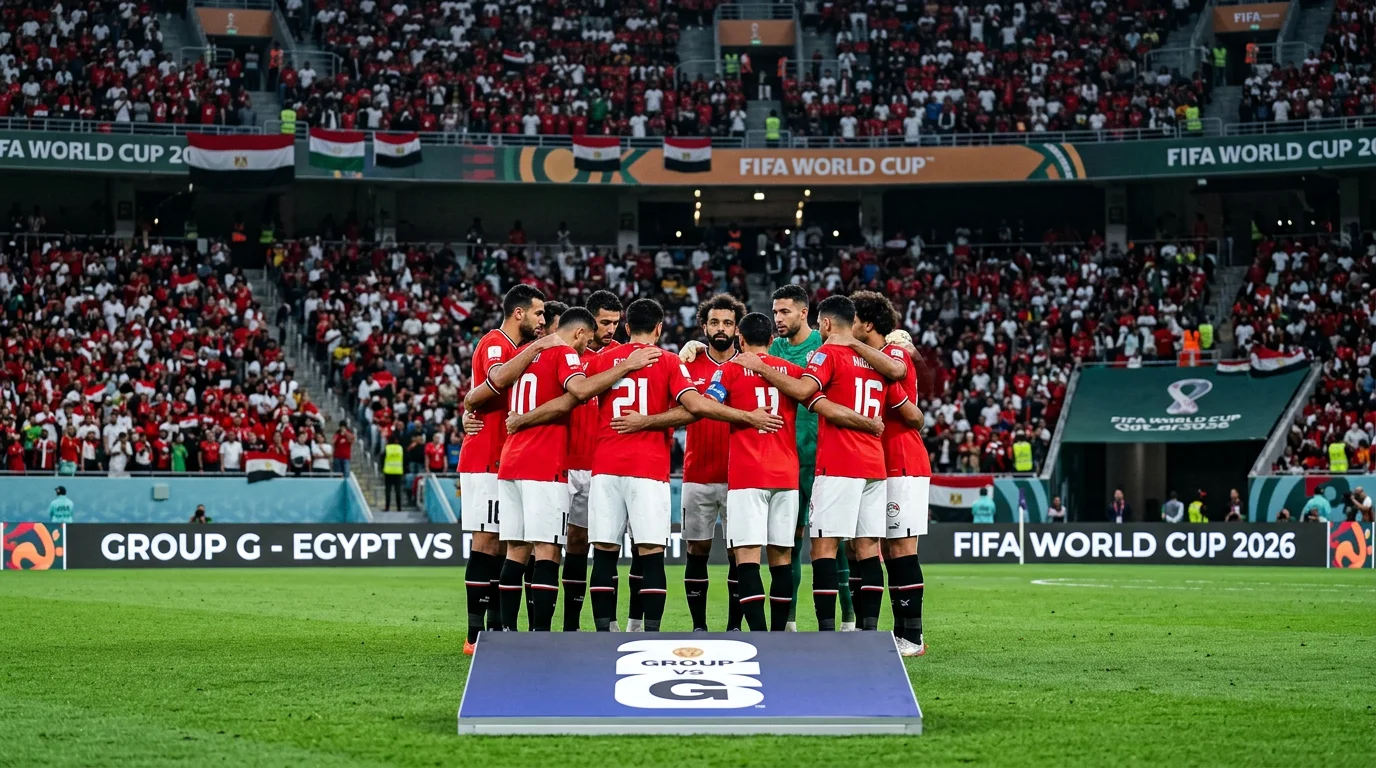
Mohamed Salah has scored more than 200 Premier League goals, won the Champions League, collected individual awards by the shelf-load — and never played a single World Cup match that went his way. Egypt’s 2018 campaign in Russia was a disaster: three defeats, Salah nursing a shoulder injury from the Champions League final, and an early exit that wasted the greatest talent Egyptian football has ever produced. Eight years later, Salah returns to the World Cup stage at 34, fit, driven, and surrounded by the most complete Egyptian squad in a generation. Group G pairs them with Belgium, Iran, and New Zealand — a draw that makes the Round of 32 a realistic target if the Pharaohs get the results they need in the right order. For All Whites fans, Egypt are the matchday-two opponent in Vancouver, and Mo Salah is the single most dangerous individual any New Zealand defender will face in the entire tournament.
TL;DR: Egypt Snapshot Plus the NZ Angle
- Egypt qualified through Africa with a squad built around Salah’s attacking brilliance and a disciplined defensive structure.
- Group G draws: Belgium (matchday 1), then All Whites (matchday 2), then Iran (matchday 3).
- Salah at 34 remains one of the five or six most dangerous forwards in world football — his cut-inside-and-shoot pattern off the right is impossible to defend consistently.
- NZ vs Egypt on 22 June at 13:00 NZST at BC Place, Vancouver — the match that could define the All Whites’ tournament.
- Our angle: Egypt are the second favourites to qualify from Group G. The value for NZ punters sits in the specific match markets for Egypt vs All Whites, particularly the draw if NZ’s defensive setup holds through the first hour.
Trace Egypt’s African Qualifying Journey
African qualifying for the World Cup is a grind that stretches across two years and multiple rounds, testing squads in conditions that range from sea-level humidity to high-altitude thin air, from pristine pitches to surfaces that would make a Sunday league groundskeeper wince. Egypt navigated the entire process without losing a match — a record that speaks to both the squad’s quality and the coaching staff’s ability to manage the physical and psychological demands of qualification across a continent.
The campaign began with comfortable group-stage victories over lower-ranked African opponents, where Salah’s presence alone was enough to unsettle defences and create space for the supporting cast. The real tests came in the final qualifying round, where Egypt faced Senegal, Ivory Coast, and Nigeria in a tight group that produced just two qualification slots. Egypt beat Nigeria in Cairo through a Salah penalty and a second-half defensive masterclass, drew with Senegal in Dakar in a hostile atmosphere that tested every ounce of the squad’s composure, and sealed their World Cup berth with a home victory over Ivory Coast that was more comfortable than the 1-0 scoreline suggested. The underlying numbers show that Egypt created more chances per match than any other African qualifier except Morocco, and their defensive record — six goals conceded across the entire campaign — was the best on the continent.
For betting purposes, the qualifying data reveals a team that is methodical rather than spectacular. Egypt do not blow opponents away; they control matches through defensive structure, patience in possession, and the inevitable moment where Salah finds space to do damage. That pattern will translate directly to Group G, where Egypt’s approach against Belgium, New Zealand, and Iran will follow the same template: defend well, stay compact, and trust Salah to produce the moments of quality that decide tight matches.
Assess the Squad — Mo Salah and the Egyptian Core
Start with the obvious. Salah at the 2026 World Cup is not the explosive, pace-driven winger who terrorised Serie A defenders at Roma a decade ago. He is something more refined: a forward who has mastered the art of positioning, who finds half-spaces between full-back and centre-back with the precision of a chess grandmaster placing a bishop, and whose left foot remains one of the most dangerous weapons in the game. Salah’s signature move — receiving the ball on the right flank, cutting inside onto his left, and curling a shot toward the far post — has been analysed, prepared for, and drilled against by every defence in the Premier League for seven consecutive seasons. It still works. The reason is not mystery but mastery: Salah executes the pattern at such speed and with such precision that even defenders who know exactly what is coming cannot prevent it often enough.
At 34, Salah’s physical profile has shifted. His sprint speed has declined by roughly 5 to 8 per cent from his peak, which means he no longer outruns full-backs in straight footraces as routinely as he once did. The compensation is positional intelligence: Salah now starts his runs from deeper and wider positions, timing his movement to arrive in the danger zone at the exact moment the ball reaches him. His goal-per-match ratio has remained remarkably consistent over the past three seasons, suggesting that the decline in raw athleticism has been fully offset by improvements in decision-making and positioning. For New Zealand’s defenders, the assignment against Salah is not about matching his pace — it is about denying him the ball in the right-sided half-space where his cut-inside pattern begins.
Beyond Salah, Egypt’s squad is built on collective organisation rather than individual stars. The midfield is anchored by players from the Egyptian Premier League and the Saudi Pro League — technically competent, physically robust, and drilled in a system that prioritises ball retention and defensive shape. Mohamed Elneny, if selected, brings Premier League experience to the holding role, while younger midfielders offer energy and pressing intensity that the older heads cannot sustain for 90 minutes. The defence is the squad’s second-strongest unit after Salah himself. Egyptian centre-backs tend to be tall, strong in the air, and comfortable defending deep — exactly the profile needed for a tournament where the game plan involves absorbing pressure for long periods. The goalkeeper, Mohamed El-Shenawy, is experienced and reliable, a shot-stopper who commands his area with the quiet authority that comes from years as the undisputed number one.
The weakness is creativity beyond Salah. When the ball is not reaching Salah in his preferred zones — when the opposition doubles up on the right side and forces Egypt to attack down the left or through the centre — the squad lacks a secondary creative source capable of unlocking organised defences. The wide midfielders on the opposite flank are functional rather than brilliant, and the centre-forward position has been a revolving door of options without a single player establishing himself as the guaranteed starter. If New Zealand can deny Salah the ball and force Egypt to create from other areas, the Pharaohs become significantly less threatening. That is the tactical keystone for the All Whites’ matchday-two game plan.
Break Down Egypt’s Group G Position
Egypt enter Group G as the second favourites behind Belgium, and their fixture order is significant. Opening against Belgium in Seattle is the toughest possible start — a match where Egypt will be heavy underdogs and where the result is less important than the performance. If Egypt keep the scoreline close against Belgium (a 1-0 or 2-1 defeat is the most likely outcome), they enter the New Zealand match on 22 June with confidence intact, a clear plan, and the knowledge that a win over NZ sets up a potentially decisive final match against Iran.
The Iran fixture on matchday three is the hidden subplot of Group G. Egypt and Iran are competing directly for second place — and potentially for the best third-place spot that could open a path to the Round of 32. If both teams have taken three points from their first two matches (beating NZ and losing to Belgium), the Egypt-Iran decider becomes a winner-takes-second, loser-takes-third contest with huge implications. That scenario makes the NZ match even more important for Egypt: they cannot afford to drop points against the All Whites if they want to enter the Iran match with the security of knowing a draw would be sufficient.
For NZ punters analysing Group G dynamics, Egypt’s determination to beat the All Whites creates a predictable tactical pattern. Egypt will attack from the start, looking for an early goal that settles nerves and forces NZ out of their defensive shell. If New Zealand can survive the first 20 minutes without conceding — the period when Egypt’s intensity and Salah’s sharpness are at their peak — the match dynamics shift. Egypt become more anxious, the passes become more rushed, and the space behind their committed full-backs opens up for NZ counter-attacks through Chris Wood. The first 20 minutes are the match within the match.
Evaluate Egypt’s Odds — Group and Outright
Egypt’s outright World Cup winner odds are in the 80.00 to 150.00 range — extreme long-shot territory that reflects the gap between their squad quality and the tournament’s genuine contenders. These odds are not worth backing; Egypt are not winning the World Cup, and no amount of Salah brilliance changes the structural limitations of a squad that lacks the depth to survive seven knockout matches against progressively better opponents.
The Group G markets are where Egypt’s odds become relevant. To qualify from the group (top two or best third) sits around 2.50 to 3.50 — a price that implies 28 to 40 per cent probability. My assessment is slightly higher, around 35 to 45 per cent, because Egypt’s defensive quality and Salah’s match-winning ability make them a tough opponent for anyone in the group. If the market prices Egypt’s qualification above 3.00, there is value worth considering.
To finish second in Group G is the more specific and useful market for punters. Expect odds around 2.80 to 3.50, which implies a 28 to 36 per cent probability. I rate Egypt’s chances of finishing second at roughly 35 per cent — the margin is small, but it exists, and if you find the price above 3.20, it is a justifiable bet. The risk factor is the Iran match: if Egypt and Iran split points against each other and NZ, the group could come down to goal difference, which introduces variance that is difficult to predict.
The Egypt vs New Zealand match result market is the most actionable for NZ punters. Egypt win at around 1.80 to 2.10, draw at 3.20 to 3.50, NZ win at 4.50 to 6.00. The draw is my favoured play at prices above 3.20. Egypt will dominate possession but NZ’s defensive system is built to contain exactly this type of opponent — a team that relies on one attacking channel (Salah’s right side) and lacks creativity elsewhere. A 0-0 or 1-1 is the most probable scoreline profile for this match, and the draw odds underrate the likelihood of that outcome.
Prepare for Egypt vs All Whites — The Key Clash
The 22 June fixture at BC Place in Vancouver kicks off at 13:00 NZST — a lunchtime appointment that could be the most important 90 minutes in New Zealand football since the 2010 draw with Italy. The tactical preview is straightforward: Egypt will have the ball, NZ will not. The numbers from qualifying suggest Egypt will average around 60 to 65 per cent possession against Group G opponents, and New Zealand’s game plan does not require fighting for the ball — it requires defending intelligently without it.
The All Whites’ defensive shape against Egypt will almost certainly feature a back four with the left-sided centre-back tasked to step out and support the left-back whenever Salah receives the ball in the right channel. That doubling-up leaves the opposite flank underprotected, which is why the right-back and right-sided midfielder will need to tuck in to cover the central areas that the left-back vacates. The entire defensive structure rotates around Salah’s positioning: when he drifts wide, NZ compress to the right; when he moves centrally, the centre-backs take over. The system requires concentration, communication, and discipline for 90 minutes. One lapse — one moment where Salah receives the ball in space between the lines without a covering defender — is likely enough for him to score.
New Zealand’s attacking plan against Egypt involves Wood, set pieces, and patience. Wood’s hold-up play allows NZ to relieve defensive pressure by winning aerial duels in the Egypt half, drawing fouls, and earning free kicks in dangerous positions. Liberato Cacace’s delivery from left-sided set pieces is the primary creative weapon — his ability to whip the ball into the six-yard box with pace and accuracy gives NZ’s centre-backs a realistic heading opportunity at every corner and wide free kick. If NZ can accumulate six or seven set-piece opportunities across 90 minutes, the probability of scoring from at least one is significant.
The in-play betting angle for this match is the clearest in the entire Group G schedule. If the score is 0-0 at half time — which I rate as the single most likely half-time result — the live odds on a New Zealand draw or win will be substantially better than pre-match prices. Backing the draw at half time, when the live market adjusts to reflect the actual on-pitch pattern, could be the smartest single bet of the All Whites’ World Cup campaign. The pre-match draw price of 3.20 to 3.50 might look generous now; the live draw price at 0-0 half time will be closer to 2.50, and the value will have already been captured by those who backed it early.
Egypt’s Group G Campaign — Match by Match
Egypt lose to Belgium 1-0 in the opener, with Salah creating two clear chances but finding Courtois in inspired form. Egypt beat New Zealand 1-0 through a Salah goal in the 55th minute — a cut-inside-and-curl from 20 yards that NZ’s goalkeeper gets a hand to but cannot keep out. Egypt draw 0-0 with Iran in the decider, both teams content with a point that secures second (Egypt) and third (Iran) respectively. Egypt finish with four points, qualify for the Round of 32, and exit in the first knockout round against a strong European opponent who can defend Salah more effectively than any Group G side managed.
That is the baseline prediction. The upside scenario for NZ fans: the All Whites hold Egypt to a 0-0 draw in Vancouver, Salah has an off day, and NZ take a precious point that keeps their own third-place hopes alive. I rate that outcome at roughly 25 per cent probability — not the most likely single outcome, but far from improbable, and exactly the kind of result that makes the draw market worth backing.
