
How to Start Betting on World Cup 2026 — NZ Walkthrough
 Available in US
Loading...
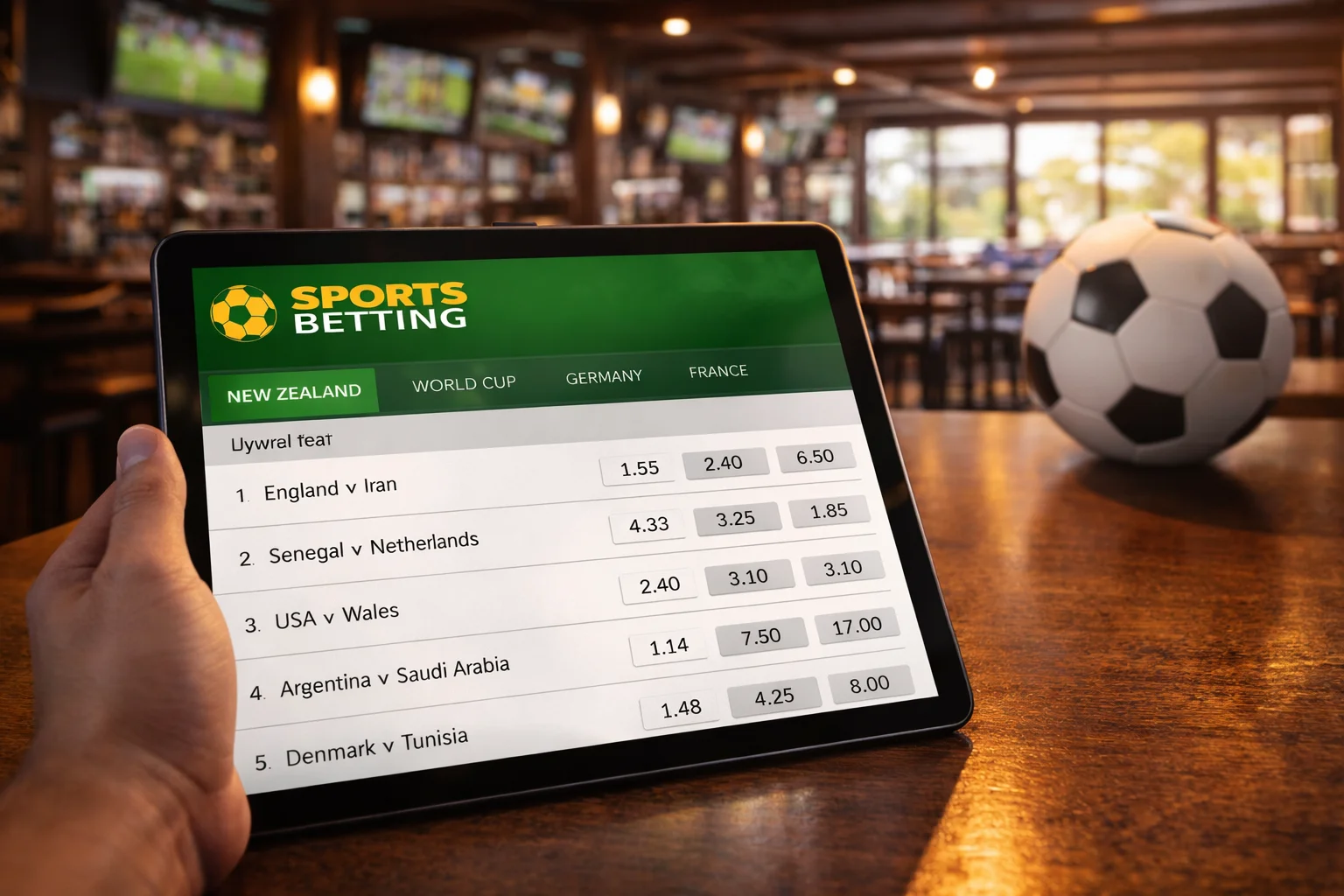
Nine years ago, I watched Chris Wood score against the Solomon Islands in a World Cup qualifier from a pub in Wellington, convinced the All Whites would never get another real shot at the big stage. Now they have a guaranteed spot in Group G, and for the first time since 2010, New Zealand punters can back their national team at a FIFA World Cup with actual, legitimate odds. That changes everything about how you approach your betting for this tournament.
This walkthrough covers everything you need to place your first World Cup bet in New Zealand — from setting up your TAB NZ account to understanding which markets give you the best chance of walking away with a profit across 39 days of football. I have spent the past decade covering international tournaments, and the 48-team format FIFA introduced for 2026 creates opportunities that did not exist at previous World Cups. More teams mean more matches, more variables, and more edges for punters who know where to look.
Whether you have never placed a sports bet or you are transitioning from rugby and racing to football, this guide assumes nothing. By the end, you will know exactly how to bet on World Cup 2026, which bet types suit your style, how to keep your bankroll intact through the group stage and knockout rounds, and which rookie mistakes drain accounts faster than a 90th-minute equaliser.
TL;DR — Your Pre-Match Checklist
Before the opening whistle at Estadio Azteca on 11 June, make sure you have ticked these five boxes:
- Register and verify your TAB NZ account at least 48 hours before you want to bet — verification can take time, and you do not want to miss early value on Group G markets.
- Deposit in NZD using POLi, debit card, or bank transfer — TAB NZ does not charge deposit fees, but check your bank’s policies on gambling transactions.
- Learn the decimal odds format used in New Zealand — a price of 3.50 means you receive $3.50 for every $1 wagered, including your stake back.
- Set deposit and loss limits through TAB NZ’s responsible gambling tools before you place a single bet — changing limits later requires a cooling-off period.
- Decide your total World Cup bankroll and divide it across the tournament’s three phases: group stage, Round of 32, and knockout rounds from the quarter-finals onward.
Complete these steps now, and you will be ready to act when the odds shift in the days before kick-off.
Set Up Your TAB NZ Account Step by Step
Last November, a mate asked me to help him bet on the Melbourne Cup for the first time. He assumed he could sign up and deposit in five minutes. Three days later, he was still waiting for his ID verification to clear, and the horse he wanted had drifted from 8.00 to 6.50. Do not make the same mistake with the World Cup.
TAB NZ holds the exclusive licence for sports betting in New Zealand under the Racing Industry Act 2020. Since June 2025, no offshore operators can legally accept bets from Kiwis on sports or racing. That simplifies your choice — TAB NZ is it — but it also means the platform handles enormous volume during major events. Getting your account ready early matters.
Register and Verify
Head to the TAB NZ website or download the mobile app from the App Store or Google Play. Registration requires your full legal name, date of birth, residential address, and a valid email. You must be 18 or older to open an account.
TAB NZ uses electronic identity verification through the Department of Internal Affairs’ RealMe system for most customers. If your details match government records, verification completes within minutes. If they do not — common issues include using a nickname instead of your passport name or a recent address change — you will need to upload documents manually. Acceptable documents include a New Zealand driver licence, passport, or 18+ card combined with a utility bill or bank statement showing your address.
Manual verification can take 24 to 72 hours during busy periods. With the World Cup approaching, expect TAB NZ’s compliance team to face higher volumes than usual. Register by late May at the latest, ideally sooner if you want to lock in outright bets before the odds compress.
Once verified, TAB NZ assigns you a customer number. Save this somewhere accessible — you will need it for phone betting (0800 102 106) if the app or website experiences issues during high-traffic matches.
Deposit in NZD
TAB NZ accepts deposits exclusively in New Zealand dollars. The minimum deposit is $5, and there is no maximum, though your bank may flag large transfers to gambling accounts.
POLi offers the fastest deposits — funds typically appear within minutes. POLi connects directly to your internet banking, so you authorise the transfer without sharing your login details with TAB NZ. Debit cards (Visa and Mastercard) also process quickly, usually under an hour. Credit card deposits are not accepted under New Zealand gambling regulations.
Bank transfers take one to three business days. If you are planning to bet on the opening match, initiate your transfer by 6 June to guarantee funds clear in time. TAB NZ does not charge deposit fees, but some banks treat gambling transfers as cash advances — check your bank’s terms to avoid surprise interest charges.
Consider depositing your entire World Cup bankroll upfront. Having the funds available prevents impulse top-ups when a bet loses, which is one of the fastest routes to blowing a budget. Seeing a fixed balance also makes you more deliberate about stake sizing.
Learn How Decimal Odds Work — Quick Primer
A punter from Auckland once told me he avoided football betting because “the odds looked different” from racing. He was right — they do look different. But once you understand decimal odds, you will find them far easier to calculate than the fractional format the British use or the moneyline system Americans prefer.
Decimal odds represent your total return per dollar wagered, including your original stake. If TAB NZ prices Argentina at 4.50 to win the World Cup and you bet $20, your return on a winning bet is $20 multiplied by 4.50, which equals $90. That $90 includes your $20 stake, so your profit is $70.
This format makes comparing odds straightforward. A team at 2.10 gives you a better return than one at 1.85, and you can see that instantly without converting fractions. It also simplifies multi-bet calculations — multiply all the individual odds together to find your combined price.

Understanding implied probability helps you identify value. To convert decimal odds to implied probability, divide 1 by the odds and multiply by 100. For Argentina at 4.50, the calculation is 1 divided by 4.50, multiplied by 100, which equals 22.2%. The market believes Argentina has roughly a 22% chance of winning the tournament.
Here is where it gets useful: if your own analysis suggests Argentina’s true probability is 28%, betting at 4.50 offers value. Over the long term, backing bets where you believe the true probability exceeds the implied probability leads to profit. Of course, estimating true probabilities requires research, which is why the rest of this guide focuses on the tools and markets that make that analysis easier.
Decimal odds at 2.00 represent a 50% implied probability — the breakeven point where you neither gain nor lose over infinite bets. Anything below 2.00 means the market considers that outcome more likely than not. Anything above 2.00 suggests the outcome is less likely than a coin flip, according to the bookmaker’s pricing.
TAB NZ displays decimal odds by default for football markets. If you see odds displayed differently, check your account settings — you may have inadvertently switched to fractional or American format.
Choose the Right Bet Type for the World Cup
During the 2022 World Cup, I tracked every bet I placed across the tournament. The data surprised me: my match-result bets broke even, my goalscorer picks lost 15% of my stake, but my outright and group-winner bets delivered 40% ROI. The lesson was clear — not all bet types suit tournament football equally.
TAB NZ offers dozens of markets for each World Cup match, but most punters need only five or six to cover every angle they might want to play. Here is how each works and when to use it.
Outrights
Outright bets — also called futures or antepost bets — involve picking the tournament winner before the event concludes. You can place these now, months before the first ball is kicked, or during the tournament as odds shift based on results.
The advantage of early outright bets is price. Argentina currently sits around 4.50, but if they cruise through the group stage and look dominant, that price will shorten to 3.00 or lower. Locking in value early means bigger potential returns. The risk is obvious: injuries, form slumps, or shock eliminations can make your bet worthless before the knockout rounds begin.
I recommend allocating 10-15% of your World Cup bankroll to outright bets placed before the tournament starts. Spread this across two or three selections rather than putting everything on one team. A small stake on a 15.00 outsider like Netherlands or Germany hedges against the favourites disappointing.
Match Result (1X2)
The 1X2 market — also called three-way betting — asks you to predict the result at full time: home win, draw, or away win. At the World Cup, “home” typically refers to the team listed first on the fixture, regardless of which country hosts the match.
Draws happen frequently in group-stage football. Conservative teams protect a point against stronger opposition, and the stakes of knockout elimination have not kicked in yet. In the 2022 group stage, 8 of 48 matches ended level — roughly 17%. Ignoring the draw sacrifices a significant chunk of outcomes.
When assessing 1X2 odds, compare the draw price to historical rates. If the market prices the draw at 4.00 (25% implied probability) but the matchup features two evenly ranked teams with defensive tendencies, the draw likely offers value. Group-stage matches between Pot 2 and Pot 3 teams — like Egypt versus Iran in Group G — frequently produce draws.
Multis (Accumulators)
Multis combine multiple selections into a single bet. All legs must win for the bet to pay out, but the odds multiply together, creating potentially enormous returns from small stakes.
The catch: every additional leg reduces your probability of winning. A four-leg multi where each selection has a 60% chance of winning carries a combined probability of just 13%. Bookmakers love multis because the compounded edge across multiple selections dramatically increases their margin.
If you enjoy multis — and many Kiwi punters do — limit them to two or three legs and focus on outcomes you have strong conviction about. A safer approach is the “banker” system: identify one near-certain outcome and combine it with a single value pick. For example, pairing Brazil to beat Haiti (highly likely) with Morocco to beat Scotland (less certain, but reasonably probable) creates a modest multi without stacking impossible odds.
TAB NZ offers multi bonuses that increase your payout based on the number of legs. These bonuses help offset the bookmaker’s edge but do not eliminate it. Treat multis as entertainment bets with controlled stakes rather than a core profit strategy.
Over/Under Goals
Total goals markets ask whether the combined score will exceed or fall below a specified line. The standard line is 2.5 goals — Over 2.5 requires three or more goals, Under 2.5 requires two or fewer.
The 48-team format introduces more mismatches than previous World Cups. When Germany faced Curaçao — a tiny Caribbean nation with a population of 150,000 — the goals flowed freely. Matches between Pot 1 powerhouses and Pot 4 qualifiers like Haiti, Curaçao, or New Zealand (no offence to the All Whites) tend to see higher scoring.
Group-stage matches average around 2.4 goals per game historically. Knockout matches average slightly lower because teams become more cautious when elimination looms. Adjust your expectations based on the tournament phase and the stakes involved.
First Goalscorer
This market requires picking which player scores the opening goal. If your selection does not play, most bookmakers void the bet — check TAB NZ’s specific rules, as they occasionally differ by market.
First goalscorer bets carry high variance. Even prolific strikers might not score the opener if they are marked heavily, take penalties rather than open-play chances, or simply hit the post. The odds reflect this variance — prices of 6.00 to 10.00 for a team’s main striker are common.
I treat first goalscorer bets as occasional fun rather than a consistent strategy. If you fancy a punt, look for set-piece specialists facing teams weak at defending corners, or penalty takers when the opposition has a high fouling rate in the box.
Manage Your Bankroll Across 39 Days
The 2018 World Cup nearly broke me — not because my picks were terrible, but because I had no plan. I bet heavily on the group stage, chased losses during the Round of 16, and had nothing left by the quarter-finals when the value bets actually materialised. Germany crashing out in the groups taught me a harsh lesson about patience.
A World Cup lasts 39 days. That is 104 matches across three distinct phases: group stage (48 matches in 16 days), Round of 32 (16 matches in 4 days), and the remaining knockout rounds (7 rounds in 19 days, including rest days). Each phase requires different bankroll allocation because the betting dynamics shift.
Start by deciding your total World Cup bankroll — the absolute maximum you are willing to lose over the entire tournament. This should be money you can afford to lose without affecting your life. For most recreational punters, somewhere between $200 and $1,000 NZD makes sense, depending on income and expenses. Professional bettors work with larger amounts but follow the same proportional principles.
Divide your bankroll into three portions. Allocate 40% to the group stage, 30% to the Round of 32, and 30% to the remaining knockouts. This weighting front-loads your betting during the phase with the most matches while preserving enough for the high-stakes later rounds where outcomes become harder to predict but odds sometimes offer value as casual bettors overreact to recent results.
Within each phase, use a flat-staking approach: bet the same percentage of your phase bankroll on each wager. A common guideline is 2-5% per bet. If your group-stage allocation is $400, staking $10 to $20 per bet keeps you in action across dozens of matches without risking your entire allocation on a single bad result.
Never chase losses. The urge to double your stake after a losing bet feels logical — you need to “win back” what you lost. But chasing compounds variance and accelerates bankroll depletion. Stick to your stake regardless of recent results. The maths works out over time if your selections have genuine value.
Consider separating your betting account from your viewing budget. If you are planning to watch matches at the pub with friends, set aside cash for drinks and food separately from your betting bankroll. Mixing the two leads to impulsive decisions — you are three pints in, the All Whites are trailing Iran, and suddenly doubling your stake on a late equaliser seems perfectly rational. It is not. Sober betting happens at home, ideally before the match starts.
The 48-team format means more matches per day than previous World Cups. On peak group-stage days, up to four matches run simultaneously or in quick succession. This density creates betting fatigue — the mental energy required to analyse each matchup depletes over hours of viewing. Build rest days into your schedule. You do not need to bet on every matchday. Taking Wednesday off to recharge means sharper analysis on Thursday.
Keep a simple spreadsheet tracking every bet: date, match, market, odds, stake, and outcome. Reviewing this data after the tournament reveals which bet types work for you and which leak money. I discovered my goalscorer bets consistently underperformed only because I tracked them — without data, I would have continued losing.
Use In-Play Betting — Tips for Live World Cup Markets
At 2 AM during the 2014 World Cup semi-final, I watched Germany go 5-0 up against Brazil within 30 minutes. The pre-match odds had Germany at 2.80. By half-time, anyone who backed them in-play at 1.05 still made money — because they staked when the odds showed the situation had not yet been priced correctly.
Live betting — also called in-play or in-running betting — allows you to place bets after a match has started. Odds update constantly based on the score, time elapsed, red cards, and other match events. TAB NZ offers in-play markets for all World Cup matches, though the range of options is narrower than pre-match.

New Zealand’s timezone creates unique opportunities for live betting. Most World Cup matches kick off in the evening or night in North American time zones, which means early afternoon to late evening in NZST. Matches at 9 PM ET translate to 1 PM the following day in New Zealand — perfect for lunch breaks or Saturday viewing. You are awake and alert when odds move, unlike European punters catching 3 AM kickoffs.
The best in-play opportunities arise during four windows. First, the opening 15 minutes: if a favourite concedes an early goal, their win odds lengthen dramatically, often beyond what the situation warrants. Backing Brazil at 3.50 after conceding to Scotland in the 10th minute could offer tremendous value if you believe Brazil will equalise and dominate.
Second, the interval between halves: managers make tactical adjustments, and the market often underweights these changes. If you spot a formation shift that favours one side, in-play markets rarely react until goals actually land.
Third, after the 70th minute in tight games: teams trailing by one goal throw caution aside, creating high-variance situations where late goals become more likely. Over 0.5 goals in the remaining time often prices attractively.
Fourth, extra time in knockout matches: fatigue and penalty shootout fear lead to strange decisions from both teams and bettors. If you can read the momentum, this window offers edges unavailable elsewhere.
Live betting also demands discipline. The rapid pace of odds movement and the emotional intensity of watching matches create impulsive decisions. Set strict per-match limits for in-play betting and walk away once you hit them, regardless of what is happening on the pitch. The next match always offers another opportunity.
Avoid the Rookie Mistakes NZ Punters Make
Three World Cups ago, I backed Australia to beat France in their opener because “the Socceroos always turn up at World Cups” and “France have dressing room issues.” France won 4-1. My reasoning was pure narrative, unsupported by any data. Narrative-driven betting is comfortable, but the bookmaker prices in narratives — your edge comes from going beyond the story.
The first mistake is betting with your heart instead of your head. New Zealand punters naturally want the All Whites to succeed. Backing Chris Wood to score against Belgium feels patriotic. But patriotism does not pay dividends. Assess every market involving New Zealand as you would any other — with cold analysis of probabilities versus prices. You can cheer for the All Whites and bet against them in the same match if the odds warrant it.
The second mistake is ignoring the draw. In 1X2 markets, casual punters gravitate toward backing a winner. They see Brazil versus Scotland and automatically back Brazil. But Brazil might win only 60% of the time, with Scotland winning 10% and the draw accounting for 30%. If the draw is priced at 5.00 (20% implied), it offers value — yet punters overlook it because draws feel boring. Boring bets win money.
The third mistake is overloading multis. Adding legs feels like building excitement, but each leg adds risk. A five-leg multi with each selection at 70% probability has only a 17% chance of landing. The odds might show a huge potential payout, but the probability of collecting that payout is tiny. Keep multis short or avoid them entirely during tournaments where single-match variance runs high.
The fourth mistake is chasing steam. When odds move sharply — say, England drifts from 2.10 to 2.40 overnight — some punters assume “the sharps know something” and follow the movement. But steam can result from casual money, injury rumours that prove false, or bookmaker rebalancing. Following steam without understanding why it moved is gambling on other gamblers, not on football.
The fifth mistake is ignoring tournament context. A team that thrashed opponents in qualifying may rotate heavily in the third group match with qualification already secured. A team fighting for their lives in a must-win scenario brings different intensity than one coasting. Check the permutations before betting — knowing what each team needs changes everything about how they will approach the 90 minutes.
The sixth mistake is betting every match. With 104 games across the tournament, the temptation to action every fixture is strong. Resist it. Focus on matches where you have an informed opinion backed by analysis. Skipping a match costs nothing; betting without edge costs money. Quality over quantity applies to betting as much as any other skill.
The seventh mistake is relying solely on pre-tournament form. Qualifying campaigns span years and involve dramatically different opposition. Uruguay demolishing Bolivia at altitude tells you little about how they will perform against Colombia in a Houston evening match. International football form is notoriously unreliable — teams often peak or crater at tournaments regardless of their qualifying record. Watch for tactical shifts and squad changes between qualifiers and the tournament itself.
The eighth mistake is underestimating fatigue in the knockout rounds. Teams playing extra time in the Round of 32 face a significant disadvantage in subsequent matches. Travel between venues compounds the problem — a team flying from Vancouver to Miami loses energy that a side resting in Los Angeles retains. Factor in scheduling and travel when assessing knockout matches; the fresher team holds an underrated edge that odds sometimes fail to capture.
Your Action Plan Before 11 June
The All Whites open against Iran on 16 June at SoFi Stadium in Los Angeles — that is 13:00 NZST, a perfect early-afternoon kickoff. Between now and then, you have time to prepare properly instead of scrambling at the last minute like so many punters do.
This week, register your TAB NZ account and complete verification. Deposit your full World Cup bankroll so it is ready when you spot value. Set your responsible gambling limits before placing a single bet.
Next week, research the outright market and identify two or three teams you believe are mispriced. Place small outright bets to lock in current prices before public money compresses the odds as the tournament approaches.
In the fortnight before the opening match, study Group G thoroughly. Read team previews, check the latest odds across all markets, and build a list of specific bets you plan to place on the All Whites’ three group matches. Enter the tournament with a plan, not a vague intention to “have a punt.”
Betting on the World Cup should be fun. Watching the All Whites compete on the global stage is a once-in-a-generation experience for Kiwi football fans. A disciplined approach to betting enhances that experience — wins feel sweeter when they come from informed decisions, and losses sting less when they fit within a budget you controlled from the start. See you at kickoff.
