
Scout All 48 Teams — World Cup 2026 Form Guide & Odds
 Available in US
Loading...
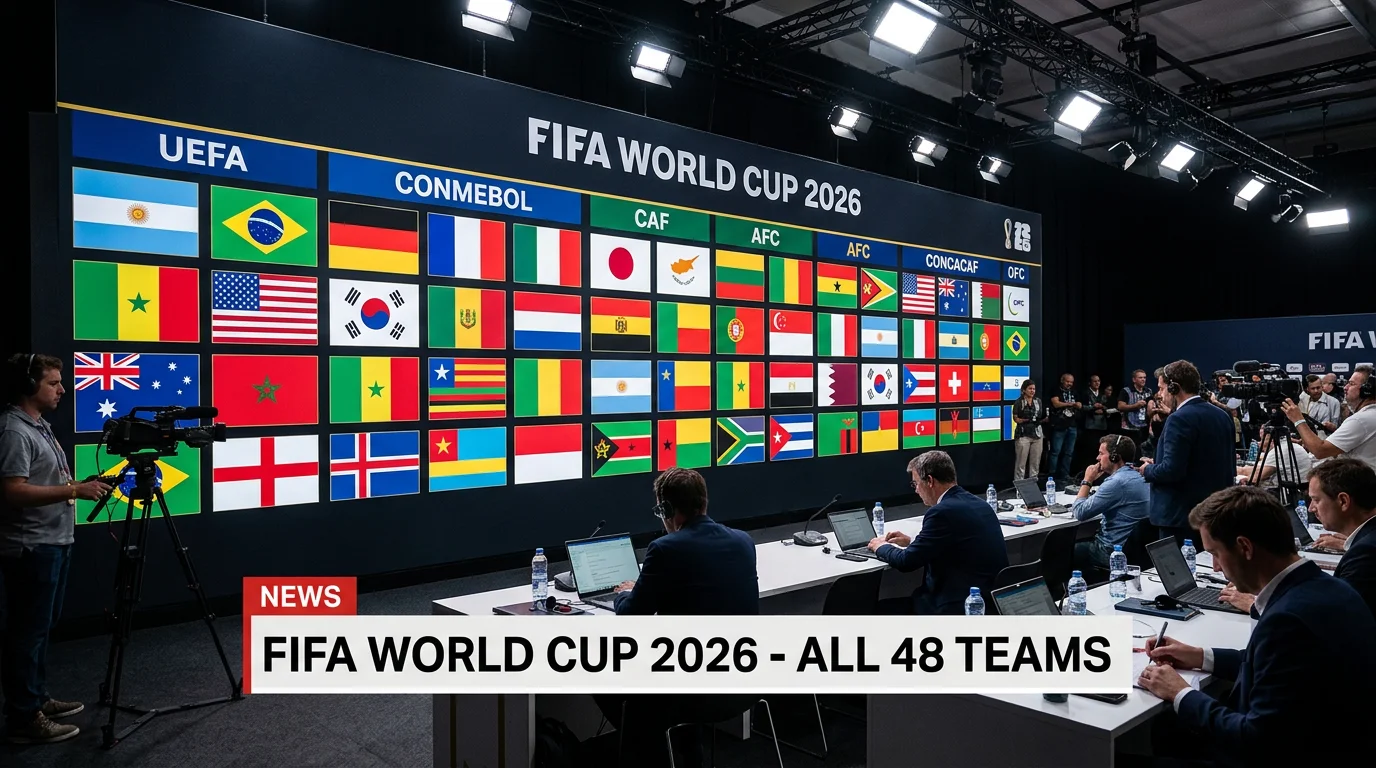
Curaçao has never qualified for a World Cup. Neither has Cabo Verde, nor did Bosnia and Herzegovina expect to be here after losing their first playoff match. The 48-team format rewrites everything we thought we knew about World Cup composition — and with it, every assumption about which nations can compete, which are making up the numbers, and where value hides in the betting markets.
I have watched qualifying campaigns across all six confederations for this tournament, and what strikes me most is how the expanded field creates genuine quality variance. Brazil versus Haiti is not a competitive fixture by any traditional measure. Yet FIFA’s new structure guarantees both nations share the same stage, and that mismatch ripples through every betting calculation you will make.
This guide scouts all 48 teams through a betting lens. You will learn which nations belong in the title conversation, which dark horses carry upset potential, and which underdogs might surprise in isolated matches even if their tournament ceiling remains low. More importantly, you will understand the form indicators and tactical profiles that separate genuine contenders from nations simply happy to be here.
TL;DR — Teams by Tier and Confederation
Every tournament requires a tiering system — a quick reference that separates realistic contenders from the rest. Here is how I categorise the 48 teams based on current form, squad depth, and tournament pedigree:
| Tier | Teams | Betting Profile |
|---|---|---|
| Contender | Argentina, Brazil, France, England, Spain | Outright value only at specific prices; short odds on group markets |
| Dark Horse | Germany, Portugal, Netherlands, Belgium, USA, Croatia | Best value window for outright bets; capable of deep runs |
| Qualifier | Uruguay, Morocco, Denmark, Japan, South Korea, Colombia, Senegal | Group market value; knockout upsets possible |
| Underdog | All remaining teams including New Zealand, Iran, Egypt, Australia, Mexico, Canada | Match-specific value; unlikely to progress beyond Round of 32 |
Use this framework as a starting point, not gospel. Form changes, injuries strike, and any team can exceed its tier for 90 minutes. The goal is understanding baseline expectations before examining individual nations.
Identify the Title Contenders
When Brazil last won a World Cup in 2002, I was watching on a grainy television in Christchurch, barely understanding the significance of Ronaldo’s redemption arc. Twenty-four years later, Brazilian fans carry that same weight of expectation into every tournament — and the squad finally looks capable of delivering.
Five nations enter the 2026 World Cup with genuine title credentials. These are not speculative picks but market-recognised favourites whose squads, form, and tactical profiles suggest they can win seven consecutive knockout matches against the best opposition available.
Argentina defend their Qatar triumph with a squad in transition. The 2022 core — Messi, Di María, Otamendi — has aged out or reduced their roles. Enzo Fernández, Julián Álvarez, and Alexis Mac Allister now carry responsibility that rested on Messi’s shoulders for fifteen years. Lionel Scaloni’s system remains intact, built on pressing triggers and quick vertical transitions, but whether the new generation can execute under World Cup pressure remains untested. Their CONMEBOL qualifying campaign showed cracks: a shock loss to Uruguay, a draw against Venezuela, and defensive lapses that elite opponents will exploit. Argentina remain contenders because their talent ceiling is the tournament’s highest, but the floor has lowered since Qatar.
Brazil bring attacking depth that borders on obscene. Vinícius Júnior, Rodrygo, Endrick, Raphinha, and Savinho compete for four forward positions — any European giant would sacrifice a decade of transfer budgets for that embarrassment of riches. Yet Brazil’s midfield lacks a controller since Casemiro’s decline, and their centre-back options remain unconvincing at the highest level. Dorival Júnior’s appointment brought stability after the Tite era’s stagnation, and qualifying results improved. Brazil will score goals. Whether they can defend leads against France or Argentina in a semi-final decides their fate.
France have the clearest path to victory if Kylian Mbappé performs at his ceiling. His move to Real Madrid adds motivation — winning the World Cup while playing for the biggest club would cement a legacy still building. Antoine Griezmann provides the intelligence Mbappé’s directness requires, and Aurélien Tchouaméni anchors a midfield capable of controlling possession against any opponent. Didier Deschamps’ pragmatism frustrates aesthetes but delivers results: two finals and a semi-final in his last three major tournaments. France’s weakness lies in full-back depth and an over-reliance on individual brilliance. When Mbappé or Griezmann disappear, Plan B feels more like hope than strategy.
England enter with their strongest squad in decades and nothing to show for it. Jude Bellingham’s emergence transforms their midfield from reactive to proactive, combining with Phil Foden, Bukayo Saka, and Cole Palmer to create attacking combinations no English side has possessed since 2004. Declan Rice provides the defensive shield that Steven Gerrard and Frank Lampard never had playing together. The new manager — whoever replaces the interim appointment — inherits a squad that should have won Euro 2024 and did not. Tournament psychology haunts England more than tactical deficiency. At some point, talent overcomes narrative. Whether 2026 is that moment depends on mentality as much as ability.
Spain quietly assembled the tournament’s youngest elite squad and won Euro 2024 as proof of concept. Lamine Yamal will be 18 at the World Cup — and already among Europe’s best wingers. Pedri, Gavi, and Fermín López provide midfield options that blend youth with experience, while Rodri’s presence ensures Spain never lose control of matches they dominate. Their weakness lies up front: no natural goalscorer has emerged to replace the retired generation. Álvaro Morata’s workrate exceeds his finishing, and Spain may need midfield goals to compensate. If the system clicks, Spain’s possession dominance suffocates opponents. If it stutters, the goals dry up quickly.
Tournament history offers a sobering reality check for contender backers. Since 2010, only Spain and Argentina have won the World Cup as genuine pre-tournament favourites. Germany in 2014 entered as a dark horse before their devastating 7-1 victory over Brazil elevated expectations retrospectively. France in 2018 carried talent but youth — their triumph felt surprising at the time despite what odds suggested. The defending champion curse looms large: no nation has successfully defended since Brazil in 1962. Argentina face that statistical headwind alongside their squad transition challenges.
Betting on contenders requires patience. Argentina at 4.50 offers value only if you believe the generational transition succeeded. Brazil at 5.00 demands faith in a defence that has not proven itself. France at 5.50 bets on Mbappé magic appearing when needed. England at 7.00 might be the tier’s best price given squad quality — but you are fighting decades of failure. Spain at 9.00 underrates their Euro 2024 form and could shorten significantly with a strong opening. The contender tier rarely offers mathematical value at market prices. Wait for mid-tournament moments when form dips or injuries strike — that is when the odds reflect actual probability rather than reputation.
Track the Dark Horses Worth Backing
Croatia reached the 2018 final with a squad inferior on paper to France, England, Belgium, and Brazil. Dark horses win World Cups rarely, but they reach semi-finals regularly. Identifying which second-tier nations carry genuine knockout potential separates profitable tournament betting from backing the same favourites everyone else sees.
Germany rebuilt after their Euro 2024 hosting role reinvigorated interest at home. Julian Nagelsmann’s tactical flexibility — switching between a back three and back four depending on opposition — gives Germany adaptability few teams possess. Florian Wirtz and Jamal Musiala form a creative partnership capable of unlocking any defence, while Kai Havertz has finally found goalscoring form that eluded him at Chelsea. Germany’s ceiling is a World Cup win. Their floor is a Round of 32 exit if defensive vulnerabilities persist. At 11.00, backing Germany means trusting a rebuild that showed green shoots but not yet fruit.
Portugal face a defining question: can they win without a 40-year-old Cristiano Ronaldo dominating their attack? Bruno Fernandes must transition from creator to leader. Rafael Leão needs to deliver on club-level promise at international level. João Félix, frustratingly inconsistent, has one more chance to prove he belongs among elite attackers. Roberto Martínez’s approach — possession-heavy, chance-creation focused — suits the players better than Fernando Santos’ reactive systems. Portugal at 13.00 offer value if you believe the post-Ronaldo era arrives smoothly rather than chaotically.
Netherlands impressed at Euro 2024 with disciplined defending and lethal counter-attacks. Ronald Koeman’s pragmatism recalls the 2010 runners-up more than the Total Football mythology the Dutch prefer. Cody Gakpo carries significant goalscoring burden, with Xavi Simons providing creativity from midfield. Virgil van Dijk’s presence stabilises a defence that looked shaky before his return to fitness. At 15.00, the Oranje represent speculative value — they can beat anyone on their day but lack the consistency to be trusted across seven matches.
Belgium arrive at what everyone calls their “last chance” for a golden generation that never delivered. Kevin De Bruyne, Romelu Lukaku, and Thibaut Courtois remain world-class even as surrounding talent declines. Domenico Tedesco’s appointment injected energy after Roberto Martínez’s departure, but qualifying showed familiar patterns: beating weaker sides comfortably, struggling against genuine tests. At 17.00, Belgium offer sentimental value more than mathematical value — backing them means believing talent can overcome Father Time for three more weeks.
The United States enjoy hosting advantage that history suggests matters more than markets price. In 2002, co-hosts South Korea reached the semi-finals despite limited quality. In 1994, the US exceeded expectations on home soil. Christian Pulisic carries the attacking burden, but Weston McKennie and Tyler Adams provide the energy that American soccer has always lacked. The young core — Gio Reyna, Yunus Musah, Timothy Weah — has tournament experience from Qatar 2022. At 21.00, the USA represent a pure bet on home advantage outweighing pure quality.
Croatia continue defying the odds through sheer willpower and Luka Modrić magic. At 40, Modrić cannot dominate matches as he once did, but his spatial awareness and passing precision remain elite. Joško Gvardiol emerged as one of world football’s best defenders, while Mateo Kovačić provides the running power that preserves Modrić’s legs. Croatia at 26.00 offer the tier’s best value for punters who believe tournament pedigree — final in 2018, third place in 2022 — translates to another deep run.
The dark horse tier rewards selective betting. Choose one or two nations based on draw analysis, form trajectories, and price movements in the weeks before kick-off. Germany and Croatia present the strongest cases for sustained outright positions. Portugal and Netherlands suit ante-post bets that can be hedged or traded as the tournament progresses. Belgium requires faith their ageing stars can produce one final run — romantic but risky. The USA bet concentrates on home advantage overcoming squad limitations — pure speculation at current prices. Spread small stakes across the tier rather than committing heavily to any single selection.
Watch the First-Timers and Returnees
Bosnia and Herzegovina shocked Italy in the UEFA playoffs, winning a penalty shootout that sent Gianluigi Donnarumma and Niccolò Barella home. That result — among the qualifying cycle’s biggest surprises — exemplifies how the 48-team format creates pathways that previously did not exist.
Curaçao make their World Cup debut as the smallest nation ever to qualify, population 150,000. Their squad relies almost entirely on players with Dutch heritage who chose to represent the Caribbean island through FIFA’s eligibility rules. Against Germany in Group E, they face a mismatch of historic proportions. But Curaçao earned their place, and one result against Côte d’Ivoire or Ecuador could send them home with memories regardless of group advancement.
Cabo Verde represent African football’s expanding depth. Their CAF qualifying campaign included a famous win over Senegal — the 2022 AFCON champions — that signalled this nation of 600,000 people could compete against established powers. Santiago plays in Europe, and the squad blends diaspora talent with domestically developed players. In Group H against Spain, Saudi Arabia, and Uruguay, Cabo Verde face severe tests, but their resilience suggests at least one competitive performance.
Haiti return to the World Cup for the first time since 1974 — a 52-year gap that highlights how CONCACAF’s traditional hierarchy has shifted. Their run through qualifying included a dramatic penalty shootout win over Honduras that united a nation facing ongoing political turmoil. Frantzdy Pierrot provides the goalscoring threat, while manager Grégory Loko has instilled a defensive discipline that keeps Haiti competitive against superior opposition. Group C with Brazil, Morocco, and Scotland appears daunting, but Haiti will not embarrass themselves.
Iraq qualified through the FIFA playoff system, defeating Bolivia to end a 38-year World Cup absence. Iraqi football’s challenges — domestic instability, limited infrastructure, players scattered across Asian leagues — make their achievement remarkable. In Group I against France, Senegal, and Norway, Iraq face the tournament’s most challenging group for an underdog. A single point would represent success; anything more qualifies as an historic upset.
Uzbekistan bring Central Asian representation to the World Cup stage for the first time. Their AFC qualifying campaign, built on defensive organisation and counter-attacking pace, translated poorly against top seeds but proved effective against regional rivals. Group K pairs them with Portugal, DR Congo, and Colombia — an easier draw than Iraq received, with genuine third-place potential if results fall kindly.
Betting on debutants requires recalibrating expectations. “To qualify from group” markets offer poor value when the team realistically cannot finish top two. Instead, look at match-specific markets: Curaçao to cover a +3.5 Asian Handicap against Germany, Haiti to stay under 4.5 goals conceded against Brazil, Iraq to draw with Norway. Small stakes on dignified defeats or isolated shocks provide entertainment value without expecting miracles.
Assess the All Whites and the OFC Factor
For Kiwi punters, no team matters more than New Zealand — but honest assessment requires separating patriotism from probability. The All Whites qualified automatically through OFC, FIFA’s smallest and weakest confederation. That guaranteed spot is historic, but it also means New Zealand avoided the intercontinental playoffs that tested their 2010 and 2022 squads.
Chris Wood anchors the attack as the only All White currently playing top-flight European football. His Premier League experience with Nottingham Forest — physical presence, aerial ability, clinical finishing — makes him the focal point of every attack. Without Wood fit and firing, New Zealand’s goal threat diminishes dramatically. Surrounding him, Liberato Cacace provides left-sided width, while the midfield trio of Joe Bell, Sarpreet Singh, and Marko Stamenic must control games against superior opposition.
Defensively, New Zealand face the tournament’s steepest quality gap. Their centre-backs play in the MLS, A-League, and lower European divisions — fine for OFC qualifiers but untested against Romelu Lukaku, Mohamed Salah, or Mehdi Taremi. If the All Whites concede early against Belgium or Egypt, their capacity to respond is limited. Tactical pragmatism — sitting deep, absorbing pressure, counter-attacking through Wood — represents the only viable approach.
Group G places New Zealand against Belgium (Pot 1 favourite), Egypt (dangerous African qualifier), and Iran (experienced Asian competitor). Finishing third requires collecting points against at least two of these opponents. The Iran match on 16 June becomes decisive — a draw or win opens the tournament positively; a loss makes the climb steeper. Egypt on 22 June presents the best opportunity for three points if Mohamed Salah’s minutes are managed. Belgium on 27 June might be a dead rubber if Belgium have already qualified, creating late-group value.
For betting purposes, the complete All Whites preview covers match-by-match odds and specific recommendations. At the tournament level, backing New Zealand to finish third in Group G around 3.50 offers reasonable value. The outright odds at 500.00+ are pure lottery plays — take a small stake for the story, but do not mistake it for value betting. Individual match bets — especially the Iran draw and Egypt handicap cover — provide more targeted opportunities.
OFC’s position in world football makes 2026 especially significant. A respectable All Whites performance — points collected, competitive displays, avoiding heavy defeats — strengthens the confederation’s case for retaining direct qualification in future World Cups. A humiliating group stage could see FIFA revisit allocation decisions. New Zealand carry more than national pride; they carry regional representation.
Read the Current Form Rankings — Last Ten Matches
Form tables deceive as often as they illuminate. Argentina’s last ten matches include friendlies against El Salvador and wins over Venezuela that do not reflect World Cup-level challenges. Still, tracking recent results provides a baseline for comparing teams objectively before applying contextual adjustments.
Among the contenders, Spain lead the form rankings with nine wins and a draw across their last ten competitive matches. Their Euro 2024 triumph and subsequent Nations League results suggest a team peaking at the right moment. France show seven wins, two draws, and one loss — that defeat to Spain in the semi-final exposed vulnerabilities that Mbappé’s brilliance otherwise conceals. Argentina’s record of six wins, three draws, and one loss reflects the transition pains their new core experiences. Brazil managed seven wins with inconsistent performances that suggest talent has not yet coalesced into a cohesive unit. England’s post-Euro 2024 form under their new manager remains too limited for meaningful analysis.
Among dark horses, Germany and Netherlands show promising trajectories. Germany’s nine-match unbeaten run through Euro 2024 and subsequent fixtures positions them as genuine threats despite their struggles in previous tournaments. Netherlands’ defensive improvement under Koeman — just four goals conceded in their last ten matches — creates a foundation that compensates for limited attacking creativity. Portugal’s form fluctuated wildly, with dominant wins against weaker opposition masking struggles against top-tier teams. Belgium and USA both show inconsistency that reflects squads in transition.
Underdogs to watch based on form include Morocco (eight wins in ten), Japan (seven wins, three draws), and South Korea (six wins, three draws, one loss). Morocco’s 2022 semi-final was not a fluke — they have sustained that level through CAF qualifying and friendlies against quality opposition. Japan’s tactical evolution under Hajime Moriyasu transforms them from plucky underdogs to genuine contenders for quarter-final places. South Korea rely heavily on Son Heung-min, but his form for Tottenham suggests he arrives in peak condition.
Form matters most when teams face similar-quality opposition. New Zealand’s ten-match record — wins against Pacific Island nations, losses to Australia — tells us little about their Group G prospects. Iran’s form against AFC opponents provides better predictive value because their qualifying campaign included matches against Japan, South Korea, and Australia. Reading form requires filtering for context: what did the result prove, and does it translate to World Cup conditions?
Strength of schedule adjustments separate useful form data from noise. Brazil beating Haiti 4-0 in a friendly proves nothing; Brazil beating Colombia 2-1 in qualifying proves more. Similarly, England’s friendly wins over weak opposition during the pre-tournament window matter less than their competitive Nations League results. When assessing form, weight matches against top-50 FIFA-ranked nations heavily and discount everything else.
Apply Five Betting Angles Across All 48 Squads
Scouting 48 teams demands systematisation. Here are five angles I apply to every nation, generating insights that translate directly into betting value.
First: manager tenure and tournament experience. Coaches who have led their teams through qualifying campaigns understand squad dynamics that replacements cannot replicate. Argentina’s Lionel Scaloni, France’s Didier Deschamps, and Morocco’s Walid Regragui enter with clear tactical identities and player trust built over years. Contrast this with nations who changed managers mid-cycle or appointed new coaches after qualifying — their systems remain partially developed. Betting against teams with new managers in their opening group matches exploits this adjustment period.
Second: depth beyond the starting XI. The 48-team format increases match density, meaning rotation becomes mandatory for teams progressing deep. Spain’s midfield depth (Pedri, Gavi, Fermín López, Dani Olmo, Fabián Ruiz) allows Euros-style rotation without quality drop-off. Compare this to Belgium, where injuries to De Bruyne or Lukaku have no adequate replacement. When assessing outrights, weight squad depth heavily — the best XI matters less than the best 23 across seven potential matches.
Third: set-piece effectiveness. Tournaments are decided by fine margins, and set pieces account for roughly 30% of World Cup goals. England’s threat from corners and free kicks — Trent Alexander-Arnold’s delivery, Harry Maguire’s aerial presence — provides guaranteed opportunities regardless of open-play struggles. Conversely, teams weak at defending set pieces (historically including Germany and Brazil) face elevated risk in tight matches. Research set-piece conversion rates and concession patterns before betting on knockout matches where one goal decides progression.
Fourth: travel and climate adaptation. The 2026 World Cup spans three countries with dramatically different climates. Matches in Miami and Houston during July mean extreme heat and humidity that favour nations accustomed to such conditions — Mexico, African and South American teams — and disadvantage European nations unused to those environments. Check the venue schedules for knockout matches and factor climate into your assessment. A semi-final at AT&T Stadium in Dallas, indoors with air conditioning, differs entirely from the same match at Hard Rock Stadium in Miami’s July humidity.
Fifth: motivation and tournament psychology. Some nations play every World Cup as an existential event — England seeking their first trophy since 1966, Netherlands aiming to complete their legacy, Brazil ending their longest-ever drought. Others arrive satisfied simply to participate — debutants like Curaçao, returnees like Iraq. Motivation matters in close matches where the team wanting victory more finds extra effort in the final minutes. Assess each nation’s narrative: are they playing for history, or playing for experience?
Applying these five angles to every group match generates a matrix of advantages and vulnerabilities. The market prices some factors efficiently — squad quality, for instance — but underweights others like managerial tenure and climate adaptation. Finding edge requires going deeper than the surface statistics that every punter accesses equally.
From 48 Teams to Your Bet Slip
Scouting 48 teams takes time. I have spent months watching qualifying matches, tracking squad changes, and modelling potential pathways through the bracket. That effort pays off when a single insight — Belgium’s vulnerability on set pieces, Japan’s improvement under Moriyasu, New Zealand’s best chance coming against Iran — translates into a bet the market has not fully priced.
Start with the tier system as your foundation. Contenders deserve respect but rarely offer value at short prices. Dark horses present the best risk-reward balance for outright bets — back one or two selections in the 11.00 to 26.00 range and let variance work in your favour. Qualifiers and underdogs belong in match-specific bets rather than outright markets.
Use form rankings as a starting point, then adjust for schedule strength and contextual factors. A team’s recent record against top-50 nations predicts World Cup performance better than their overall record padded by friendly wins. Apply the five betting angles to every match you consider: manager tenure, squad depth, set-piece effectiveness, climate factors, and motivation. These edges compound across 104 matches, turning small advantages into meaningful profit.
The All Whites carry New Zealand’s hopes and OFC’s reputation. Betting on them requires separating emotion from analysis — Chris Wood can score against anyone, but the squad cannot control matches against elite opposition. Target specific markets where New Zealand’s odds exceed their probability: the Iran draw, Egypt handicap cover, and third-place finish in Group G. Save the outright flutter for entertainment, not investment.
Forty-eight teams, 104 matches, 39 days. The scouting starts now.
